Makes › Ferrari › 250 › 250 GT LWB California Spider · Rare production · 1957–1960 Ultra Rare
Ferrari
250 GT LWB California Spider
Original long-wheelbase Scaglietti California Spider (50 built per Gooding, which gives 106 California Spiders total: 50 LWB + 56 SWB)
Still being researched: full specifications. Everything shown is checked against the cited sources. Know more? Send us a source.
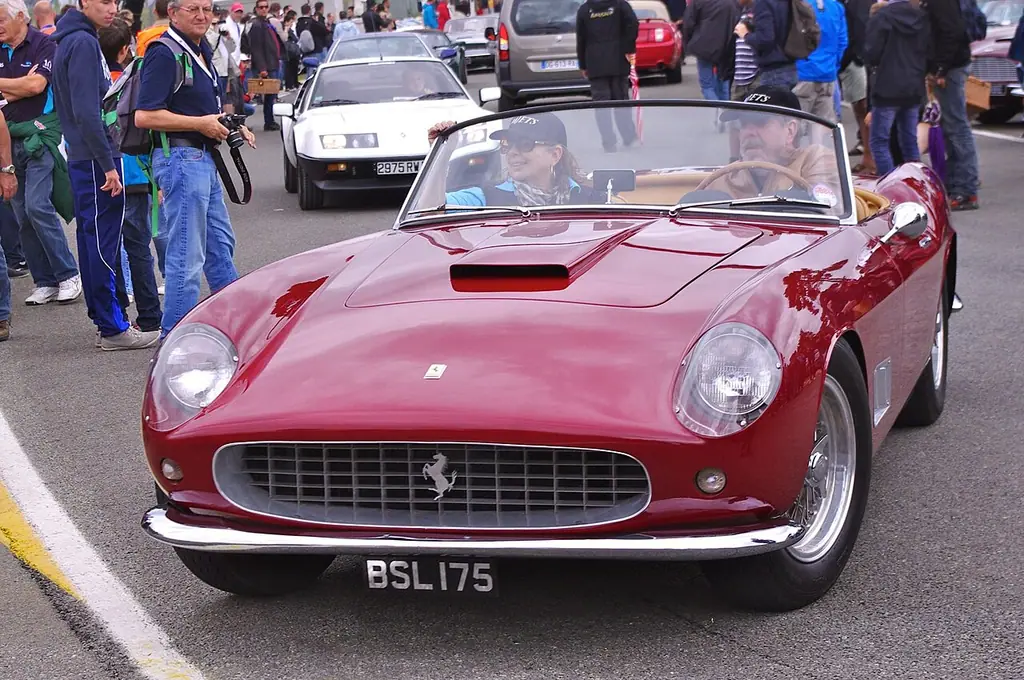
Photo: David Merrett from Daventry, England · CC BY 2.0
Contents
01Overview
At a glance
- Built
- 50 Built
- Years
- 1957–1960
- Engine
- V12, front-mounted · 2,953 cc / 3.0 LFactory: 2,953 cc
- Power
- 179 kW / 243 PSFactory: 240 hp · converted
- Top speed
- Not yet verified
- Body
- Not yet verified
- Designer
- Pinin Farina (design), Scaglietti (construction)
- In this archive
- Not yet verified
- Surviving
- Not yet verified
Sources and any conflicting figures are in the sections below.
Why it matters
The long-wheelbase California Spider was Ferrari's first purpose-built open sports car aimed at buyers who wanted to race at the weekend and drive on the road. It was closer to the competition cars than the ordinary 250 GT cabriolet and became the base for the later short-wheelbase California, one of the most valuable open Ferraris.
How rare is it?
Six separate kinds of rarity – never combined into one number.
Each kind of rarity is rated separately and never combined.
Photos
Exterior, interior and detail photos with their licences.
 Ferrari 250 GT LWB California Spider (Wikimedia Commons search)
Photo: David Merrett from Daventry, England · CC BY 2.0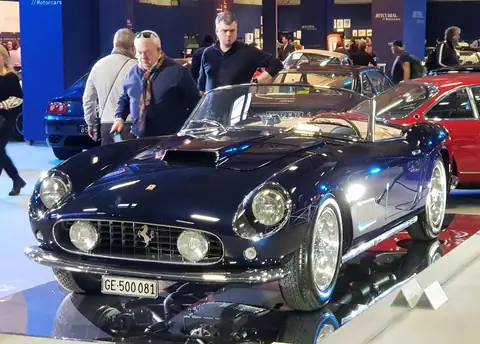 Ferrari 250 GT LWB California Spider (Wikimedia Commons search)
Photo: Andrew Bone from Weymouth, England · CC BY 2.0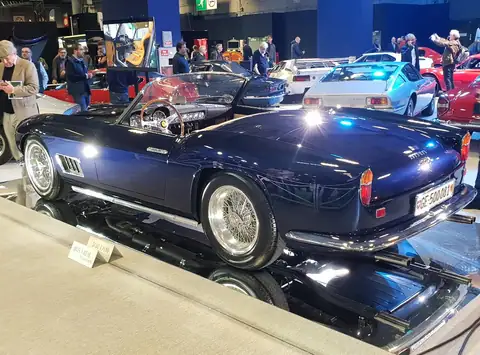 Ferrari 250 GT LWB California Spider (Wikimedia Commons search)
Photo: Andrew Bone from Weymouth, England · CC BY 2.0
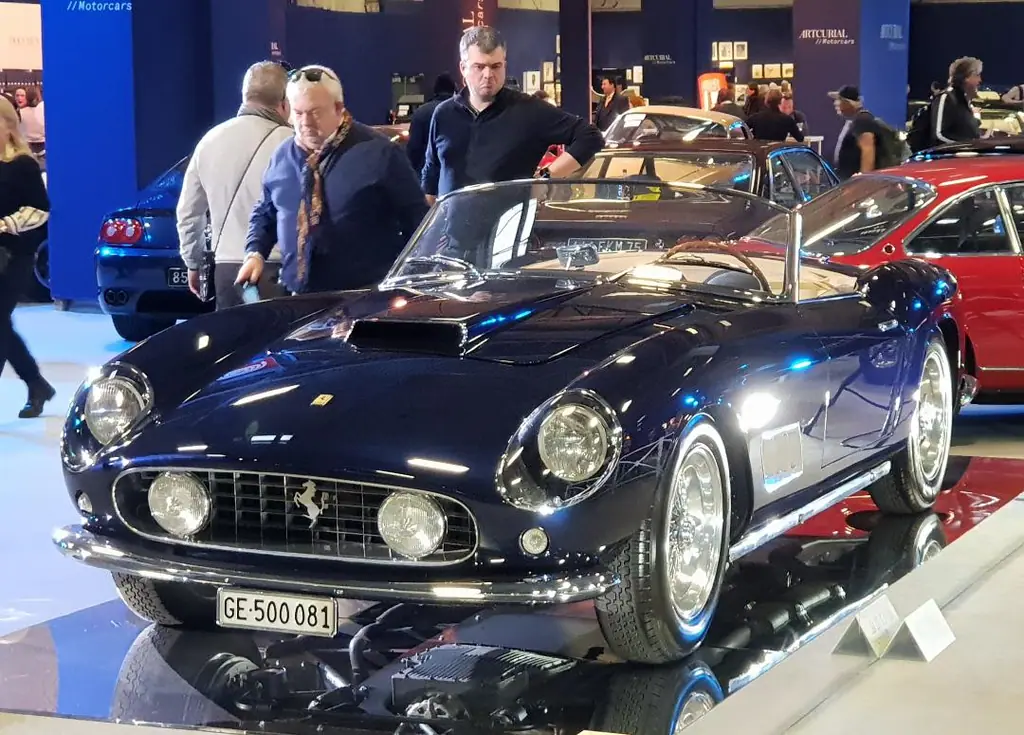
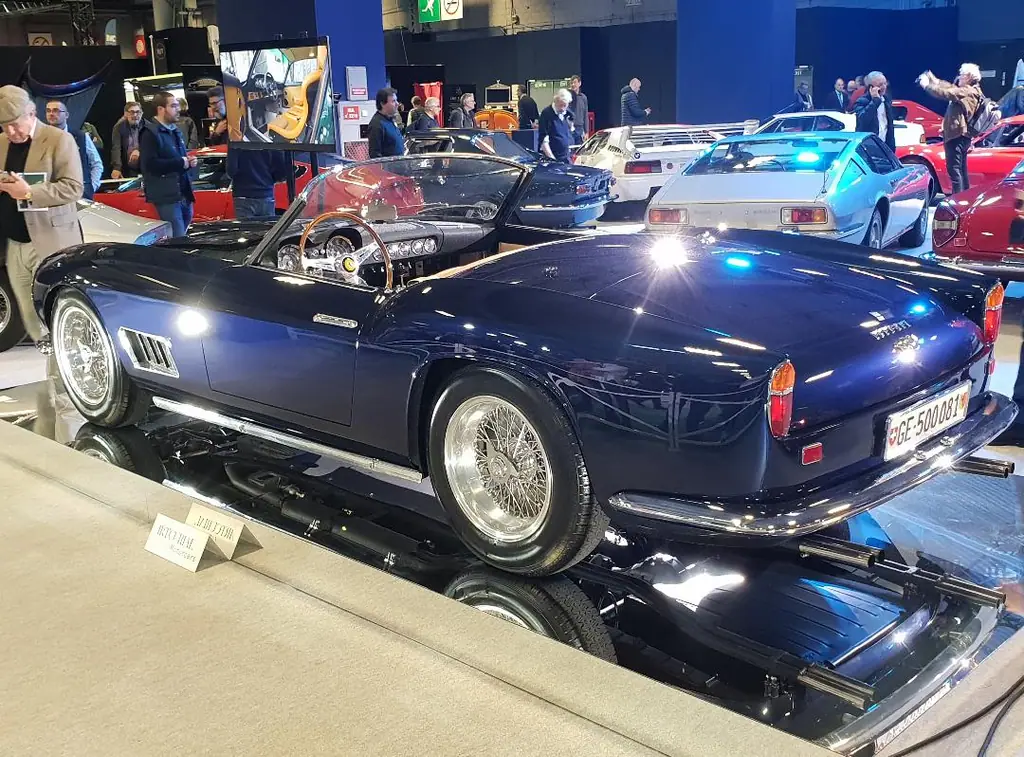


02Production & history
Production
Every figure says what it counts.
| What is counted | Figure | Basis | Status |
|---|---|---|---|
| Total model productionLWB California Spiders (of 106 California Spiders built 1957–1963: 50 LWB + 56 SWB) | 501 | Factory production | Independently researched |
Independent counts (e.g. engine and colour) are never combined into a calculated figure. Surviving examples are never presented as original production.
History
The car came about at the urging of North American importers John von Neumann and Luigi Chinetti, who wanted a stripped, high-performance roadster; it entered the Ferrari range in the late 1950s. The open body was styled by Pinin Farina and built by Scaglietti on the Tour de France berlinetta chassis.
Early cars were successful in GT racing, with a class win at the 1959 Sebring 12 Hours and fifth overall at Le Mans a few months later. After 50 long-wheelbase cars, Ferrari moved to the short-wheelbase platform with disc brakes.
Variants
How each version differs from the standard 250 GT LWB California Spider.
No variants documented yet. Have a source? Contribute it.
03Specifications
Technical specifications
Engine
| Engine family | Not yet verified |
|---|---|
| Engine code | Not yet verified |
| Layout | V12, front-mounted2 Independently researched |
| Displacement | 2,953 cc / 3.0 LFactory: 2,953 cc3 Independently researchedCaradisiac describes the 250 GT California generally. |
| Bore | Not yet verified |
| Stroke | Not yet verified |
| Compression ratio | Not yet verified |
| Fuel system | Not yet verified |
| Power | 179 kW / 243 PSFactory: 240 hp · converted2 Independently researchedCompetition-specification engines of 280 bhp were optional. |
| Power at | 7,500 rpm3 Independently researchedBelongs to the 240 ch figure; ultimatecarpage gives around 240 bhp standard and 280 bhp for full competition engines. Use only if the page power is the standard-tune figure. |
| Torque | Not yet verified |
Transmission & drivetrain
| Gearbox | Not yet verified |
|---|---|
| Gears | 43 Independently researched |
| Driven wheels | Not yet verified |
Chassis, body & dimensions
| Chassis | Elliptical-section steel tubular frame2 Independently researched |
|---|---|
| Front suspension | Double wishbones2 Independently researched |
| Rear suspension | Live rear axle2 Independently researched |
| Brakes | Drums on all four wheels2 Independently researched |
| Steering | Not yet verified |
| Body construction | Not yet verified |
| Materials | Steel body on early cars; lightweight aluminium body available4 Independently researchedultimatecarpage text covers the California Spyder in general, written from the 1958 introduction. |
| Wheelbase | Not yet verified |
| Length | Not yet verified |
| Width | Not yet verified |
| Height | Not yet verified |
| Front track | Not yet verified |
| Rear track | Not yet verified |
| Kerb weight | Not yet verified |
| Dry weight | Not yet verified |
Performance
| Maximum speed | Not yet verified |
|---|---|
| 0–100 km/h | Not yet verified |
| Fuel tank | Not yet verified |
“Not yet verified” means no source has been checked for that value yet. Nothing is estimated to fill a gap.
04Colours & options
Factory colours & interiors
Original paint and trim, with the number of cars in each where a source gives it.
Not yet documented. Have a source? Contribute it.
Factory options & codes
Codes are shown exactly as written by the manufacturer.
Not yet documented. Have a source? Contribute it.
05Individual cars
Chassis register
Every documented car, with its colours, history and where it is now. Open a row for the full record. Known chassis are not automatically authenticated originals.
Not yet documented. Have a source? Contribute it.
Competition history
Every race result of the individual cars, in date order. Click a chassis number to open its full record in the register.
Not yet documented. Have a source? Contribute it.
Auction & sale history
Documented public sales of the individual cars. Click a chassis number to open its full record in the register.
Not yet documented. Have a source? Contribute it.
See one in person
Museums where an example of this car can be seen.
No example is documented on public display yet. Have a source? Contribute it.
06Reference
Identification guide
How to tell an original from a replica or later conversion.
Genuine LWB cars have an elliptical-section steel tubular frame, double-wishbone front suspension, a live rear axle and drum brakes on all four wheels. The V12 was offered in around 240 bhp standard tune or 280 bhp competition tune. Headlamps could be ordered covered or open, and bodies were either steel or lightweight aluminium; all were Scaglietti-built. Because of the car's value, replicas exist, and a Caradisiac piece warns that the dashboard gives them away.
Sources
Each number links to the exact facts it supports.
-
1
Gooding & Company press release – 1962 Ferrari 250 GT SWB California Spider Level B
- 50 LWB California Spiders (of 106 California Spiders built 1957–1963: 50 LWB + 56 SWB)
-
2
1960 - 1963 Ferrari 250 GT SWB California Spyder Level C Ultimatecarpage.com
- the lovely V12 was good for around 240 bhp
- In 'standard' trim, the lovely V12 was good for around 240 bhp
- elliptical section steel tubular frame
- Suspension was by double wishbones at the front
- a live rear axle
- Drum brakes were fitted on all four corners
-
3
Photos du jour : Ferrari 250 GT California Level C Caradisiac, archived capture · 2009-12-05
- V12 en alliage leger est un 2953 cm3 developpant 240 ch a 7500 t/m
- 240 ch a 7500 t/m
- Sa boite a 4 rapports
-
4
Ferrari 250 GT SWB California Spyder Level C Wouter Melissen · ultimatecarpage.com · 2015-01-26
- first California Spyders were fitted with all-steel bodies
- Scaglietti could also cloth the car in a lightweight aluminium coach-work
Keep exploring
More from Ferrari
-
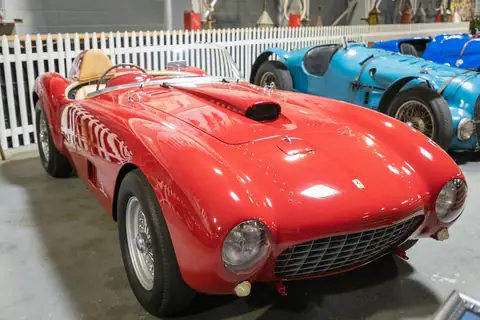
Ferrari · 1954
375 MM Spider by Pinin Farina ("Ingrid Bergman" car, 0456AM)
1 Built
-
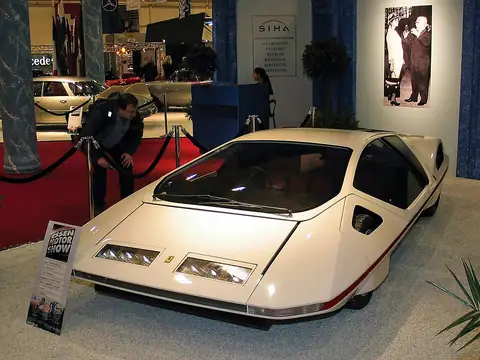
Ferrari · 1970
512 S Modulo (Pininfarina)
1 Built
-
Ferrari · 2005–2006
P4/5 by Pininfarina (2006)
1 Built
-
Ferrari · 1980
Pinin
1 Built
More from Italy
-
Autobianchi
A112 Giovani (Pininfarina)
Production not yet verified
-
Lamborghini
400 GT Interim
23 Built
-
Maserati
A6 (1947-1953)
Production not yet verified
-
Alfa Romeo · 1968–1975
GTA 1300 Junior
447 Built
62 other makes from ItalyAbarthACM AutomobiliAlfa RomeoAres DesignATSAuto Avio CostruzioniAutobianchiAznomB EngineeringBandiniBertoneBizzarriniBrixia-ZüstCagivaCarrozzeria Touring SuperleggeraCeiranoChiribiriCisitaliaCizetaColoniCoviniDallaraDe TomasoDiattoF.I.A.L. LegnanoFervesFiatFissoreFlorentiaGhiaInnocentiIntermeccanicaIsoIsotta FraschiniItalaItaldesignLaffiteLamborghiniLanciaMaseratiAll makes →