Makes › Ford › Sierra and Capri › Capri Turbo (Zakspeed) · Rare specification · 1981–1982 Extremely Rare
Ford
Capri Turbo (Zakspeed)
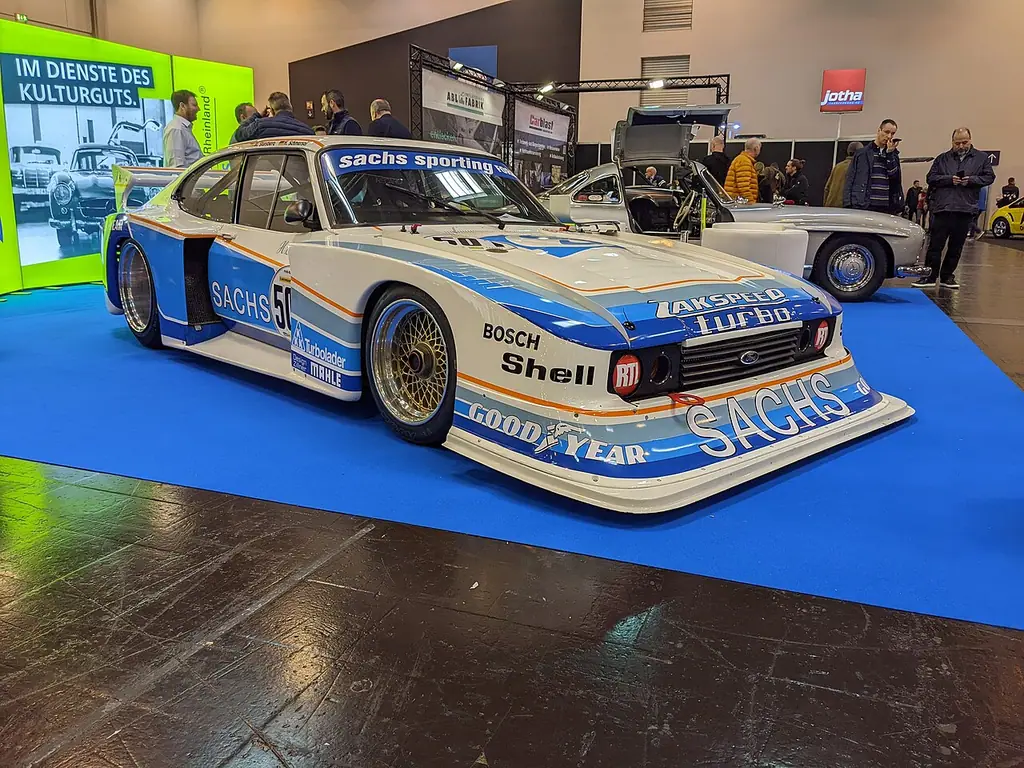
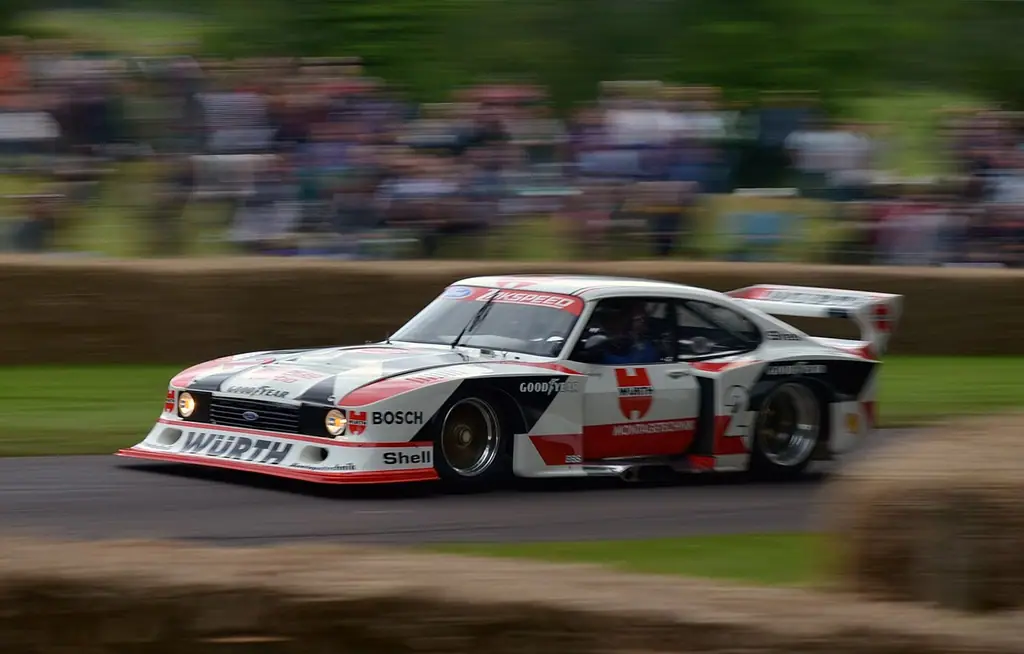
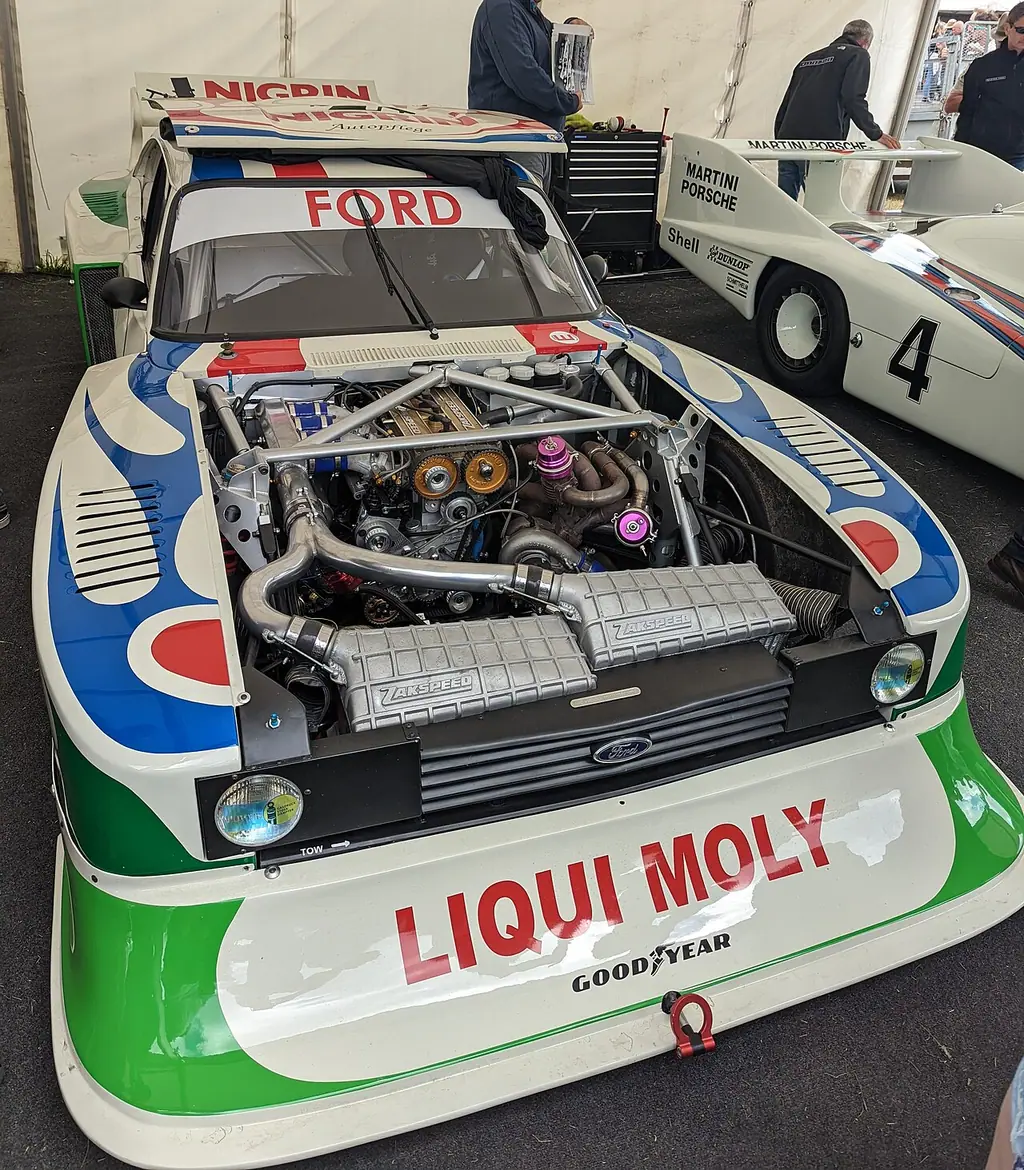
Wide-arched 188 PS turbocharged Capri developed with Zakspeed and sold by Ford Germany.
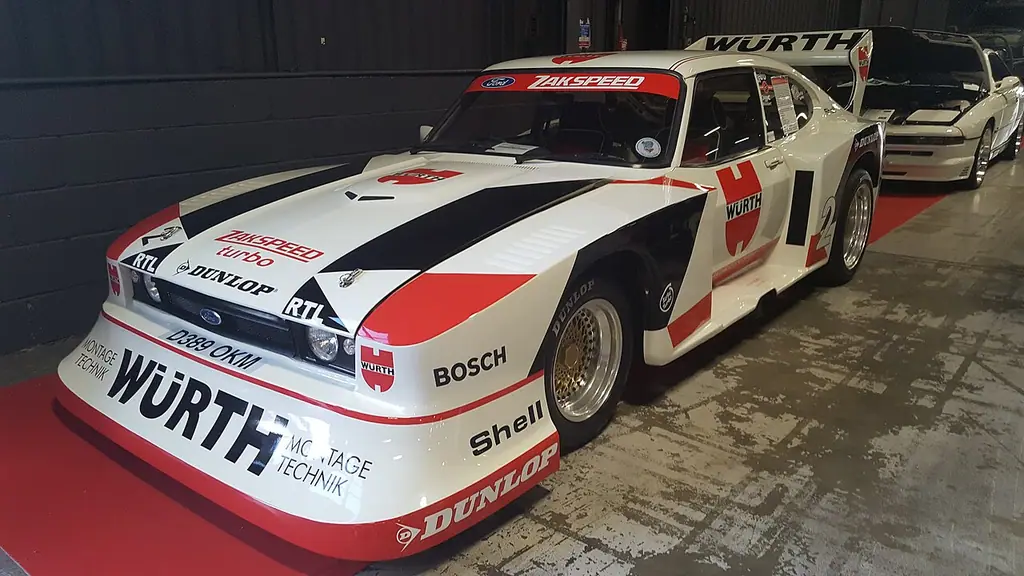
Photo: Kieran White from Manchester, England · CC BY 2.0
Contents
01Overview
At a glance
- Built
- 155 Built
- Years
- 1981–1982
- Engine
- 60-degree V6, iron block, overhead valves (pushrods) · 2,792 cc / 2.8 LFactory: 2,792 cc
- Power
- 142 kW / 193 PSFactory: 190 hp · converted
- Top speed
- 216 km/hFactory: 134 mph · converted
- Body
- Not yet verified
- Designer
- Ford Motorsport department, Cologne
- In this archive
- Not yet verified
- Surviving
- Not yet verified
Sources and any conflicting figures are in the sections below.
Why it matters
The Capri Turbo, called the Werks Turbo by Ford's German Rallye Sport dealers, was the road-car link to the turbocharged Zakspeed Group 5 Capris that Ford had financed in the German DRM. It ended the wait for an RS-style Capri after the 1970-74 RS models and was offered only in left-hand drive.
How rare is it?
Six separate kinds of rarity – never combined into one number.
Each kind of rarity is rated separately and never combined.
Photos
Exterior, interior and detail photos with their licences.
 Ford Capri Turbo (Zakspeed) (Wikimedia Commons: Zakspeed Ford Capri Turbo)
Photo: Kieran White from Manchester, England · CC BY 2.0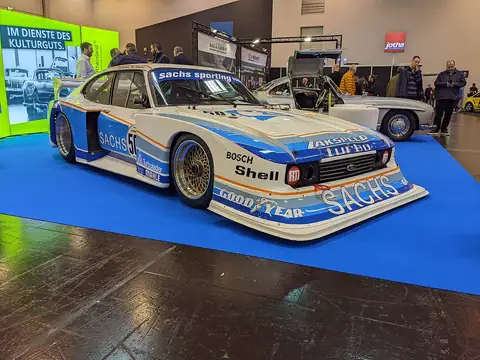 Ford Capri Turbo (Zakspeed) (Wikimedia Commons: Zakspeed Ford Capri Turbo)
Photo: Thomas Vogt from Paderborn, Deutschland · CC BY 2.0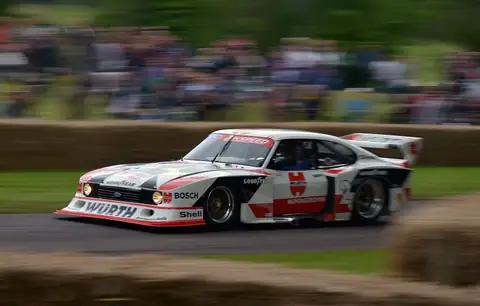 Ford Capri Turbo (Zakspeed) (Wikimedia Commons: Zakspeed Ford Capri Turbo)
Photo: Nic Redhead from Birmingham, UK · CC BY-SA 2.0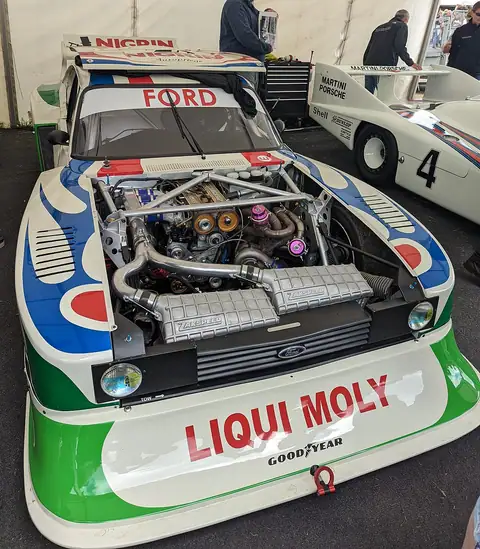 Ford Capri Turbo (Zakspeed) (Wikimedia Commons: Zakspeed Ford Capri Turbo)
Photo: Calreyn88 · CC BY-SA 4.0


02Production & history
Production
Every figure says what it counts.
| What is counted | Figure | Basis | Status |
|---|---|---|---|
| Factory package productionunits completed July 1981 – September 1982 (as understood) | 1551,2 | Factory production | Registry reported |
Independent counts (e.g. engine and colour) are never combined into a calculated figure. Surviving examples are never presented as original production.
History
Ford's Motorsport department in Cologne developed the car over the winter of 1980-81 from the fuel-injected 160 bhp Capri 2.8i launched in February 1981, mixing new parts with items from the RS parts catalogue. Production started at the Cologne Motorsport department in July 1981 and the car was presented at the Frankfurt Motor Show that September.
Each engine began as a carburettor Granada V6 and was modified in Cologne with a Garrett turbocharger, Bosch K-Jetronic injection and strengthened internals. Production ran until September 1982 and the source understands that 155 units were completed. The racing Zakspeed Capris won the 1981 DRM title through Klaus Ludwig.
Variants
How each version differs from the standard Capri Turbo (Zakspeed).
No variants documented yet. Have a source? Contribute it.
03Specifications
Technical specifications
Engine
| Engine family | Not yet verified |
|---|---|
| Engine code | Not yet verified |
| Layout | 60-degree V6, iron block, overhead valves (pushrods)1 Independently researched |
| Cylinders | 61 Independently researched |
| Displacement | 2,792 cc / 2.8 LFactory: 2,792 cc1 Independently researched |
| Bore | 93 mmFactory: 93 mm1 Independently researched |
| Stroke | 68.5 mmFactory: 68.5 mm1 Independently researched |
| Compression ratio | 9.2:11 Independently researched |
| Fuel system | Bosch K-Jetronic fuel injection1 Independently researched |
| Induction | Single Garrett T04 B50 turbocharger, up to 0.4 bar1 Independently researched |
| Power | 142 kW / 193 PSFactory: 190 hp · converted1 Independently researchedSource states bhp. |
| Power at | 5,500 rpm1 Independently researched |
| Torque | 268 NmFactory: 198 lb-ft · converted1 Independently researched |
| Torque at | 4,500 rpm1 Independently researched |
Transmission & drivetrain
| Gearbox | Manual1 Independently researched |
|---|---|
| Gears | 41 Independently researched |
| Driven wheels | Not yet verified |
Chassis, body & dimensions
| Chassis | Steel monocoque1 Independently researched |
|---|---|
| Front suspension | MacPherson struts with lower control arms; reinforced wishbones, shorter stiffer springs, gas Bilstein dampers, anti-dive kit, thicker anti-roll bar1 Independently researched |
| Rear suspension | Leaf-sprung axle with trailing arms; gas Bilstein dampers1 Independently researched |
| Brakes | Twin-circuit; 262 mm internally vented front discs, 229 mm reinforced rear drums1 Independently researched |
| Steering | Power-assisted, shorter steering column1 Independently researched |
| Body construction | Steel panels; fibreglass chin spoiler and polyurethane rear spoiler1 Independently researched |
| Wheelbase | 2,565 mmFactory: 2,565 mm1 Independently researched |
| Length | Not yet verified |
| Width | Not yet verified |
| Height | Not yet verified |
| Front track | Not yet verified |
| Rear track | Not yet verified |
| Kerb weight | 1,225 kgFactory: 1,225 kg1 Independently researchedWeight basis not stated in the source. |
| Dry weight | Not yet verified |
Performance
| Maximum speed | 216 km/hFactory: 134 mph · converted1 Independently researchedSame source gives 0-62 mph in 6.7 s. |
|---|---|
| 0–100 km/h | Not yet verified |
| Fuel tank | 58 LFactory: 58 L1 Independently researched |
“Not yet verified” means no source has been checked for that value yet. Nothing is estimated to fill a gap.
04Colours & options
Factory colours & interiors
Original paint and trim, with the number of cars in each where a source gives it.
Not yet documented. Have a source? Contribute it.
Factory options & codes
Codes are shown exactly as written by the manufacturer.
Not yet documented. Have a source? Contribute it.
05Individual cars
Chassis register
Every documented car, with its colours, history and where it is now. Open a row for the full record. Known chassis are not automatically authenticated originals.
Not yet documented. Have a source? Contribute it.
Competition history
Every race result of the individual cars, in date order. Click a chassis number to open its full record in the register.
Not yet documented. Have a source? Contribute it.
Auction & sale history
Documented public sales of the individual cars. Click a chassis number to open its full record in the register.
Not yet documented. Have a source? Contribute it.
See one in person
Museums where an example of this car can be seen.
No example is documented on public display yet. Have a source? Contribute it.
06Reference
Identification guide
How to tell an original from a replica or later conversion.
Each car has flared X-Pack fenders, a body-coloured fibreglass Zakspeed chin spoiler and a moulded black polyurethane dual-plane rear spoiler on the tailgate, with Turbo decals on the bonnet, doors and tailgate. Wheels are 6.5 x 13 four-spoke alloys with 205/60 VR13 Pirelli tyres, and the battery tray was moved to the left side of the engine bay. Interior: Recaro two-piece buckets in Shark Grey velour, a small RS-branded four-spoke leather-rimmed wheel and a 7000 rpm / 220 km/h instrument face. Colours were Diamond White, with Silver, Red or Pine Green at extra cost. All cars were left-hand drive.
Sources
Each number links to the exact facts it supports.
-
1
Homage to Zakspeed: a Historical & Technical Appraisal of the Ford Capri Mk3 Werks Turbo Level B Ben Tyer · Supercar Nostalgia · 2025-08-03
- it is understood that 155 units were completed
- all-iron 60 degree V6 with overhead valves actuated via tappets, pushrods and rocker arms
- all-iron 60 degree V6
- Displacement was unchanged at 2792cc
- bore and stroke of 93mm and 68.5mm
- A 9.2:1 compression ratio was similarly carried over
- Bosch K-Jetronic fuel-injection
- a single Garrett T04 B50 turbo (which ran at up to 0.4 bar)
- peak output figures of 190bhp at 5500rpm and 198lb-ft at 4500rpm
- 190bhp at 5500rpm
- 198lb-ft at 4500rpm
- four-speed manual gearbox with single-plate clutch and open differential
- four-speed manual gearbox
- standard Mk3 Capri steel monocoque bodyshell
- MacPherson struts with lower control arms up front ... anti-dive kit
- leaf sprung axle with trailing arms at the rear
- Internally vented front discs had a 262mm diameter. Reinforced rear drums had a 229mm
- existing power-assisted steering ... shorter steering column
- body panels were fashioned exclusively from steel
- 2565mm wheelbase
- 1225kg as opposed to 1190kg
- top speed was now 134mph
- A 58-litre fuel tank
-
2
Supercar Nostalgia – Ford Capri Mk3 Turbo Level C
- 155 units completed July 1981 – September 1982 (as understood)
Keep exploring
More from Ford
-
Ford · 1934
Edsel Ford 1934 Model 40 Special Speedster
1 Built
-
Ford · 1896
Quadricycle
1 Built
-
Ford · 1969
Mustang Boss 302 Trans-Am (Shelby team, 1969)
3 Built
-
Ford
Mustang GTP (1983-1985)
3 Built
More from United States
-
Dodge
WC-57 Command Car (1942-1945)
Production not yet verified
-
Mercer
Type 35 Raceabout
Production not yet verified
-
Winton · 1903
1903 "Vermont" touring car
1 Built
-
Lincoln
Continental convertible 1965 (Entourage)
Production not yet verified
140 other makes from United StatesAC PropulsionAcuraAllstateAMCAmerican LaFranceAmerican MotorsAmerican UnderslungApteraArmstrongArnoltAuburnBaldwin-MotionBantamBarris KustomsBendixBerger ChevroletBill ThomasBollingerBremerBuckeyeBuffumBuickCadillacCallawayCastleCheckerChevroletChristieChryslerClenetCodaColumbiaConsulierCordCunninghamCzingerDana ChevroletDean JeffriesDeSotoDetroit ElectricAll makes →