Makes › Ford › Quadricycle · Historically significant · 1896
Ford
Quadricycle
Henry Ford's first car
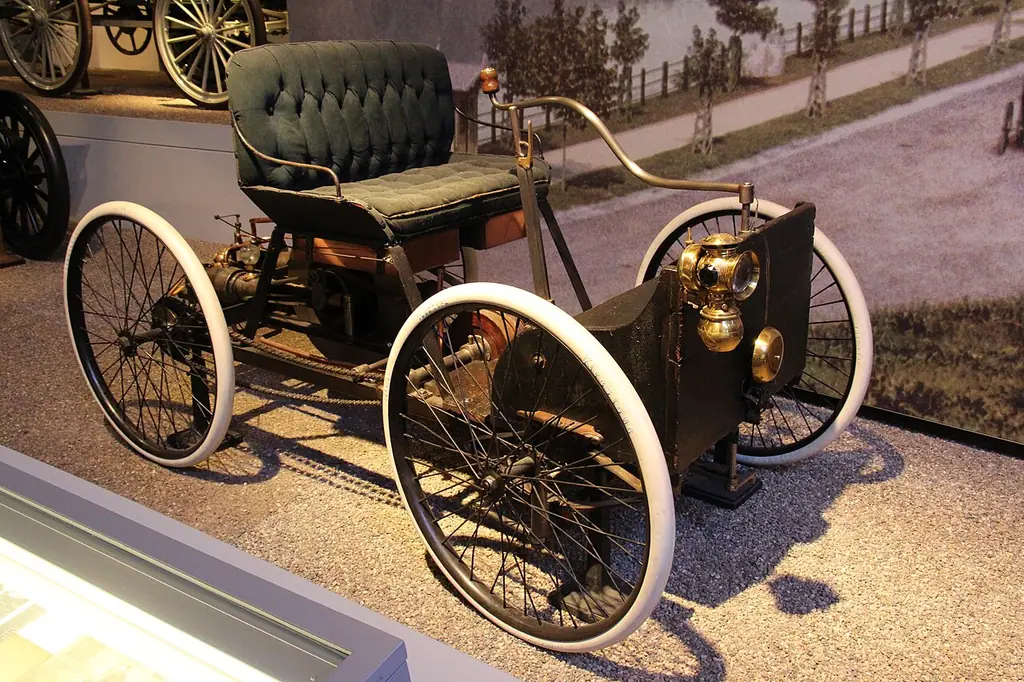
Photo: Sicnag · CC BY 2.0

Contents
01Overview
At a glance
- Built
- 1 Built
- Years
- 1896
- Engine
- Twin-cylinder, air-cooled
- Power
- 2.98 kW / 4.06 PSFactory: 4 hp · converted
- Top speed
- Not yet verified
- Body
- Not yet verified
- Designer
- Henry Ford
- In this archive
- Not yet verified
- Surviving
- 1 (independently researched)
Sources and any conflicting figures are in the sections below.
Why it matters
The Quadricycle was Henry Ford's first attempt at a gasoline-powered automobile. Its sale funded the construction of his second car, so it is the starting point of the line of vehicles that led to Ford Motor Company and, later, the Model T.
How rare is it?
Six separate kinds of rarity – never combined into one number.
Each kind of rarity is rated separately and never combined.
02Production & history
Production
Every figure says what it counts.
| What is counted | Figure | Basis | Status |
|---|---|---|---|
| Total model productionKnown surviving examples | 11 | Surviving examples | Independently researched |
| Total model productionIndividual car: “1896 Ford Quadricycle Runabout, First Car Built by Henry Ford” in The Henry Ford collection (the museum's running examples are replicas) | 11,2 | Factory production | Independently researched |
Independent counts (e.g. engine and colour) are never combined into a calculated figure. Surviving examples are never presented as original production.
History
Henry Ford built the Quadricycle in 1896 with help from friends, in a shed behind a Detroit house that he and his wife Clara rented. A museum photograph shows him, aged 33, with the finished vehicle in October 1896.
He sold the Quadricycle for $200 and used the money to build his second car.
Variants
How each version differs from the standard Quadricycle.
No variants documented yet. Have a source? Contribute it.
03Specifications
Technical specifications
Engine
| Engine family | Not yet verified |
|---|---|
| Engine code | Not yet verified |
| Layout | Twin-cylinder, air-cooled1 Independently researched |
| Cylinders | 21 Independently researched |
| Displacement | Not yet verified |
| Bore | Not yet verified |
| Stroke | Not yet verified |
| Compression ratio | Not yet verified |
| Valvetrain | Atmospheric (self-opening) intake valves, overhead exhaust valves1 Independently researched |
| Fuel system | Not yet verified |
| Power | 2.98 kW / 4.06 PSFactory: 4 hp · converted1 Independently researchedHagerty calls this an estimate; no throttle of any kind. |
| Power at | Not yet verified |
| Torque | Not yet verified |
| Redline | 500 rpm1 Independently researched |
Transmission & drivetrain
| Gearbox | Leather belt and chain drive3 Independently researched |
|---|---|
| Gears | 21 Independently researched |
| Driven wheels | Rear1 Independently researched |
Chassis, body & dimensions
| Chassis | Angle-iron frame3 Independently researched |
|---|---|
| Front suspension | Not yet verified |
| Rear suspension | Not yet verified |
| Brakes | None fitted1 Independently researched |
| Steering | Tiller1 Independently researched |
| Body construction | Not yet verified |
| Wheelbase | 1,240 mmFactory: 49 in · converted1 Independently researched |
| Length | 1,990 mmFactory: 78.5 in · converted1 Independently researched |
| Width | 1,160 mmFactory: 45.5 in · converted1 Independently researched |
| Height | 1,140 mmFactory: 45 in · converted1 Independently researched |
| Front track | Not yet verified |
| Rear track | Not yet verified |
| Kerb weight | 227 kgFactory: 500 lb · converted1 Independently researched |
| Dry weight | Not yet verified |
Performance
| Maximum speed | Not yet verified |
|---|---|
| 0–100 km/h | Not yet verified |
| Fuel tank | Not yet verified |
“Not yet verified” means no source has been checked for that value yet. Nothing is estimated to fill a gap.
04Colours & options
Factory colours & interiors
Original paint and trim, with the number of cars in each where a source gives it.
Not yet documented. Have a source? Contribute it.
Factory options & codes
Codes are shown exactly as written by the manufacturer.
Not yet documented. Have a source? Contribute it.
05Individual cars
Chassis register
Every documented car, with its colours, history and where it is now. Open a row for the full record. Known chassis are not automatically authenticated originals.
Not yet documented. Have a source? Contribute it.
Competition history
Every race result of the individual cars, in date order. Click a chassis number to open its full record in the register.
Not yet documented. Have a source? Contribute it.
Auction & sale history
Documented public sales of the individual cars. Click a chassis number to open its full record in the register.
Not yet documented. Have a source? Contribute it.
See one in person
Museums where an example of this car can be seen.
No example is documented on public display yet. Have a source? Contribute it.
06Reference
Identification guide
How to tell an original from a replica or later conversion.
The museum describes the vehicle as built from commonly available materials: an angle-iron frame, a leather belt and chain drive for the transmission and a buggy seat. Ford had to devise his own ignition system. These are the construction features that mark the original design.
Sources
Each number links to the exact facts it supports.
-
1
Seminal Homegrown: Henry Ford's Quadricycle Level B Hagerty Media
- Ford constructed a second Quad in 1899 and a third in 1901
- it still exists ... can be seen at the Henry Ford Museum
- twin-cylinder, air-cooled motor
- twin-cylinder
- "atmospheric" (self-opening) intake valves and overhead exhaust valves
- an estimated 4 horsepower running up to 500 rpm
- running up to 500 rpm
- through a two-speed transmission, a rubber belt, and a chain
- the engine drove the rears
- no reverse gear or brakes were deemed necessary
- A tiller steered the front wheels
- with a 49-inch wheelbase
- 78.5 inches long
- 45.5 inches wide
- stood 45 inches tall
- 500-pound curb weight
-
2
The Henry Ford – 1896 Ford Quadricycle Runabout, First Car Built by Henry Ford Level B
- 1 Individual car: “1896 Ford Quadricycle Runabout, First Car Built by Henry Ford” in The Henry Ford collection (the museum's running examples are replicas)
-
3
Henry Ford: On the Way to the Model T (curated set) Level A The Henry Ford · 2013-01-01
- a leather belt and chain drive for the transmission
- angle iron for the frame
Keep exploring
More from Ford
-
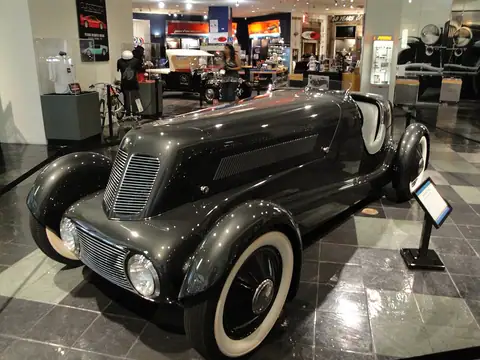
Ford · 1934
Edsel Ford 1934 Model 40 Special Speedster
1 Built
-
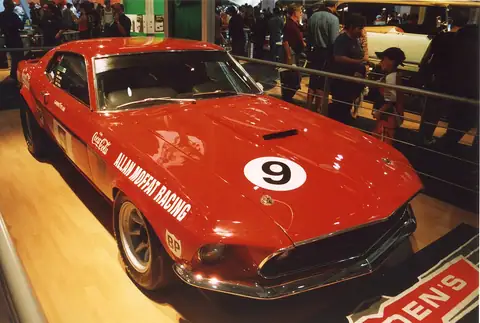
Ford · 1969
Mustang Boss 302 Trans-Am (Shelby team, 1969)
3 Built
-
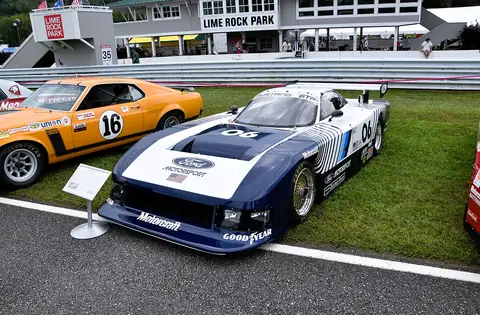
Ford
Mustang GTP (1983-1985)
3 Built
-
Ford · 1970
Torino King Cobra prototypes
4 Built
More from United States
-
Chrysler · 1962
300H
Production not yet verified
-
Shelby American
GT-H (2006)
500 Built
-
Studebaker · 1957
Golden Hawk (1957)
4,356 Built
-
Pierce-Arrow · 1933
Silver Arrow
Production not yet verified
140 other makes from United StatesAC PropulsionAcuraAllstateAMCAmerican LaFranceAmerican MotorsAmerican UnderslungApteraArmstrongArnoltAuburnBaldwin-MotionBantamBarris KustomsBendixBerger ChevroletBill ThomasBollingerBremerBuckeyeBuffumBuickCadillacCallawayCastleCheckerChevroletChristieChryslerClenetCodaColumbiaConsulierCordCunninghamCzingerDana ChevroletDean JeffriesDeSotoDetroit ElectricAll makes →