Makes › Ford › Mustang › First generation › Mustang Boss 302 Trans-Am (Shelby team, 1969) · Factory competition · 1969 Ultra Rare
Ford
Mustang Boss 302 Trans-Am (Shelby team, 1969)
Kar Kraft-built, Shelby-prepared works Trans-Am cars; chassis 628 is the sole survivor
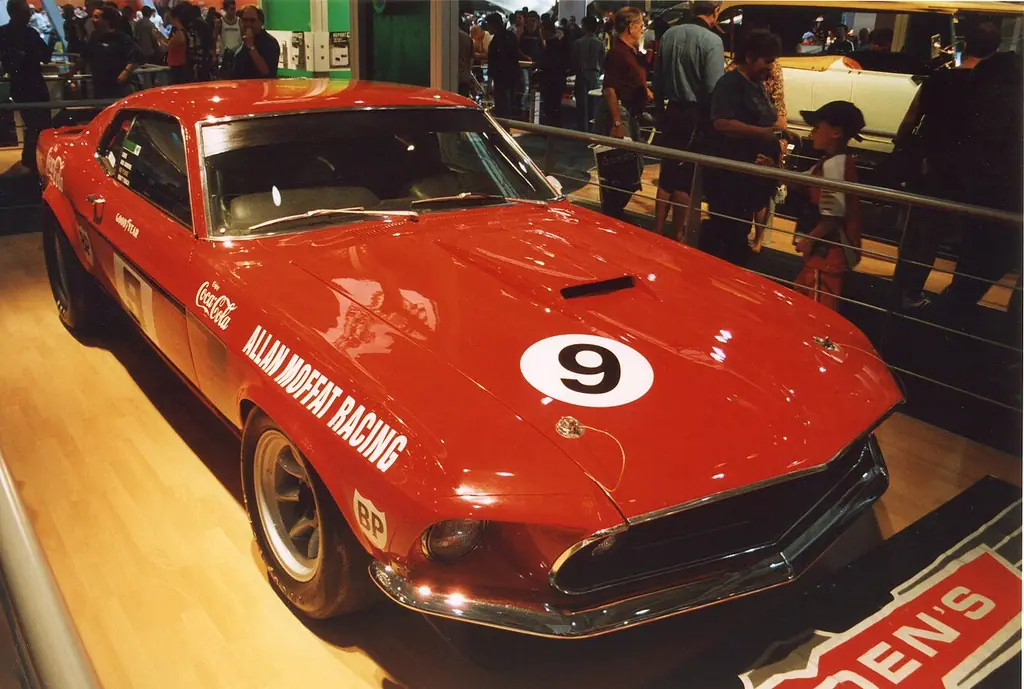
Photo: Jeremy from Sydney, Australia · CC BY 2.0

Contents
01Overview
At a glance
- Built
- 3 Built
- Years
- 1969
- Engine
- Boss 302 V8: 302 Windsor block with Cleveland-type canted-valve heads · 5,000 cc / 5 LFactory: 5 L
- Power
- 350 kW / 477 PSFactory: 470 hp · converted
- Top speed
- Not yet verified
- Body
- Not yet verified
- Designer
- Larry Shinoda (Boss 302 body styling); Kar Kraft, Brighton, Michigan (Trans-Am race-car engineering; prototypes under chief designer/engineer Lee Dykstra)
- In this archive
- Not yet verified
- Surviving
- 1 (independently researched)
Sources and any conflicting figures are in the sections below.
Why it matters
For the 1969 Trans-Am season Ford had Kar Kraft build Boss 302 race Mustangs and ran them through both Shelby and Bud Moore. Only three Boss 302s were prepared by Shelby, and the car offered at RM Sotheby's is described as the only surviving example.
How rare is it?
Six separate kinds of rarity – never combined into one number.
Each kind of rarity is rated separately and never combined.
02Production & history
Production
Every figure says what it counts.
| What is counted | Figure | Basis | Status |
|---|---|---|---|
| Total model productiononly one of the three Shelby team Boss 302 Trans-Am cars (chassis 628) survives, per the auction catalogue | 11 | Surviving examples | Independently researched |
| Total model production1969 team cars built ('one of three') | 31,2 | Factory production | Factory reported |
Independent counts (e.g. engine and colour) are never combined into a calculated figure. Surviving examples are never presented as original production.
History
Unlike earlier seasons that Shelby handled almost alone, Ford used Kar Kraft's engineering for the 1969 contender, which also let Bud Moore field two cars. The Shelby team received three Boss 302s built by Kar Kraft; the lot car was the second of the three. During the season two of them (627 and 629) were written off and 628 emerged as the only surviving team Shelby Boss 302.
Variants
How each version differs from the standard Mustang Boss 302 Trans-Am (Shelby team, 1969).
No variants documented yet. Have a source? Contribute it.
03Specifications
Technical specifications
Engine
| Engine family | Not yet verified |
|---|---|
| Engine code | Not yet verified |
| Layout | Boss 302 V8: 302 Windsor block with Cleveland-type canted-valve heads3 Independently researchedSource describes the Kar Kraft 1969 specification shared by both Trans-Am teams, as built for a Bud Moore Engineering car (VIN 9F02M148624); not a Shelby-team-specific measurement. |
| Displacement | 5,000 cc / 5 LFactory: 5 L3 Independently researchedSource describes the Kar Kraft 1969 specification shared by both Trans-Am teams, as built for a Bud Moore Engineering car (VIN 9F02M148624); not a Shelby-team-specific measurement. |
| Bore | Not yet verified |
| Stroke | Not yet verified |
| Compression ratio | 12:13 Independently researchedRace-engine figure for the 1969 Kar Kraft Trans-Am Boss 302. Source describes the Kar Kraft 1969 specification shared by both Trans-Am teams, as built for a Bud Moore Engineering car (VIN 9F02M148624); not a Shelby-team-specific measurement. |
| Valvetrain | OHV, solid-lifter camshaft, 1.73:1 aluminium roller rockers, 2.23 in intake / 1.71 in exhaust valves (Cleveland-type canted-valve heads)3 Independently researchedSource describes the Kar Kraft 1969 specification shared by both Trans-Am teams, as built for a Bud Moore Engineering car (VIN 9F02M148624); not a Shelby-team-specific measurement. |
| Fuel system | Two in-line 1050 cfm Holley Dominator four-barrel carburettors on an independent-runner alloy manifold (race specification)3 Independently researchedSource describes the Kar Kraft 1969 specification shared by both Trans-Am teams, as built for a Bud Moore Engineering car (VIN 9F02M148624); not a Shelby-team-specific measurement. |
| Power | 350 kW / 477 PSFactory: 470 hp · converted3 Independently researchedSource says "over 470bhp", claimed by Ford teams for a race-prepared 1969 engine. Road car was rated 290 bhp @ 5800 rpm. Source describes the Kar Kraft 1969 specification shared by both Trans-Am teams, as built for a Bud Moore Engineering car (VIN 9F02M148624); not a Shelby-team-specific measurement. |
| Power at | Not yet verified |
| Torque | Not yet verified |
| Redline | 8,000 rpm3 Independently researchedClaimed endurance speed of the fully race-prepared 1969 engine. Source describes the Kar Kraft 1969 specification shared by both Trans-Am teams, as built for a Bud Moore Engineering car (VIN 9F02M148624); not a Shelby-team-specific measurement. |
Transmission & drivetrain
| Gearbox | Four-speed manual (Ford Top Loader)3 Independently researchedSource describes the Kar Kraft 1969 specification shared by both Trans-Am teams, as built for a Bud Moore Engineering car (VIN 9F02M148624); not a Shelby-team-specific measurement. |
|---|---|
| Gears | 43 Independently researched |
| Driven wheels | Rear3 Independently researchedSource describes the Kar Kraft 1969 specification shared by both Trans-Am teams, as built for a Bud Moore Engineering car (VIN 9F02M148624); not a Shelby-team-specific measurement. |
Chassis, body & dimensions
| Chassis | Not yet verified |
|---|---|
| Front suspension | Strengthened upper and lower wishbones, competition coil springs, adjustable Koni shocks, adjustable anti-roll bar3 Independently researchedSource describes the Kar Kraft 1969 specification shared by both Trans-Am teams, as built for a Bud Moore Engineering car (VIN 9F02M148624); not a Shelby-team-specific measurement. |
| Rear suspension | Live axle (Kar Kraft full-floater nine-inch) on race-tuned leaf springs with traction bars, Panhard rod, adjustable Koni shocks and anti-roll bar3 Independently researchedSource describes the Kar Kraft 1969 specification shared by both Trans-Am teams, as built for a Bud Moore Engineering car (VIN 9F02M148624); not a Shelby-team-specific measurement. |
| Brakes | Front: ventilated discs 11.96 in diameter with four-piston Kelsey-Hayes calipers (Lincoln parts); rear: 11.3 in discs from the road-car front hardware3 Independently researchedSource describes the Kar Kraft 1969 specification shared by both Trans-Am teams, as built for a Bud Moore Engineering car (VIN 9F02M148624); not a Shelby-team-specific measurement. |
| Steering | Quick-ratio 16:1 steering box3 Independently researchedSource describes the Kar Kraft 1969 specification shared by both Trans-Am teams, as built for a Bud Moore Engineering car (VIN 9F02M148624); not a Shelby-team-specific measurement. |
| Body construction | Steel unibody, fully seam-welded, with welded tubular steel roll cage tied into the suspension mounting points; thin-gauge bolt-on panels3 Independently researchedSource describes the Kar Kraft 1969 specification shared by both Trans-Am teams, as built for a Bud Moore Engineering car (VIN 9F02M148624); not a Shelby-team-specific measurement. |
| Wheelbase | Not yet verified |
| Length | Not yet verified |
| Width | Not yet verified |
| Height | Not yet verified |
| Front track | Not yet verified |
| Rear track | Not yet verified |
| Kerb weight | Not yet verified |
| Dry weight | Not yet verified |
Performance
| Maximum speed | Not yet verified |
|---|---|
| 0–100 km/h | Not yet verified |
| Fuel tank | Not yet verified |
“Not yet verified” means no source has been checked for that value yet. Nothing is estimated to fill a gap.
04Colours & options
Factory colours & interiors
Original paint and trim, with the number of cars in each where a source gives it.
Not yet documented. Have a source? Contribute it.
Factory options & codes
Codes are shown exactly as written by the manufacturer.
Not yet documented. Have a source? Contribute it.
05Individual cars
Chassis register
Every documented car, with its colours, history and where it is now. Open a row for the full record. Known chassis are not automatically authenticated originals.
Not yet documented. Have a source? Contribute it.
Competition history
Every race result of the individual cars, in date order. Click a chassis number to open its full record in the register.
Not yet documented. Have a source? Contribute it.
Auction & sale history
Documented public sales of the individual cars. Click a chassis number to open its full record in the register.
Not yet documented. Have a source? Contribute it.
See one in person
Museums where an example of this car can be seen.
No example is documented on public display yet. Have a source? Contribute it.
06Reference
Identification guide
How to tell an original from a replica or later conversion.
The surviving Shelby team car carries chassis number 9F02M148628 (team car number 628); the other two Shelby team cars were 627 and 629.
Sources
Each number links to the exact facts it supports.
-
1
1969 Ford Mustang Boss 302 Trans-Am lot Level A RM Sotheby's
- Born as one of three Boss 302s built by Kar Kraft and prepared by Shelby
- 628 became the only surviving team Shelby Boss 302
-
2
RM Sotheby's – 1969 Ford Mustang Boss 302 Trans Am (Jim Click Collection, Monterey 2016) Level B
- 3 1969 team cars built ('one of three')
-
3
Allan Moffat's 1969 T/A Mustang Level C Mark Oastler · Bowden's Own (article by Mark Oastler, Australian Muscle Car) · 2016-05-31
- marriage of 351 Cleveland heads with 302 Windsor block (Engine)
- 5.0 litre small block V8 engine (Engine)
- 12:1 forged alloy pistons (road versions used 10.5:1) (Engine)
- 2.23-inch intake and 1.71-inch exhaust valves (Engine)
- 1.73:1 aluminium roller rockers (Engine)
- two gigantic 1050cfm Holley Dominator four-barrel carburettors (Engine)
- producing over 470bhp (350kW) by mid season (Engine)
- could endure up to a staggering 8000rpm (Engine)
- Top Loaders with a variety of ratios were available for the race cars (Transmission)
- Ford Top Loader four speed gearbox (Transmission)
- live axle/leaf spring arrangement also be retained (Suspension)
- strengthened upper and lower swinging arms, adjustable Koni shocks (Suspension)
- full floater nine-inch rear axle assembly located by race-tuned leaf springs (Suspension)
- 11.96-inch diameter ventilated rotors and four-spot Kelsey-Hayes callipers (Brakes)
- quick-ratio 16:1 steering box (Suspension)
- shell was fully seam-welded (Body/chassis unit)
- fully welded tubular steel roll cage (Body/chassis unit)
Keep exploring
More from Ford
-
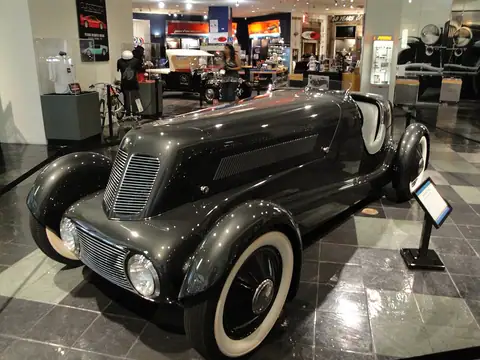
Ford · 1934
Edsel Ford 1934 Model 40 Special Speedster
1 Built
-
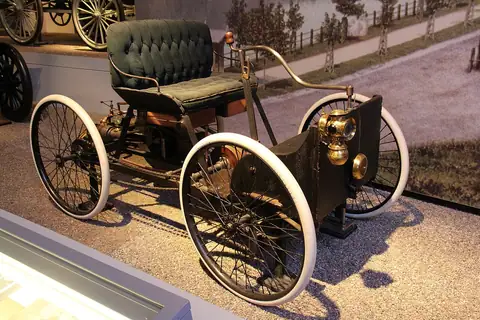
Ford · 1896
Quadricycle
1 Built
-
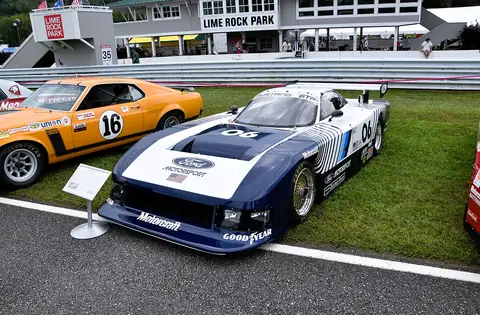
Ford
Mustang GTP (1983-1985)
3 Built
-
Ford · 1970
Torino King Cobra prototypes
4 Built
More from United States
-
Dodge · 1969
Charger 500
392 Built
-
Chevrolet
Monte Carlo Pace Car (2000)
Production not yet verified
-
Cadillac
Series 72 (1940)
Production not yet verified
-
Buick · 1982
Regal Grand National (1982)
215 Built
140 other makes from United StatesAC PropulsionAcuraAllstateAMCAmerican LaFranceAmerican MotorsAmerican UnderslungApteraArmstrongArnoltAuburnBaldwin-MotionBantamBarris KustomsBendixBerger ChevroletBill ThomasBollingerBremerBuckeyeBuffumBuickCadillacCallawayCastleCheckerChevroletChristieChryslerClenetCodaColumbiaConsulierCordCunninghamCzingerDana ChevroletDean JeffriesDeSotoDetroit ElectricAll makes →