Makes › Ford › Lotus Cortina Mk1 (road cars) · Factory competition · 1963–1966 Rare
Ford
Lotus Cortina Mk1 (road cars)
Lotus-built twin-cam homologation Cortina Mk1 road cars (works team cars are a separate candidate)
Still being researched: full specifications. Everything shown is checked against the cited sources. Know more? Send us a source.
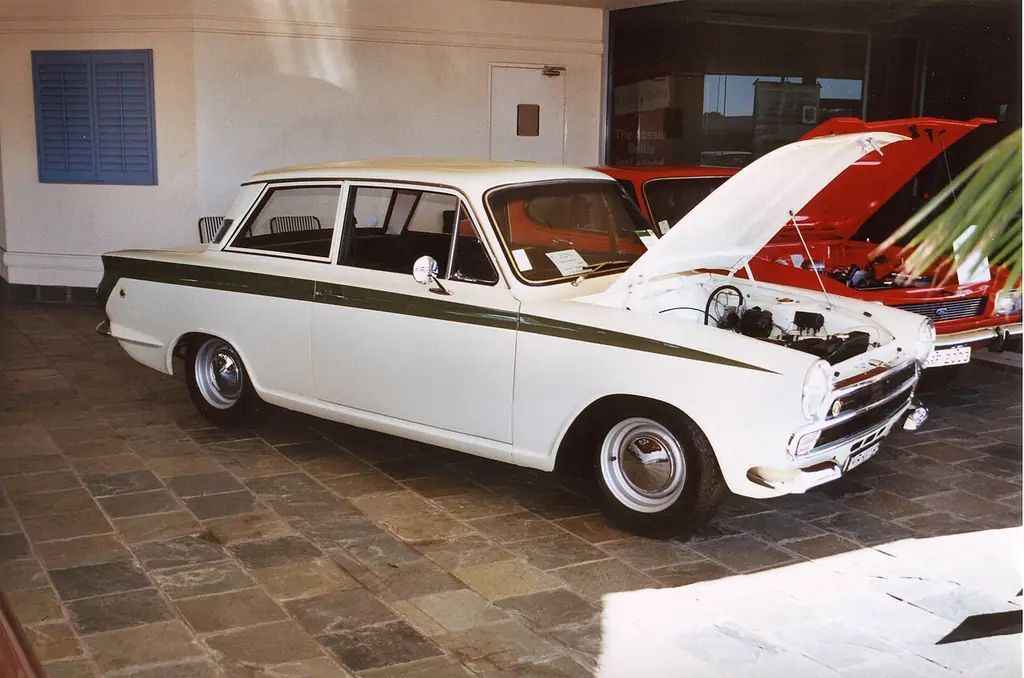
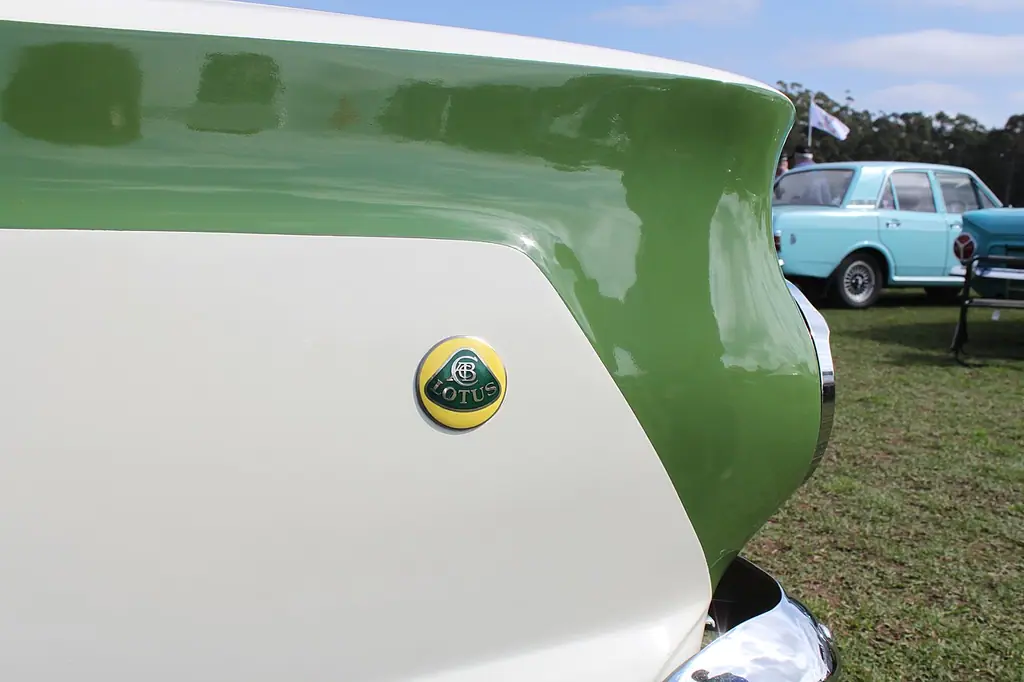
Photo: Jeremy from Sydney, Australia · CC BY 2.0
Contents
01Overview
At a glance
- Built
- 3,306 Built
- Years
- 1963–1966
- Engine
- Inline four, DOHC · 1,558 cc / 1.6 LFactory: 1,558 cc
- Power
- 78.3 kW / 106 PSFactory: 105 hp · converted
- Top speed
- Not yet verified
- Body
- Not yet verified
- Designer
- Not yet verified
- In this archive
- Not yet verified
- Surviving
- Not yet verified
Sources and any conflicting figures are in the sections below.
Why it matters
The Mk1 Lotus Cortina put Lotus's twin-cam engine into a two-door Cortina so that Ford could homologate a lightweight saloon for Group 2 racing. It became one of the best-known performance saloons of the 1960s, and the Special Equipment cars are the rarest road versions.
How rare is it?
Six separate kinds of rarity – never combined into one number.
Each kind of rarity is rated separately and never combined.
Photos
Exterior, interior and detail photos with their licences.
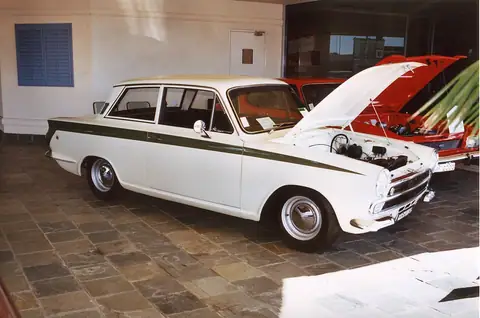 Ford Lotus Cortina Mk1 (road cars) (Wikimedia Commons search)
Photo: Jeremy from Sydney, Australia · CC BY 2.0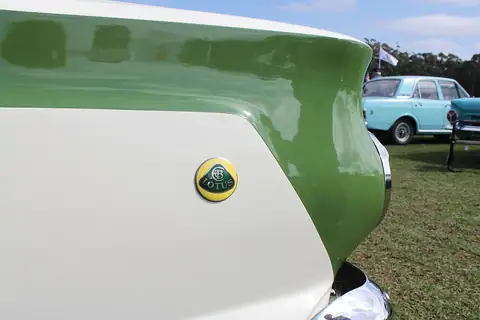 Ford Lotus Cortina Mk1 (road cars) (Wikimedia Commons search)
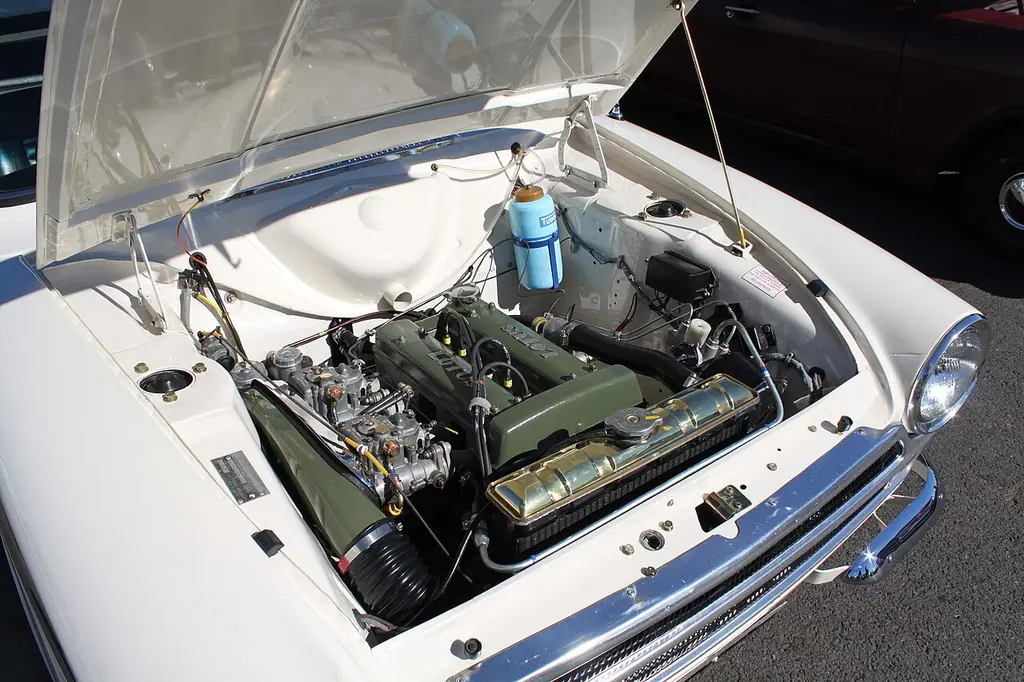
Photo: Jeremy from Sydney, Australia · CC BY 2.0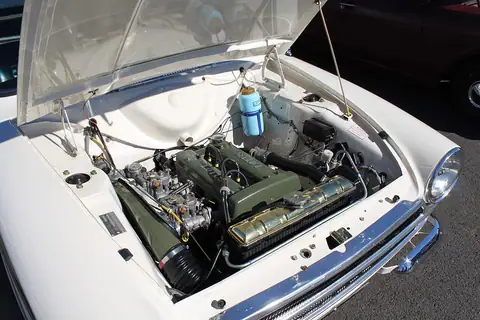 Ford Lotus Cortina Mk1 (road cars) (Wikimedia Commons search)
Photo: Jeremy from Sydney, Australia · CC BY 2.0


02Production & history
Production
Every figure says what it counts.
| What is counted | Figure | Basis | Status |
|---|---|---|---|
| Total model productionMkI Lotus Cortinas produced | 3,3061,2 | Factory production | Disputed |
Sources differ: Bonhams says 3,306 MkI Lotus Cortinas produced; Autozine says close to 3,000.
Independent counts (e.g. engine and colour) are never combined into a calculated figure. Surviving examples are never presented as original production.
History
Colin Chapman sought a replacement for the costly Coventry Climax engine, and designer Harry Mundy supplied a twin-cam head for the Ford Kent 1.5-litre four, enlarged to 1,600 cc for the Lotus Elan. Ford executive Walter Hayes then asked Chapman to fit it to 1,000 small two-door saloons. The car added lightweight body panels, lighter transmission and differential cases, close-ratio gearing, Girling front discs and a heavily modified suspension. Jim Clark's bobsled run at Cortina d'Ampezzo in 1963 helped publicise it.
Bonhams says 2,894 Mk1 cars were produced, of which 64 were built by the factory as Special Equipment models. These had semi-race camshafts, larger valves, a larger exhaust, adjustable rear dampers and 115 bhp instead of 105 bhp.
Variants
How each version differs from the standard Lotus Cortina Mk1 (road cars).
No variants documented yet. Have a source? Contribute it.
03Specifications
Technical specifications
Engine
| Engine family | Ford Kent 1500 block with Lotus twin-cam head designed by Harry Mundy3 Independently researched |
|---|---|
| Engine code | Not yet verified |
| Layout | Inline four, DOHC3 Independently researched |
| Displacement | 1,558 cc / 1.6 LFactory: 1,558 cc3 Independently researched |
| Bore | Not yet verified |
| Stroke | Not yet verified |
| Compression ratio | Not yet verified |
| Fuel system | Not yet verified |
| Power | 78.3 kW / 106 PSFactory: 105 hp · converted4 Independently researchedStandard output implied by the Special Equipment upgrade to 115 bhp "from 105". The 180 bhp quoted in the 1965 lot refers to a different, probably modified car. |
| Power at | Not yet verified |
| Torque | Not yet verified |
Transmission & drivetrain
| Gearbox | Not yet verified |
|---|---|
| Gears | 42 Independently researched |
| Driven wheels | RWD2 Independently researchedRear-wheel drive inferred from the driven live rear axle described in S2. |
Chassis, body & dimensions
| Chassis | Not yet verified |
|---|---|
| Front suspension | Not yet verified |
| Rear suspension | Live axle located by trailing arms and an A-bracket, coil springs, aluminium differential housing2 Independently researched |
| Brakes | Girling front discs3 Independently researched |
| Steering | Not yet verified |
| Body construction | Ford Type 74 two-door monocoque, modified by Lotus5 Independently researched |
| Wheelbase | Not yet verified |
| Length | Not yet verified |
| Width | Not yet verified |
| Height | Not yet verified |
| Front track | Not yet verified |
| Rear track | Not yet verified |
| Kerb weight | Not yet verified |
| Dry weight | Not yet verified |
Performance
| Maximum speed | Not yet verified |
|---|---|
| 0–100 km/h | Not yet verified |
| Fuel tank | Not yet verified |
“Not yet verified” means no source has been checked for that value yet. Nothing is estimated to fill a gap.
04Colours & options
Factory colours & interiors
Original paint and trim, with the number of cars in each where a source gives it.
Not yet documented. Have a source? Contribute it.
Factory options & codes
Codes are shown exactly as written by the manufacturer.
Not yet documented. Have a source? Contribute it.
05Individual cars
Chassis register
Every documented car, with its colours, history and where it is now. Open a row for the full record. Known chassis are not automatically authenticated originals.
Not yet documented. Have a source? Contribute it.
Competition history
Every race result of the individual cars, in date order. Click a chassis number to open its full record in the register.
Not yet documented. Have a source? Contribute it.
Auction & sale history
Documented public sales of the individual cars. Click a chassis number to open its full record in the register.
Not yet documented. Have a source? Contribute it.
See one in person
Museums where an example of this car can be seen.
No example is documented on public display yet. Have a source? Contribute it.
06Reference
Identification guide
How to tell an original from a replica or later conversion.
Special Equipment cars are marked by green cam covers, a 'Special Equipment' script badge on the rear body panel and a leather-covered Lotus wood-rim steering wheel from April 1964. They also have Irvine aircraft-specification seat belts and adjustable rear dampers. Cars are typically Ermine White with a green stripe. The cached lots show different chassis number formats: Z74D424157 on a 1964 car, BA74EK59800 on a 1965 car, and 4362065 on a 1966 car, which the Lotus Cortina Register places as the 2,065th right-hand-drive example. Rebuilds around a genuine Lotus Cortina bodyshell exist, so registry confirmation of the chassis number matters.
Sources
Each number links to the exact facts it supports.
-
1
Bonhams lot 373: 1965 Ford Lotus Cortina Competition Level B
- 3306 MkI Lotus Cortinas produced
-
2
Ford Cortina Level B Autozine
- close to 3000 cars were built to satisfy demand
- Lotus Elan's 1558cc twin-cam engine and close-ratio 4-speed gearbox
- the Lotus version located the live axle by a pair of trailing arms
- Lotus version located the live axle by a pair of trailing arms and an A-bracket
-
3
1965 Lotus Cortina Mk I, Quail Lodge 2015 Level C Bonhams · 2015-08-14
- twin-cam head for the Ford Kent 1.5-liter four-cylinder motor
- 1,558cc DOHC Inline 4-Cylinder Engine
- Girling front disc brakes
-
4
1964 Ford Lotus Cortina Mk1 Special Equipment, Beaulieu 2006 Level C Bonhams · 2006-09-09
- 115 bhp (up-rated from 105)
-
5
Guide: Lotus Type 28 / Ford Cortina Mk1 Level A Supercar Nostalgia
- Ford's standard Type 74 two-door monocoque bodyshell was much-modified
Keep exploring
More from Ford
-
Ford · 1934
Edsel Ford 1934 Model 40 Special Speedster
1 Built
-
Ford · 1896
Quadricycle
1 Built
-
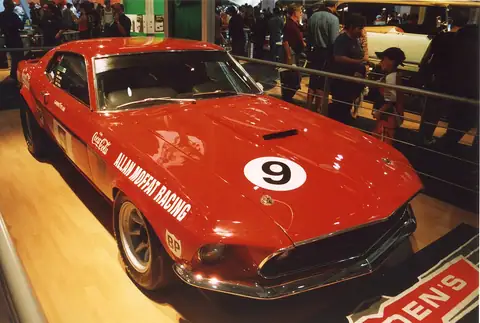
Ford · 1969
Mustang Boss 302 Trans-Am (Shelby team, 1969)
3 Built
-
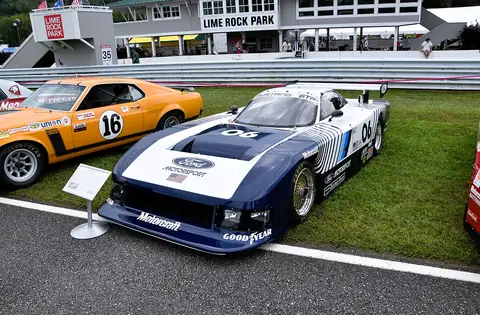
Ford
Mustang GTP (1983-1985)
3 Built
More from United States
-
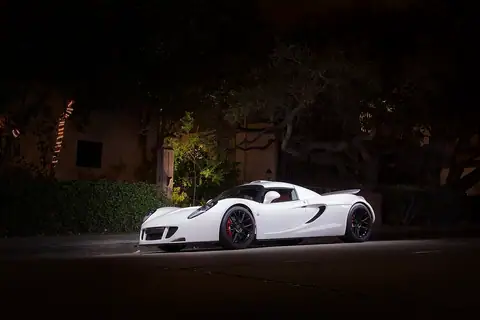
Hennessey
Venom GT
13 Built
-
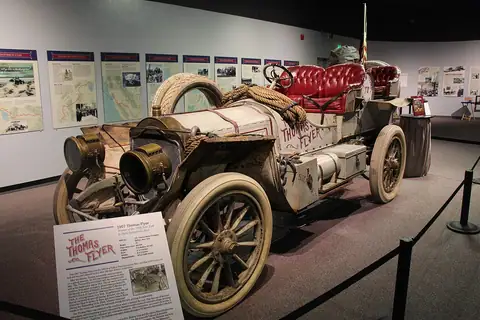
Thomas · 1907–1908
Flyer (1908 New York–Paris winner)
1 Built
-
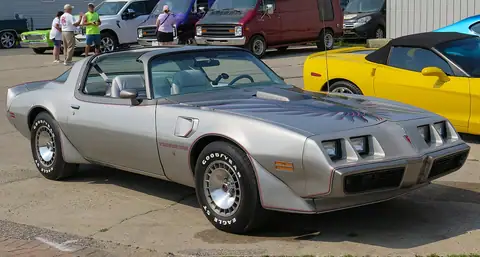
Pontiac · 1979
Trans Am 10th Anniversary Edition (1979)
7,500 Built
-
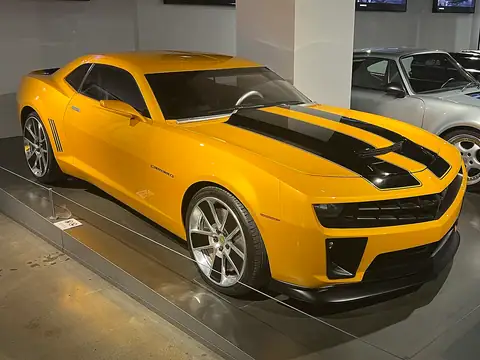
Chevrolet
Camaro concept "Bumblebee" (Transformers: Age of Extinction studio-built car)
Production not yet verified
140 other makes from United StatesAC PropulsionAcuraAllstateAMCAmerican LaFranceAmerican MotorsAmerican UnderslungApteraArmstrongArnoltAuburnBaldwin-MotionBantamBarris KustomsBendixBerger ChevroletBill ThomasBollingerBremerBuckeyeBuffumBuickCadillacCallawayCastleCheckerChevroletChristieChryslerClenetCodaColumbiaConsulierCordCunninghamCzingerDana ChevroletDean JeffriesDeSotoDetroit ElectricAll makes →