Makes › Frazer Nash › Le Mans › Le Mans Replica · Factory competition · 1949–1951 Ultra Rare
Frazer Nash
Le Mans Replica
Post-war competition two-seater named after 1949 Le Mans 3rd place
Contents
01Overview
At a glance
- Built
- 50 Built
- Years
- 1949–1951
- Engine
- Bristol OHV inline six · 1,971 cc / 2.0 LFactory: 1,971 cc
- Power
- 93.2 kW / 127 PSFactory: 125 hp · converted
- Top speed
- Not yet verified
- Body
- Not yet verified
- Designer
- Not yet verified
- In this archive
- Not yet verified
- Surviving
- Not yet verified
Sources and any conflicting figures are in the sections below.
Why it matters
The Le Mans Replica was Frazer Nash's best-known post-war competition two-seater, a factory-built duplicate of the car Norman Culpan and H.J. Aldington raced at Le Mans in 1949. Around 50 were built out of just over 400 Frazer Nashes in total, and the model won the 1951 Targa Florio and at Sebring in 1952.
How rare is it?
Six separate kinds of rarity – never combined into one number.
Each kind of rarity is rated separately and never combined.
02Production & history
Production
Every figure says what it counts.
| What is counted | Figure | Basis | Status |
|---|---|---|---|
| Total model productionapprox. Le Mans Replicas among c.400 Frazer Nashes (sources also cite 34) | 501 | Factory production | Independently researched |
Independent counts (e.g. engine and colour) are never combined into a calculated figure. Surviving examples are never presented as original production.
History
The model was named in honour of Culpan and Aldington's 1949 Le Mans performance, and customers could buy a replica of that car directly from the factory. It used Frazer Nash's 200-series parallel-tube chassis with leaf-spring front suspension and the Bristol 1,971 cc overhead-valve six-cylinder engine with a four-speed gearbox. Wins in the 1951 Targa Florio and at Sebring in 1952 cemented its reputation, and only around 50 were made.
Variants
How each version differs from the standard Le Mans Replica.
No variants documented yet. Have a source? Contribute it.
03Specifications
Technical specifications
Engine
| Engine family | Not yet verified |
|---|---|
| Engine code | Not yet verified |
| Layout | Bristol OHV inline six2 Independently researched |
| Cylinders | 63 Independently researched |
| Displacement | 1,971 cc / 2.0 LFactory: 1,971 cc2 Independently researched |
| Bore | 66 mmFactory: 66 mm3 Independently researched |
| Stroke | 96 mmFactory: 96 mm3 Independently researched |
| Compression ratio | 9.0:13 Independently researched |
| Valvetrain | 2 valves per cylinder, OHV3 Independently researched |
| Fuel system | Three Solex carburettors3 Independently researched |
| Induction | Naturally aspirated3 Independently researched |
| Power | 93.2 kW / 127 PSFactory: 125 hp · converted2 Independently researchedSource states bhp (brake horsepower, mechanical). |
| Power at | 5,500 rpm3 Independently researched |
| Torque | Not yet verified |
Transmission & drivetrain
| Gearbox | Four-speed manual2 Independently researched |
|---|---|
| Gears | 43 Independently researched |
| Driven wheels | Rear3 Independently researched |
Chassis, body & dimensions
| Chassis | Steel ladder frame3 Independently researchedExisting page text mentions a 200-series parallel-tube chassis; UCP says the tubular frame came with the Mk2 (1952). |
|---|---|
| Front suspension | Lower wishbones, transverse leaf spring, tubular shock absorbers3 Independently researched |
| Rear suspension | Live axle, torsion bar springs, tubular shock absorbers3 Independently researched |
| Brakes | Hydraulic drums, all round3 Independently researched |
| Steering | Not yet verified |
| Body construction | Aluminium body3 Independently researched |
| Wheelbase | 2,438 mmFactory: 2,438 mm3 Independently researched |
| Length | 3,835 mmFactory: 3,835 mm3 Independently researched |
| Width | 1,499 mmFactory: 1,499 mm3 Independently researched |
| Height | Not yet verified |
| Front track | 1,219 mmFactory: 1,219 mm3 Independently researched |
| Rear track | 1,219 mmFactory: 1,219 mm3 Independently researched |
| Kerb weight | 673 kgFactory: 673 kg3 Independently researchedSource does not state dry or kerb basis. |
| Dry weight | Not yet verified |
Performance
| Maximum speed | Not yet verified |
|---|---|
| 0–100 km/h | Not yet verified |
| Standing ¼ mile | 16 s4 Independently researchedPeriod claim quoted from Denis Jenkinson, not a measured value. |
| Fuel tank | Not yet verified |
“Not yet verified” means no source has been checked for that value yet. Nothing is estimated to fill a gap.
04Colours & options
Factory colours & interiors
Original paint and trim, with the number of cars in each where a source gives it.
Not yet documented. Have a source? Contribute it.
Factory options & codes
Codes are shown exactly as written by the manufacturer.
Not yet documented. Have a source? Contribute it.
05Individual cars
Chassis register
Every documented car, with its colours, history and where it is now. Open a row for the full record. Known chassis are not automatically authenticated originals.
Not yet documented. Have a source? Contribute it.
Competition history
Every race result of the individual cars, in date order. Click a chassis number to open its full record in the register.
Not yet documented. Have a source? Contribute it.
Auction & sale history
Documented public sales of the individual cars. Click a chassis number to open its full record in the register.
Not yet documented. Have a source? Contribute it.
See one in person
Museums where an example of this car can be seen.
No example is documented on public display yet. Have a source? Contribute it.
06Reference
Identification guide
How to tell an original from a replica or later conversion.
The original Le Mans Replica had a steel ladder frame, an aluminium cycle-fender body, the 1,971 cc six with three Solex carburettors and 9.0:1 compression. The tubular frame arrived later with the Mk2, and the closed Le Mans Coupe used that newer frame, so a car with a ladder frame, 2,438 mm wheelbase and 1,219 mm track fits the early Replica.
Sources
Each number links to the exact facts it supports.
-
1
RM Sotheby's lot catalogue: 1954 Frazer Nash Le Mans Replica FN210 (London 2016) Level B
- 50 approx. Le Mans Replicas among c.400 Frazer Nashes (sources also cite 34)
-
2
1954 Frazer Nash Le Mans Replica – London 2016 Level B RM Sotheby's
- 1,971 cc OHV inline six-cylinder engine
- 125 bhp
- four-speed manual transmission
-
3
Frazer Nash Le Mans Replica - Specifications Level C Wouter Melissen · Ultimatecarpage.com · 2014-07-03
- BMW Straight 6 (Specifications)
- 66.0 mm / 96.0 mm (Specifications)
- Compression 9.0:1 (Specifications)
- 2 valves / cylinder, OHV (Specifications)
- 3 Solex Carburettors (Specifications)
- Naturally Aspirated (Specifications)
- 125 bhp @ 5,500 rpm (Specifications)
- 4 speed Manual (Specifications)
- Rear wheel drive (Specifications)
- Chassis steel ladder frame (Specifications)
- lower wishbones, transverse leaf spring, tubular shock absorbers (Specifications)
- live axle, torsion bar springs, tubular shock absorbers (Specifications)
- hydraulic drums, all-round (Specifications)
- Body aluminium (Specifications)
- 2,438 mm (96 in) (Specifications)
- 3,835 mm (151 in) (Specifications)
- 1,499 mm (59 in) (Specifications)
- 1,219 mm (48 in) (Specifications)
- Weight 673 kilo / 1,484 lbs (Specifications)
-
4
1950 Frazer Nash Le Mans Replica Level C Supercars.net
- standing-start quarter-mile in 16 seconds
Keep exploring
More from Frazer Nash
-
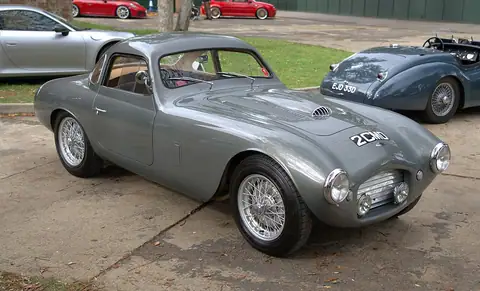
Frazer Nash · 1953–1955
Le Mans Coupé
9 Built
-
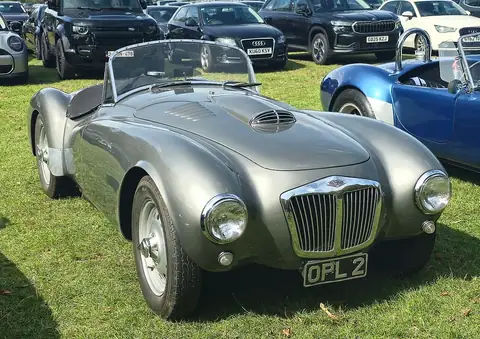
Frazer Nash
Mille Miglia
11 Built
-
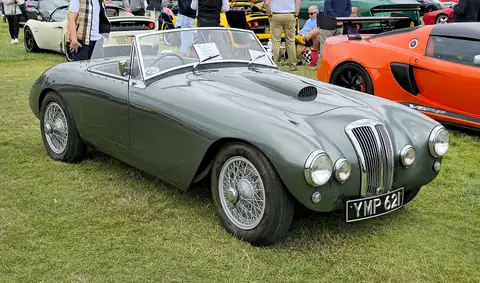
Frazer Nash · 1952–1954
Targa Florio
14 Built
-
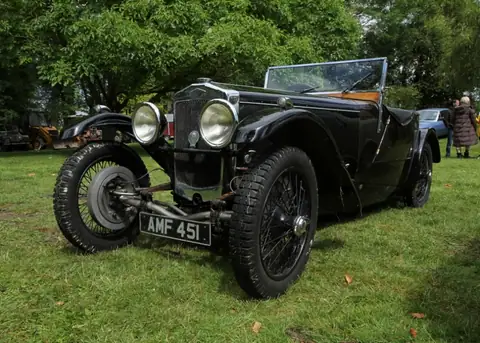
Frazer Nash · 1932–1934
Colmore
19 Built
See all 11 cars by Frazer Nash →
More from United Kingdom
-
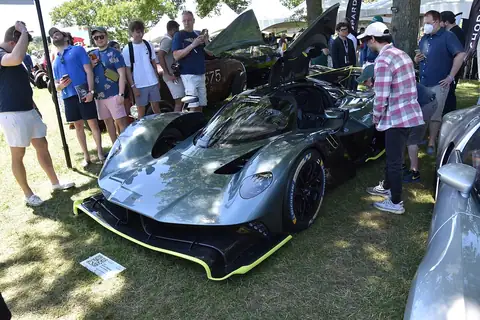
Aston Martin · 2021–2022
Valkyrie AMR Pro
42 Built
-
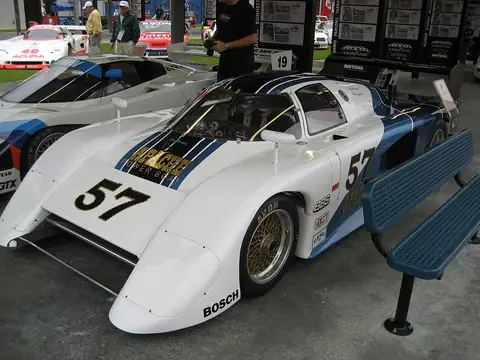
March · 1983
83G (1983)
Production not yet verified
-
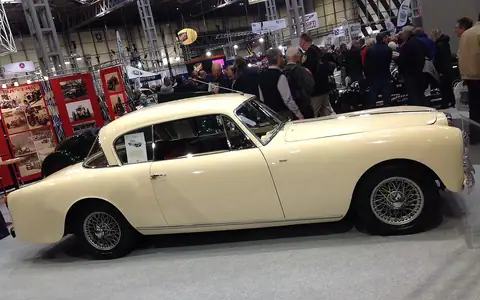
Alvis · 1956–1958
TC108G (Graber design, Willowbrook)
37 Built
-
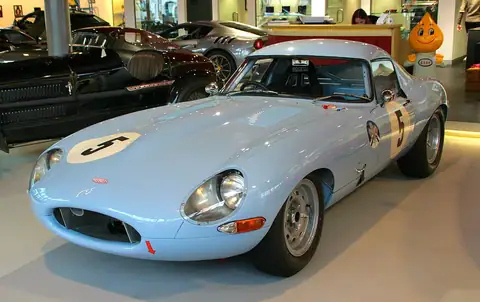
Jaguar · 1962
E-type Low Drag Coupé (CUT 7)
2 Built
134 other makes from United KingdomACAiredaleAlan Mann RacingAllardAlvisArabArashArielArmstrong SiddeleyArrowsAscariAston MartinAtalantaAtlantisAustinAustin-HealeyBedfordBentleyBerkeleyBluebirdBMCBondBrabhamBristolBritish LeylandBroadspeedBrookeBrough SuperiorCampbell-RailtonCaparoCaterhamChevronConnaughtCooperCrayfordDaimlerDavid BrownDawsonDeLoreanDuttonAll makes →