Makes › Jaguar › C-type (XK120C) · Factory competition Extremely Rare
Jaguar
C-type (XK120C)
Works and customer competition cars; Le Mans winner 1951 and 1953
Still being researched: full specifications. Everything shown is checked against the cited sources. Know more? Send us a source.
Contents
01Overview
At a glance
- Built
- 53 Built
- Years
- Not yet verified
- Engine
- Front-mounted XK inline six · 3,400 cc / 3.4 LFactory: 3.4 L
- Power
- 149 kW / 203 PSFactory: 200 hp · converted
- Top speed
- Not yet verified
- Body
- Not yet verified
- Designer
- Malcolm Sayer (body)
- In this archive
- Not yet verified
- Surviving
- Not yet verified
Sources and any conflicting figures are in the sections below.
Why it matters
The C-type was Jaguar's first purpose-built sports-racer, combining the XK engine with a lightweight tubular space frame and aerodynamic body. It won Le Mans on its 1951 debut, the first British victory there in almost 20 years, and won again in 1953; only 53 were built.
How rare is it?
Six separate kinds of rarity – never combined into one number.
Each kind of rarity is rated separately and never combined.
02Production & history
Production
Every figure says what it counts.
| What is counted | Figure | Basis | Status |
|---|---|---|---|
| Total model productionexamples built (3 initial works cars, c.43 customer cars) | 531,2 | Factory production | Factory reported |
Independent counts (e.g. engine and colour) are never combined into a calculated figure. Surviving examples are never presented as original production.
History
Three factory cars were built first for the works team and debuted at Le Mans in June 1951, where Peter Walker and Peter Whitehead won outright. Jaguar then built approximately 43 customer cars. The cars used a 3.4-litre XK engine with a new cylinder head, high-lift camshafts and racing pistons, clothed in a body by Malcolm Sayer. The C-type won Le Mans again in 1953.
Variants
How each version differs from the standard C-type (XK120C).
No variants documented yet. Have a source? Contribute it.
03Specifications
Technical specifications
Engine
| Engine family | Not yet verified |
|---|---|
| Engine code | Not yet verified |
| Layout | Front-mounted XK inline six3 Independently researched |
| Displacement | 3,400 cc / 3.4 LFactory: 3.4 L3 Independently researched |
| Bore | Not yet verified |
| Stroke | Not yet verified |
| Compression ratio | Not yet verified |
| Fuel system | SU carburettors on this later production car1 |
| Power | 149 kW / 203 PSFactory: 200 hp · converted3 Independently researched |
| Power at | Not yet verified |
| Torque | Not yet verified |
Transmission & drivetrain
| Manufacturer | XK120 transmission carried over1 |
|---|---|
| Gearbox | Not yet verified |
| Gears | Not yet verified |
| Driven wheels | Not yet verified |
Chassis, body & dimensions
| Chassis | Tubular space frame3 Independently researched |
|---|---|
| Front suspension | Not yet verified |
| Rear suspension | Transverse torsion bars1 |
| Brakes | Drum brakes on later production cars such as this one; Dunlop disc brakes on the 1953 works cars1 |
| Steering | Not yet verified |
| Body construction | Not yet verified |
| Wheelbase | Not yet verified |
| Length | Not yet verified |
| Width | Not yet verified |
| Height | Not yet verified |
| Front track | Not yet verified |
| Rear track | Not yet verified |
| Kerb weight | Not yet verified |
| Dry weight | Not yet verified |
Performance
| Maximum speed | Not yet verified |
|---|---|
| 0–100 km/h | Not yet verified |
| Fuel tank | Not yet verified |
“Not yet verified” means no source has been checked for that value yet. Nothing is estimated to fill a gap.
04Colours & options
Factory colours & interiors
Original paint and trim, with the number of cars in each where a source gives it.
Not yet documented. Have a source? Contribute it.
Factory options & codes
Codes are shown exactly as written by the manufacturer.
Not yet documented. Have a source? Contribute it.
05Individual cars
Chassis register
Every documented car, with its colours, history and where it is now. Open a row for the full record. Known chassis are not automatically authenticated originals.
Not yet documented. Have a source? Contribute it.
Competition history
Every race result of the individual cars, in date order. Click a chassis number to open its full record in the register.
Not yet documented. Have a source? Contribute it.
Auction & sale history
Documented public sales of the individual cars. Click a chassis number to open its full record in the register.
Not yet documented. Have a source? Contribute it.
See one in person
Museums where an example of this car can be seen.
No example is documented on public display yet. Have a source? Contribute it.
06Reference
Identification guide
How to tell an original from a replica or later conversion.
Originals have an all-new lightweight tubular space frame and the elliptical grille, and carry XKC chassis numbers with matching engine (E-series), gearbox and body numbers recorded by the factory; the catalogued XKC 007, for example, has engine E 1009-8 and body K 1009.
Sources
Each number links to the exact facts it supports.
-
1
1953 Jaguar C-type (NDU 289) Level A Jaguar Daimler Heritage Trust
- of the 53 cars built, 43 were sold to private owners
- still fitted with SU carburettors and drum brakes
- Using the XK120’s proven engine, transmission and front suspension
- the rear suspension now used transverse torsion bars
-
2
RM Sotheby's lot catalogue: 1952 Jaguar C-Type XKC 007 (New York 2017) Level B
- 53 examples built (3 initial works cars, c.43 customer cars)
-
3
1952 Jaguar C-Type – New York ICONS 2017 Level B RM Sotheby's
- 3.4-liter engine
- develop a formidable 200 hp
- all-new lightweight tubular space frame
Keep exploring
More from Jaguar
-
Jaguar · 1966
XJ13
1 Built
-
Jaguar · 1992
XJ40 Prototype Shooting Brake (J199 TAC)
1 Built
-
Jaguar · 1988
XJ42 prototype (convertible)
1 Built
-
Jaguar · 1962
E-type Low Drag Coupé (CUT 7)
2 Built
More from United Kingdom
-
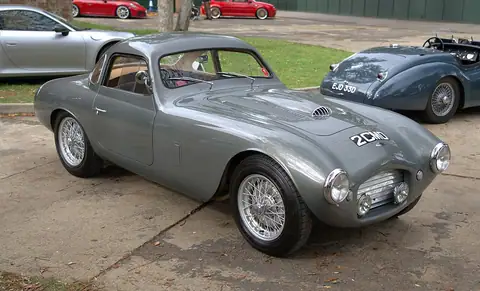
Frazer Nash · 1953–1955
Le Mans Coupé
9 Built
-
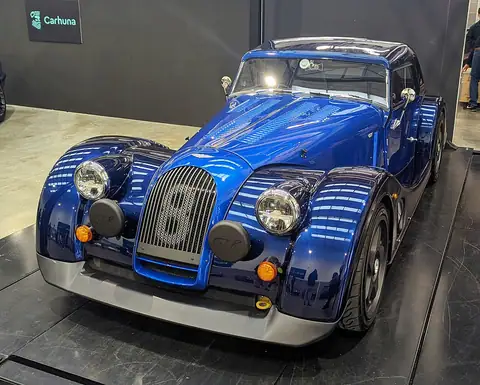
Morgan · 2021–2022
Plus 8 GTR
9 Built
-
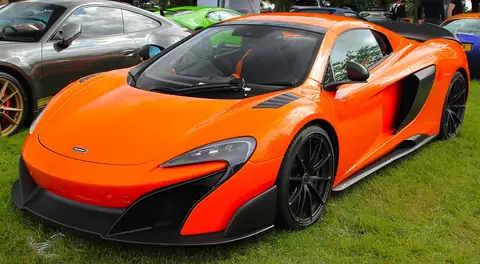
McLaren · 2015–2016
675LT
500 Built
-
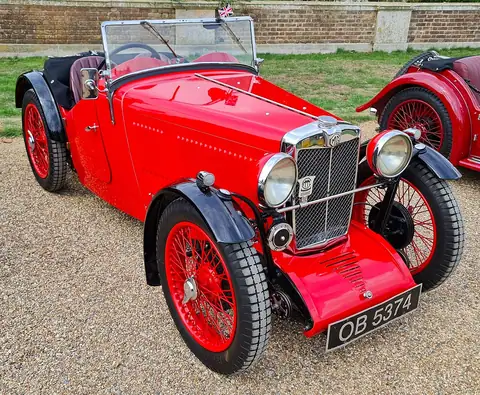
MG
MG J2 (1932-1934)
Production not yet verified
131 other makes from United KingdomACAiredaleAlan Mann RacingAllardAlvisArabArashArielArmstrong SiddeleyArrowsAscariAston MartinAtalantaAtlantisAustinAustin-HealeyBedfordBentleyBerkeleyBluebirdBMCBondBrabhamBristolBritish LeylandBroadspeedBrookeBrough SuperiorCampbell-RailtonCaparoCaterhamChevronConnaughtCooperCrayfordDaimlerDavid BrownDawsonDeLoreanDuttonAll makes →