Makes › Lotus › Eleven (all versions) · Factory competition · 1956–1958 Very Rare
Lotus
Eleven (all versions)
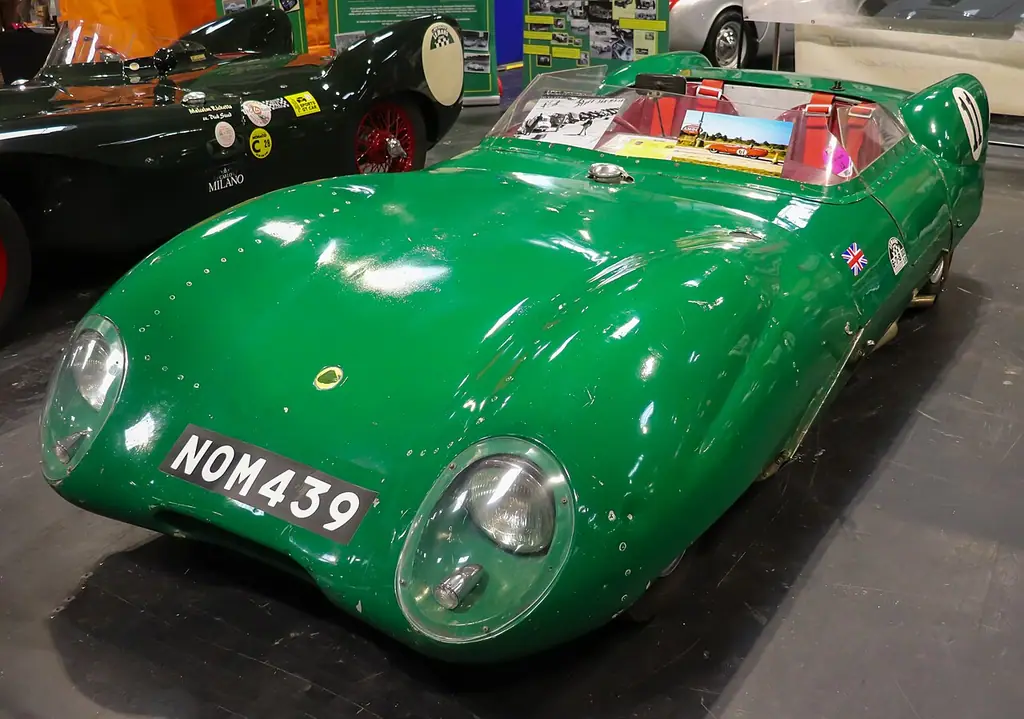
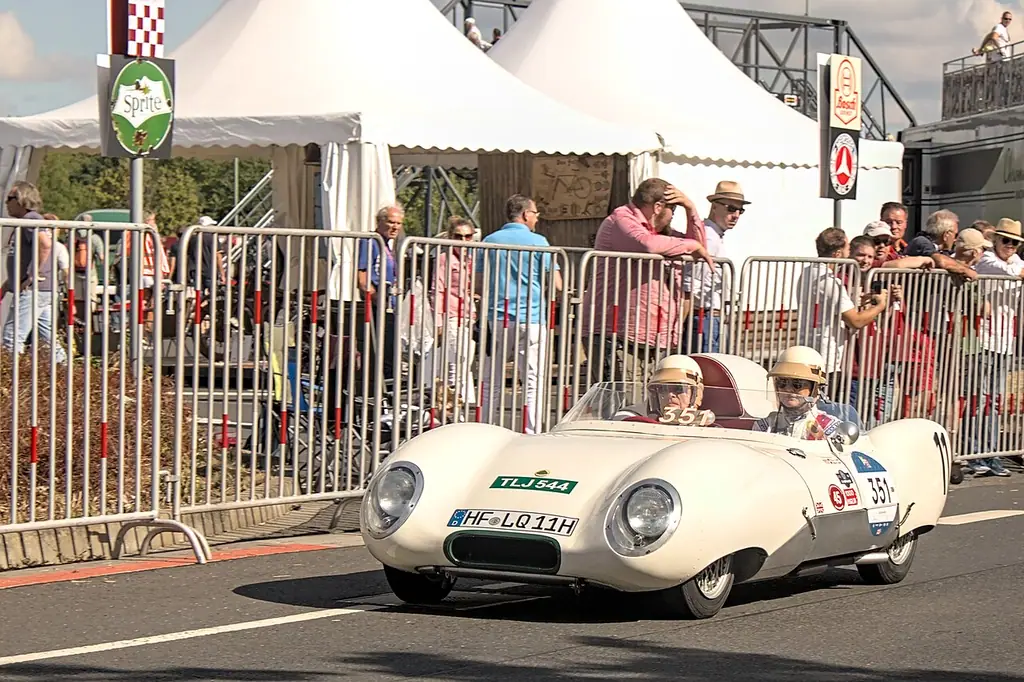
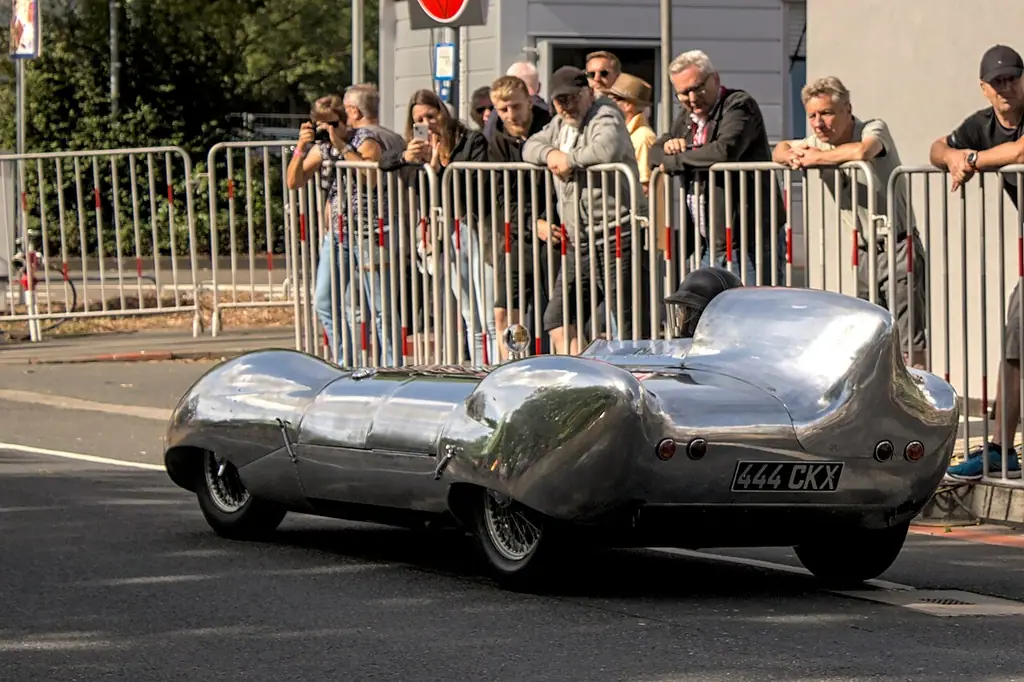
Chapman/Costin sports racer – Le Mans, Club and Sport variants
Still being researched: identification guide. Everything shown is checked against the cited sources. Know more? Send us a source.
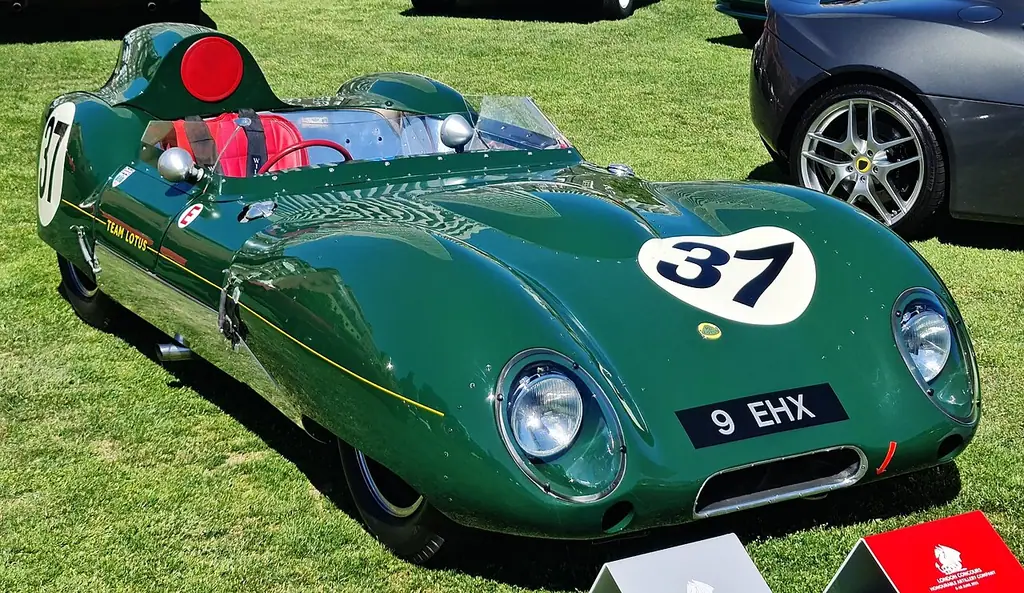
Photo: MrWalkr · CC BY-SA 4.0
Contents
01Overview
At a glance
- Built
- 270 Built
- Years
- 1956–1958
- Engine
- Inclined about 10 degrees to fit the bay · 1,098 cc / 1.1 LFactory: 1,098 cc
- Power
- 26.8 kW / 36.5 PSFactory: 36 hp · converted
- Top speed
- 266 km/hFactory: 165 mph · converted
- Body
- Not yet verified
- Designer
- Frank Costin (aerodynamic body design), for Colin Chapman's Lotus
- In this archive
- Not yet verified
- Surviving
- Not yet verified
Sources and any conflicting figures are in the sections below.
Why it matters
The Eleven was Colin Chapman's small, light and aerodynamic customer sports-racing car that helped establish Lotus as a serious maker of competition cars. It won almost 150 races in its first season, 1956, and took the 1100 cc class at Le Mans.
How rare is it?
Six separate kinds of rarity – never combined into one number.
Each kind of rarity is rated separately and never combined.
Photos
Exterior, interior and detail photos with their licences.
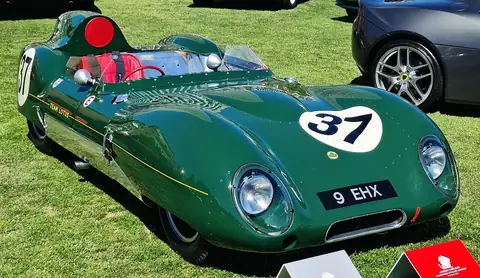 Lotus Eleven (all versions) (Wikimedia Commons: Lotus Eleven)
Photo: MrWalkr · CC BY-SA 4.0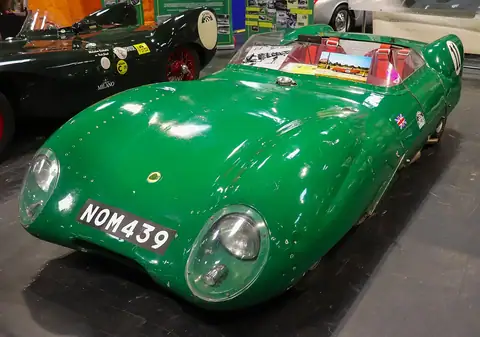 Lotus Eleven (all versions) (Wikimedia Commons: Lotus Eleven)
Photo: Vauxford · CC BY-SA 4.0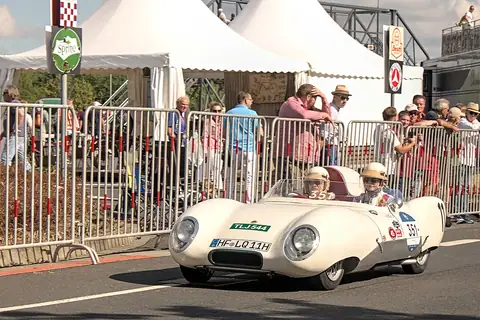 Lotus Eleven (all versions) (Wikimedia Commons: Lotus Eleven)
Photo: Alexander Migl · CC BY-SA 4.0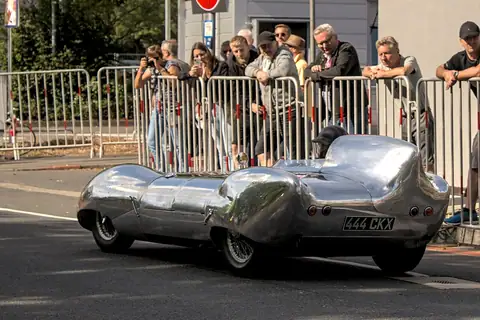 Lotus Eleven (all versions) (Wikimedia Commons: Lotus Eleven)
Photo: Alexander Migl · CC BY-SA 4.0


02Production & history
Production
Every figure says what it counts.
| What is counted | Figure | Basis | Status |
|---|---|---|---|
| Total model productionLotus Elevens of all versions produced, approximate (about 150 of them early Series 1) | 2701 | Factory production | Independently researched |
Independent counts (e.g. engine and colour) are never combined into a calculated figure. Surviving examples are never presented as original production.
History
The Eleven began production in 1956 as Chapman's next sports racer after the Mark VI. It took the chequered flag almost 150 times in 1956 alone. A Series 2 version with new front suspension was introduced in spring 1957.
In 1957 an Eleven won its class at Sebring, and at Le Mans one Eleven was first in the 1100 cc class with other Elevens second and fourth. In 1958 Elevens swept their class at Sebring. Production ended in 1958.
Variants
How each version differs from the standard Eleven (all versions).
No variants documented yet. Have a source? Contribute it.
03Specifications
Technical specifications
Engine
| Engine family | Coventry Climax four (Sport); Ford 10 (Club)2 Independently researchedFrom an enthusiast source (level D) – not yet confirmed by the maker or a registry. |
|---|---|
| Engine code | Not yet verified |
| Layout | Inclined about 10 degrees to fit the bay2 Independently researchedFrom an enthusiast source (level D) – not yet confirmed by the maker or a registry. |
| Cylinders | 42 Independently researchedFrom an enthusiast source (level D) – not yet confirmed by the maker or a registry. |
| Displacement | 1,098 cc / 1.1 LFactory: 1,098 cc2 Independently researchedSport model. Club model engine is the Ford 10 unit. From an enthusiast source (level D) – not yet confirmed by the maker or a registry. |
| Bore | Not yet verified |
| Stroke | Not yet verified |
| Compression ratio | Not yet verified |
| Fuel system | Not yet verified |
| Power | 26.8 kW / 36.5 PSFactory: 36 hp · converted2 Independently researchedClub model only. From an enthusiast source (level D) – not yet confirmed by the maker or a registry. |
| Power at | Not yet verified |
| Torque | Not yet verified |
Transmission & drivetrain
| Gearbox | Gearbox built in unit with the engine, based on an Austin A30 case2 Independently researchedFrom an enthusiast source (level D) – not yet confirmed by the maker or a registry. |
|---|---|
| Gears | Not yet verified |
| Driven wheels | Not yet verified |
Chassis, body & dimensions
| Chassis | Light steel tubular structure with stressed aluminium panels3 Independently researched |
|---|---|
| Front suspension | Conventional swing axle with a lower pivot point, coil-over dampers2 Independently researchedFrom an enthusiast source (level D) – not yet confirmed by the maker or a registry. |
| Rear suspension | Club and Sport: live axle; Le Mans: de Dion axle3 Independently researched |
| Brakes | Club and Sport: drum brakes; Le Mans: four-wheel Girling inboard discs3 Independently researched |
| Steering | Shortened Morris Minor rack and pinion, 1.75 turns lock to lock3 Independently researched |
| Body construction | Not yet verified |
| Wheelbase | Not yet verified |
| Length | Not yet verified |
| Width | Not yet verified |
| Height | 686 mmFactory: 27 in · converted2 Independently researchedHeight at the base of the windscreen per source; not an overall roof height. From an enthusiast source (level D) – not yet confirmed by the maker or a registry. |
| Front track | Not yet verified |
| Rear track | Not yet verified |
| Kerb weight | Not yet verified |
| Dry weight | 617 kgFactory: 1,360 lb · converted3 Independently researched |
Performance
| Maximum speed | 266 km/hFactory: 165 mph · converted2 Independently researchedClaim for the Le Mans model; no test source in cache. From an enthusiast source (level D) – not yet confirmed by the maker or a registry. |
|---|---|
| 0–100 km/h | Not yet verified |
| Fuel tank | 36 LFactory: 9.5 gal-us · converted3 Independently researchedSource does not say which gallon (US site); optional 11-gallon tank for endurance racing. |
“Not yet verified” means no source has been checked for that value yet. Nothing is estimated to fill a gap.
04Colours & options
Factory colours & interiors
Original paint and trim, with the number of cars in each where a source gives it.
Not yet documented. Have a source? Contribute it.
Factory options & codes
Codes are shown exactly as written by the manufacturer.
Not yet documented. Have a source? Contribute it.
05Individual cars
Chassis register
Every documented car, with its colours, history and where it is now. Open a row for the full record. Known chassis are not automatically authenticated originals.
Not yet documented. Have a source? Contribute it.
Competition history
Every race result of the individual cars, in date order. Click a chassis number to open its full record in the register.
Not yet documented. Have a source? Contribute it.
Auction & sale history
Documented public sales of the individual cars. Click a chassis number to open its full record in the register.
Not yet documented. Have a source? Contribute it.
See one in person
Museums where an example of this car can be seen.
No example is documented on public display yet. Have a source? Contribute it.
06Reference
Identification guide
How to tell an original from a replica or later conversion.
Not yet documented. Have a source? Contribute it.
Sources
Each number links to the exact facts it supports.
-
1
Bonhams – 1956 Lotus Eleven Le Mans, chassis no. 220 Level B
- 270 Lotus Elevens of all versions produced, approximate (about 150 of them early Series 1)
-
2
1956 Lotus Eleven Level D conceptcarz.com
- all-new 1098cc aluminum Coventry Climax four-cylinder engine
- equipped with a modest 36hp Ford 10 engine
- mounted at about ten degrees to fit in the bay
- 1098cc aluminum Coventry Climax four-cylinder engine
- built in unit with the new gearbox, based on an Austin A30 case
- The front suspension was a conventional swing axle setup but with a lower pivot point
- 27 inches high at the base of the windscreen
- The Le Mans was capable of 165 mph in 1955
-
3
1956 Lotus Eleven Level C Conceptcarz.com (Daniel Vaughan, Feb 2020) · 2020-02-01
- stressed aluminum panels concealing a light steel tubular structure
- Both the Club and the Sport were given live rear axles
- de Dion rear axle
- Le Mans model had four-wheel Girling inboard disc brakes
- shortened rack-and-pinion steering system was sourced from the Morris Minor
- The Lotus Eleven weighed just 1,360 pounds
- The 9.5-gallon fuel tank was located on the driver's side
Keep exploring
More from Lotus
-
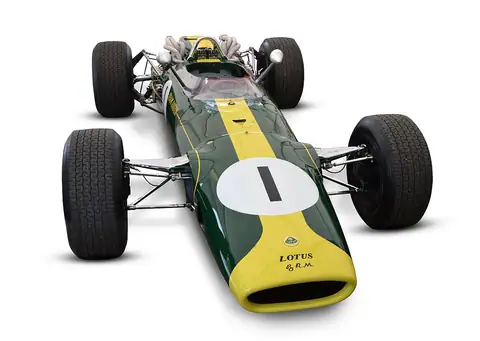
Lotus · 1966–1967
43
2 Built
-
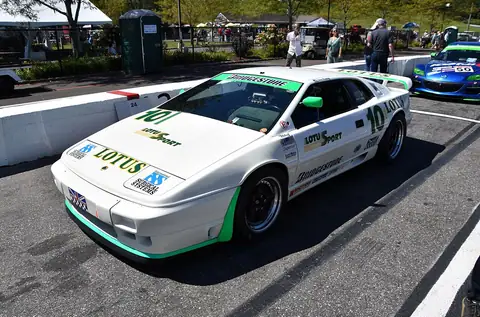
Lotus · 1990–1991
Esprit X180R
3 Built
-
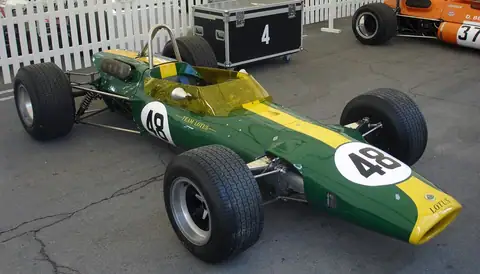
Lotus · 1967–1968
48
4 Built
-
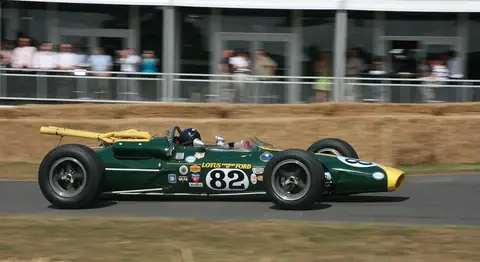
Lotus
38
8 Built
More from United Kingdom
-
Aston Martin · 2005
DBR9
Production not yet verified
-
Austin
Westminster (A110)
Production not yet verified
-
March
761 (1976)
Production not yet verified
-
Bentley
Brooklands (2008-2011)
550 Built
134 other makes from United KingdomACAiredaleAlan Mann RacingAllardAlvisArabArashArielArmstrong SiddeleyArrowsAscariAston MartinAtalantaAtlantisAustinAustin-HealeyBedfordBentleyBerkeleyBluebirdBMCBondBrabhamBristolBritish LeylandBroadspeedBrookeBrough SuperiorCampbell-RailtonCaparoCaterhamChevronConnaughtCooperCrayfordDaimlerDavid BrownDawsonDeLoreanDuttonAll makes →