Makes › Mazda › Eunos Cosmo (JC) · Rare production · 1990–1995 Limited Production
Mazda
Eunos Cosmo (JC)
Luxury coupé; only production car with a triple-rotor (20B) engine; Japan only
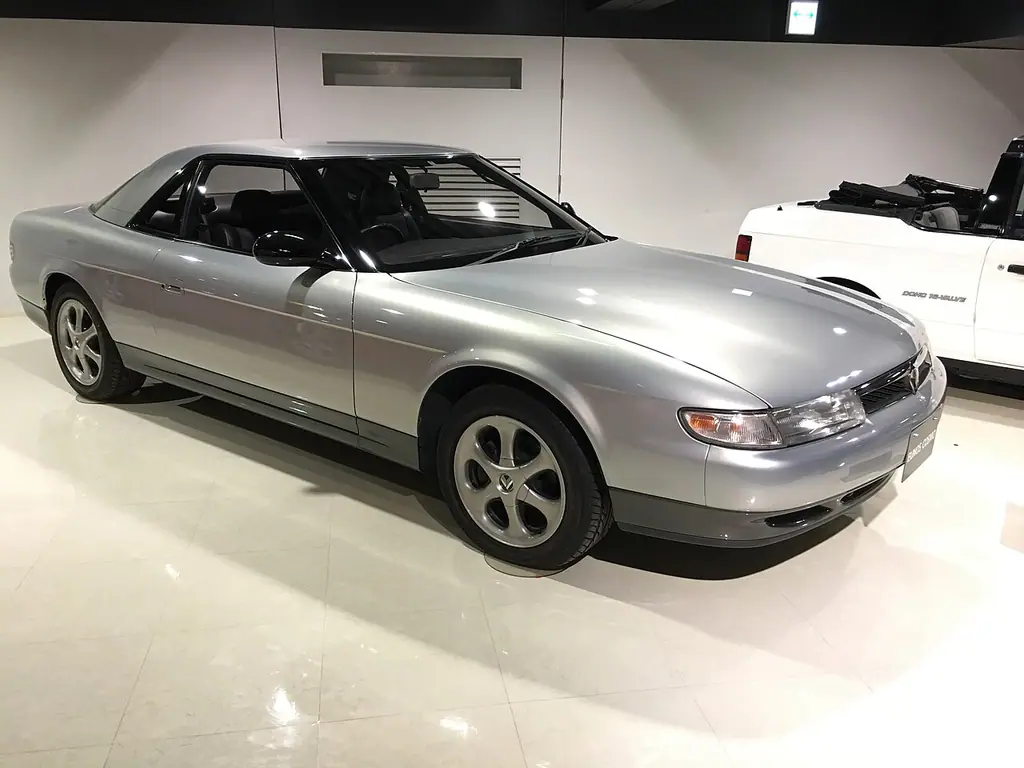
Photo: NAParish · CC BY-SA 2.0

Contents
01Overview
At a glance
- Built
- 8,875 Built
- Years
- 1990–1995
- Engine
- front engine, rear-wheel drive; two-rotor 13B or three-rotor 20B-REW, sequential twin turbo · 1,962 cc / 2.0 LFactory: 1,962 cc
- Power
- 206 kW / 280 PSFactory: 280 PS
- Top speed
- Not yet verified
- Body
- Not yet verified
- Designer
- Not yet verified
- In this archive
- Not yet verified
- Surviving
- Not yet verified
Sources and any conflicting figures are in the sections below.
Why it matters
The Eunos Cosmo was the third-generation Cosmo and the world's first mass-production car with a three-rotor engine and sequential twin turbochargers. It was also among the first cars with factory GPS navigation, and it used a dedicated platform that no other car shared.
How rare is it?
Six separate kinds of rarity – never combined into one number.
Each kind of rarity is rated separately and never combined.
02Production & history
Production
Every figure says what it counts.
| What is counted | Figure | Basis | Status |
|---|---|---|---|
| Total model productiontotal built | 8,8751,2 | Factory production | Registry reported |
Independent counts (e.g. engine and colour) are never combined into a calculated figure. Surviving examples are never presented as original production.
History
The Eunos Cosmo went on sale in Japan in April 1990 through the new Eunos dealer channel and remained on the market until 1995. It was offered as a two-door, four-seat coupe with a four-speed automatic only, with either a two-rotor 13B of 230 PS or the three-rotor 20B-REW of 280 PS. Mazda's table lists 8,875 cars built, without a split by engine.
A Mazda-supplied navigation and control system (CCS) was fitted to some cars, depending on grade and date. The car was sold only in Japan and stayed right-hand drive. Mazda later cancelled its Eunos plans during the Japanese financial downturn.
Variants
How each version differs from the standard Eunos Cosmo (JC).
No variants documented yet. Have a source? Contribute it.
03Specifications
Technical specifications
Engine
| Engine family | Not yet verified |
|---|---|
| Engine code | 20B-REW (three-rotor); 13B (two-rotor)1 Independently researched |
| Layout | front engine, rear-wheel drive; two-rotor 13B or three-rotor 20B-REW, sequential twin turbo1,3 Independently researched |
| Displacement | 1,962 cc / 2.0 LFactory: 1,962 cc1 Independently researched20B-REW. The 13B is 1,308 cc. Mazda's own booklet prints 654 cc x 2 for the 20B, which the source treats as a misprint. |
| Bore | Not yet verified |
| Stroke | Not yet verified |
| Compression ratio | Not yet verified |
| Fuel system | Not yet verified |
| Power | 206 kW / 280 PSFactory: 280 PS320B-REW, net. The two-rotor 13B is rated 230 PS (169 kW) at 6,500 rpm. |
| Power at | 6,500 rpm1 Independently researched |
| Torque | 402 Nm / 41 kgmFactory: 41 kgm320B-REW, net. |
| Torque at | 3,000 rpm1 Independently researched |
Transmission & drivetrain
| Gearbox | 4-speed automatic, rear-wheel drive1 Independently researched |
|---|---|
| Gears | 41 Independently researched |
| Driven wheels | rear1 Independently researched |
Chassis, body & dimensions
| Chassis | Not yet verified |
|---|---|
| Front suspension | double wishbone1 Independently researched |
| Rear suspension | multilink with twin dampers1 Independently researched |
| Brakes | ventilated discs front and rear (13B Type SX)1 Independently researched |
| Steering | Not yet verified |
| Body construction | Not yet verified |
| Wheelbase | 2,750 mmFactory: 2,750 mm1 Independently researched |
| Length | 4,815 mmFactory: 4,815 mm1 Independently researched |
| Width | 1,795 mmFactory: 1,795 mm1 Independently researched |
| Height | 1,305 mmFactory: 1,305 mm1 Independently researched |
| Front track | 1,520 mmFactory: 1,520 mm1 Independently researched |
| Rear track | 1,510 mmFactory: 1,510 mm1 Independently researched |
| Kerb weight | 1,610 kgFactory: 1,610 kg1 Independently researchedThe 13B Type SX is listed at 1,490 kg. |
| Dry weight | Not yet verified |
Performance
| Maximum speed | Not yet verified |
|---|---|
| 0–100 km/h | Not yet verified |
| Fuel tank | 72 LFactory: 72 L1 Independently researched |
“Not yet verified” means no source has been checked for that value yet. Nothing is estimated to fill a gap.
04Colours & options
Factory colours & interiors
Original paint and trim, with the number of cars in each where a source gives it.
Not yet documented. Have a source? Contribute it.
Factory options & codes
Codes are shown exactly as written by the manufacturer.
Not yet documented. Have a source? Contribute it.
05Individual cars
Chassis register
Every documented car, with its colours, history and where it is now. Open a row for the full record. Known chassis are not automatically authenticated originals.
Not yet documented. Have a source? Contribute it.
Competition history
Every race result of the individual cars, in date order. Click a chassis number to open its full record in the register.
Not yet documented. Have a source? Contribute it.
Auction & sale history
Documented public sales of the individual cars. Click a chassis number to open its full record in the register.
Not yet documented. Have a source? Contribute it.
See one in person
Museums where an example of this car can be seen.
No example is documented on public display yet. Have a source? Contribute it.
06Reference
Identification guide
How to tell an original from a replica or later conversion.
Early cars are E-JC3SE (13B) and E-JCESE (20B); later cars are E-JC3S and E-JCES. Grades are Type S, Type E and Type SX, and the Type E carries leather and a CD player with an optional CCS navigation computer. All cars have a four-speed automatic, so a manual gearbox is a conversion. Mazda's recall 592 for an air-conditioning fuse covered 8,853 cars.
Sources
Each number links to the exact facts it supports.
-
1
Mazda Eunos Cosmo JC guide Level B Christopher Weydert · JDMBUYSELL · 2026-10-11
- Mazda lists 8,875 Eunos Cosmos built, with no 13B and 20B split
- 13B twin turbo (1,308 cc) or 20B-REW (1,962 cc)
- Front engine; no factory manual
- The September 1991 Motor-Fan catalogue lists the 20B cars at 1,962 cc
- rated by Mazda at 280 PS net at 6,500 rpm
- 41.0 kgf·m net at 3,000 rpm
- Rear-wheel drive, four-speed automatic only
- four-speed automatic only
- front double-wishbone suspension and a rear multilink with twin dampers
- rear multilink with twin dampers
- ventilated discs front and rear
- on a 2,750 mm wheelbase with tracks of 1,520 and 1,510 mm
- 4,815 mm long, 1,795 mm wide and 1,305 mm high
- tracks of 1,520 and 1,510 mm
- The booklet lists 1,610 kg for the 20B car
- a 72-litre tank for unleaded premium fuel
-
2
Rare Rides: a 1990 Mazda Eunos Cosmo – The Truth About Cars Level C
- 8875 total built
-
3
Cosmo (1975-) Level A Mazda Motor Corporation
- three-rotor rotary engine and a sequential twin turbocharger
- maximum power at 280ps and maximum torque at 41.0 kg-m
- maximum torque at 41.0 kg-m
Keep exploring
More from Mazda
-
Mazda · 1991
787B
3 Built
-
Mazda · 1984–1985
RX-7 Group B (SA22C)
20 Built
-
Mazda · 1992
Familia GT-Ae (BG8Z)
300 Built
-
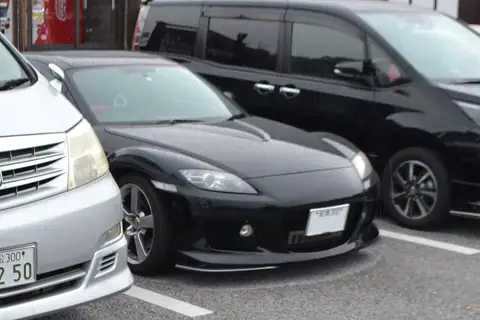
Mazda · 2004
RX-8 Mazdaspeed Version (SE3P)
300 Built
More from Japan
-
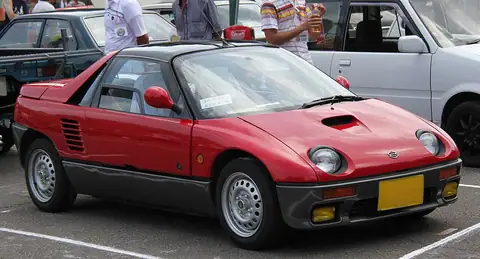
Suzuki
Cara (PG6SA)
531 Built
-

Prince · 1965
R380 (R380A-I)
4 Built
-
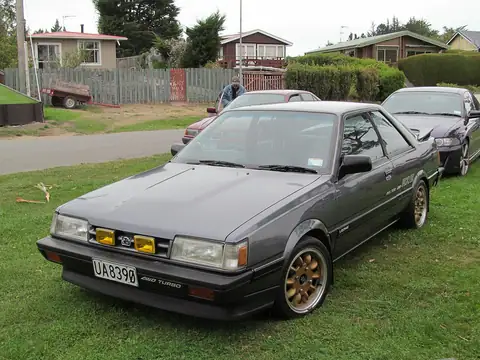
Subaru
Leone RX (3-door)
Production not yet verified
-
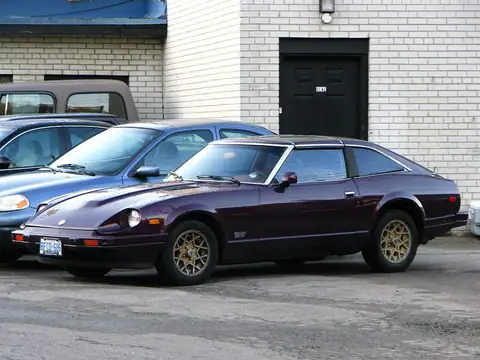
Datsun
280ZX Turbo 2+2 (S130)
Production not yet verified
29 other makes from JapanAriaAsparkAutechDaihatsuDatsunDomeHinoHondaInfinitiIsuzuJiottoKuroganeLexusMitsubishiMitsuokaMossMugenNismoNissanOrcaPrinceScionSubaruSuzukiTommykairaToyotaTRDVemacYamaha