Makes › Prince › R380 (R380A-I) · Factory competition · 1965 Ultra Rare
Prince
R380 (R380A-I)
Prince's first purpose-built prototype racer (Brabham BT8-based chassis, GR8 engine); won the 1966 Japan GP and set speed records
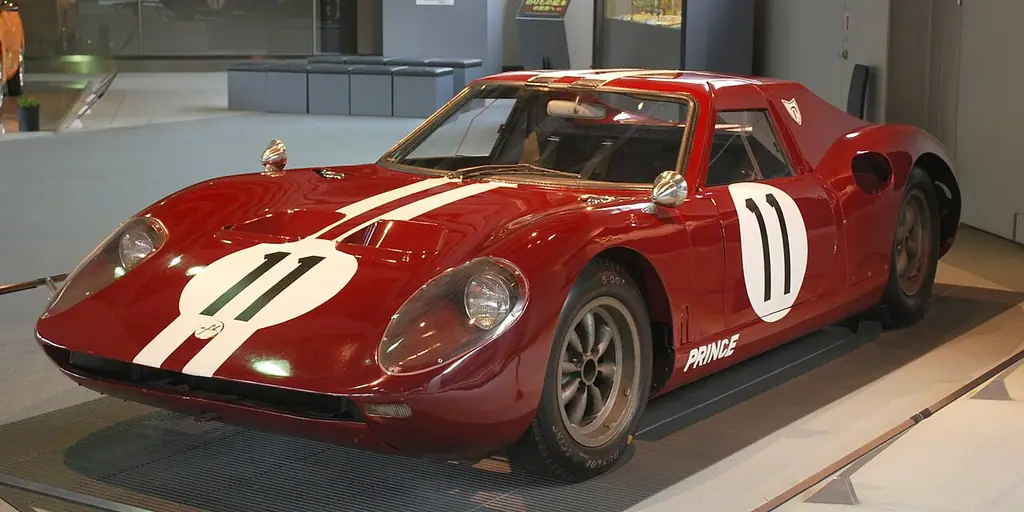
Photo: Mytho88 · CC BY-SA 3.0

Contents
01Overview
At a glance
- Built
- 4 Built
- Years
- 1965
- Engine
- Inline six, rear-mounted (mid-engine) · 1,996 cc / 2.0 LFactory: 1,996 cc
- Power
- 149 kW / 203 PSFactory: 200 hp · converted
- Top speed
- 270 km/hFactory: 270 km/h
- Body
- Not yet verified
- Designer
- Shinichiro Sakurai (Prince Motor Company head of engineering)
- In this archive
- Not yet verified
- Surviving
- 1 (factory reported)
Sources and any conflicting figures are in the sections below.
Why it matters
The R380 was Prince's first purpose-built racing prototype and one of the first purpose-built Japanese race cars. It won the 1966 Japanese Grand Prix outright, ahead of a Porsche 906, and set several class speed records in 1965 on the Yatabe test track.
How rare is it?
Six separate kinds of rarity – never combined into one number.
Each kind of rarity is rated separately and never combined.
02Production & history
Production
Every figure says what it counts.
| What is counted | Figure | Basis | Status |
|---|---|---|---|
| Total model productionR380s believed to survive, the 1966 Japanese Grand Prix winner (stated by Nissan/Infiniti 2017) | 11 | Surviving examples | Factory reported |
| Total model productionR380s built by Prince | 41 | Factory production | Factory reported |
Independent counts (e.g. engine and colour) are never combined into a calculated figure. Surviving examples are never presented as original production.
History
Prince lost the 1964 Japanese Grand Prix to a Porsche 904 with a modified Skyline GT and decided to build its own prototype. Shinichiro Sakurai, head of Prince engineering, bought a bare Brabham BT8 chassis and designed new aluminium bodywork and a new twin-cam engine, the GR-8, for it. Four R380s were built.
The 1965 Japanese Grand Prix was cancelled, so the cars were used for aerodynamic work and for record runs at Yatabe. At the 1966 race at Fuji, the R380s took first and second place against Porsche 906s. The car was redesigned for 1967 as the R380-II, by which time Prince had merged into Nissan.
Variants
How each version differs from the standard R380 (R380A-I).
No variants documented yet. Have a source? Contribute it.
03Specifications
Technical specifications
Engine
| Engine family | Not yet verified |
|---|---|
| Engine code | GR-81 |
| Layout | Inline six, rear-mounted (mid-engine)1 Independently researched |
| Cylinders | 61 |
| Displacement | 1,996 cc / 2.0 LFactory: 1,996 cc1 |
| Bore | 82 mmFactory: 82 mm2 Independently researched |
| Stroke | 63 mmFactory: 63 mm2 Independently researched |
| Compression ratio | 11:13 Independently researched |
| Valvetrain | Double overhead camshafts, four valves per cylinder, alloy crossflow head2 Independently researched |
| Fuel system | Three Weber 42DCOE dual-throat side-draught carburettors2 Independently researched |
| Power | 149 kW / 203 PSFactory: 200 hp · converted1 Independently researched |
| Power at | 8,000 rpm2 Independently researched |
| Torque | Not yet verified |
Transmission & drivetrain
| Manufacturer | Hewland2 Independently researched |
|---|---|
| Gearbox | Hewland 5-speed transaxle, floor change2 Independently researched |
| Gears | 51 |
| Driven wheels | Not yet verified |
Chassis, body & dimensions
| Chassis | Brabham BT8 chassis1 |
|---|---|
| Front suspension | Not yet verified |
| Rear suspension | Not yet verified |
| Brakes | Not yet verified |
| Steering | Not yet verified |
| Body construction | Light alloy panelwork, low-slung two-door rear-engined coupe2 Independently researched |
| Wheelbase | 2,360 mmFactory: 2,360 mm2 Independently researched |
| Length | 3,930 mmFactory: 3,930 mm2 Independently researched |
| Width | 1,580 mmFactory: 1,580 mm2 Independently researched |
| Height | 1,035 mmFactory: 1,035 mm2 Independently researched |
| Front track | Not yet verified |
| Rear track | Not yet verified |
| Kerb weight | 660 kgFactory: 660 kg2 Independently researchedSource lists it simply as "Weight". |
| Dry weight | Not yet verified |
Performance
| Maximum speed | 270 km/hFactory: 270 km/h2 Independently researched |
|---|---|
| 0–100 km/h | Not yet verified |
| Fuel tank | Not yet verified |
“Not yet verified” means no source has been checked for that value yet. Nothing is estimated to fill a gap.
04Colours & options
Factory colours & interiors
Original paint and trim, with the number of cars in each where a source gives it.
Not yet documented. Have a source? Contribute it.
Factory options & codes
Codes are shown exactly as written by the manufacturer.
Not yet documented. Have a source? Contribute it.
05Individual cars
Chassis register
Every documented car, with its colours, history and where it is now. Open a row for the full record. Known chassis are not automatically authenticated originals.
Not yet documented. Have a source? Contribute it.
Competition history
Every race result of the individual cars, in date order. Click a chassis number to open its full record in the register.
Not yet documented. Have a source? Contribute it.
Auction & sale history
Documented public sales of the individual cars. Click a chassis number to open its full record in the register.
Not yet documented. Have a source? Contribute it.
See one in person
Museums where an example of this car can be seen.
No example is documented on public display yet. Have a source? Contribute it.
06Reference
Identification guide
How to tell an original from a replica or later conversion.
The R380 is a low rear-engined two-door coupe on a Brabham BT8 chassis, with light alloy bodywork and the GR-8 engine: 1996 cc, double overhead cam, four valves per cylinder and triple Weber 42DCOE carburettors, behind a Hewland five-speed transaxle. The R380-I of 1965-66 has the original body; the R380-II of 1967 has a completely changed, sleeker body and fuel injection in place of the carburettors. Only one R380 is believed to survive, the 1966 Japanese Grand Prix winner.
Sources
Each number links to the exact facts it supports.
-
1
INFINITI to show Prince R380 at 2017 Amelia Island Concours d'Elegance Level A Nissan Online Newsroom (web archive copy)
- the four R380s they built
- believed to be the only surviving R380 in existence
- Known as the GR-8
- mid-engine chassis ... inline, six-cylinder engine
- inline, six-cylinder engine
- 1996 cubic centimeter, inline six-cylinder engine
- produced 200-horsepower
- mated to a 5-speed racing gearbox
- Built upon a Brabham BT8 mid-engine chassis
-
2
Prince R380 Level D earlydatsun.com (web archive copy)
- internal dimensions of 82mmx63mm
- alloy double overhead cam, four valve per cylinder, crossflow cylinder head
- triple 42DCOE Weber dual throat side draught
- Power - 200hp@8000rpm
- a Hewland 5 speed transaxle
- Hewland 5 speed Floor change
- light weight alloy panelwork
- Wheelbase - 2360mm
- Length - 3930mm
- Width - 1580mm
- Height - 1035mm
- Weight - 660kg
- Top speed - 270kph
-
3
Nissan R380-II Level D earlydatsun.com (web archive copy)
- compression ratio was also increased from 11:1 to 11.9:1
Keep exploring
More from Prince
-
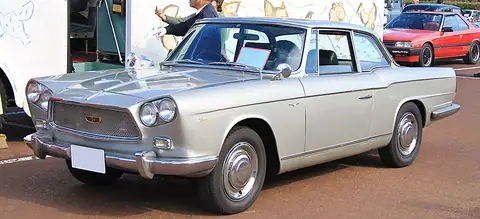
Prince · 1962–1963
Skyline Sport (BLRA-3)
60 Built
-
No licensed photo yet
Prince · 1962–1963
Skyline Sport (BLRA-3) coupé and convertible
60 Built
-
No licensed photo yet
Prince · 1964
Skyline GT (S54-I / S54A-I, 1964 homologation batch)
100 Built
-
No licensed photo yet
Prince · 1964
Skyline GT (S54A-1) homologation batch
100 Built
See all 6 cars by Prince →The Nissan family →
More from Japan
-
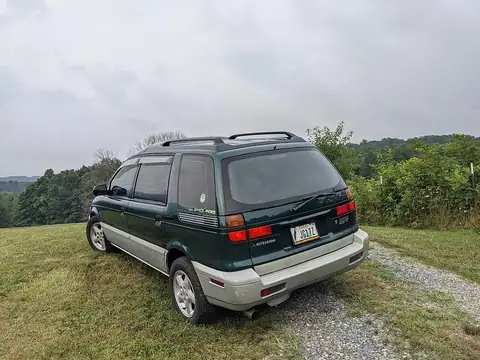
Mitsubishi
Chariot Resort Runner GT
Production not yet verified
-
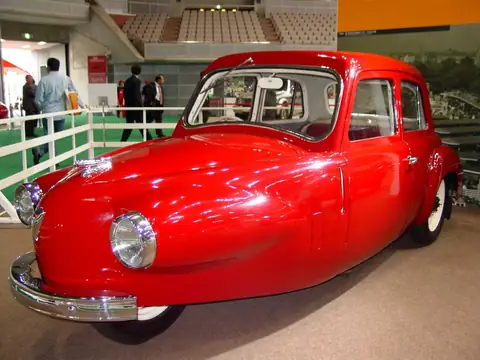
Daihatsu · 1951
Bee
Production not yet verified
-
Mazda · 2002
RX-7 Spirit R (FD3S)
1,500 Built
-
Dome
RC82
Production not yet verified
27 other makes from JapanAriaAsparkAutozamDaihatsuDatsunDomeHinoHondaInfinitiIsuzuJiottoKuroganeLexusMazdaMazdaspeedMitsubishiMitsuokaMossMugenOrcaScionSubaruSuzukiToyotaTRDVemacYamaha