Makes › McLaren › F1 › F1 (road car) · Rare production · 1993–1998 Extremely Rare
McLaren
F1 (road car)
Central-seat carbon supercar; only 64 standard production road cars of 106 F1s in all variants
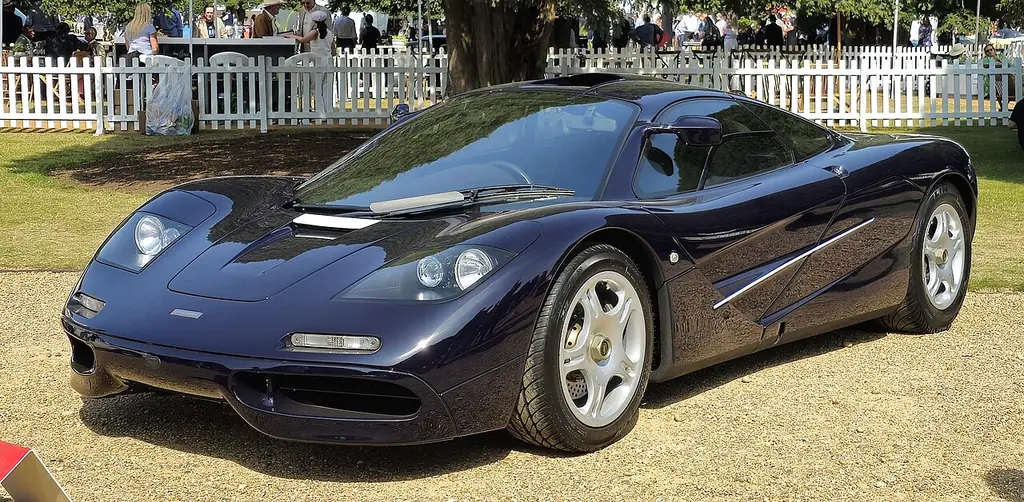
Photo: Calreyn88 · CC BY-SA 4.0
Contents
01Overview
At a glance
- Built
- 64 Built
- Years
- 1993–1998
- Engine
- Mid-mounted 60-degree V12 (BMW Motorsport S70/2) · 6,064 cc / 6.1 LFactory: 6,064 cc
- Power
- 468 kW / 636 PSFactory: 627 hp · converted
- Top speed
- 388 km/hFactory: 241 mph · converted
- Body
- Not yet verified
- Designer
- Gordon Murray (design lead); styling team led by Peter Stevens
- In this archive
- Not yet verified
- Surviving
- Not yet verified
Sources and any conflicting figures are in the sections below.
Why it matters
Conceived as the ultimate road car, the F1 brought Formula 1 thinking to a road vehicle, including a carbon-composite monocoque and monobloc Brembo calipers, both firsts for a road car. Its central driving position and 241 mph top speed set a benchmark, and McLaren reportedly lost money on every car because it was built without regard to cost.
How rare is it?
Six separate kinds of rarity – never combined into one number.
Each kind of rarity is rated separately and never combined.
Photos
Exterior, interior and detail photos with their licences.
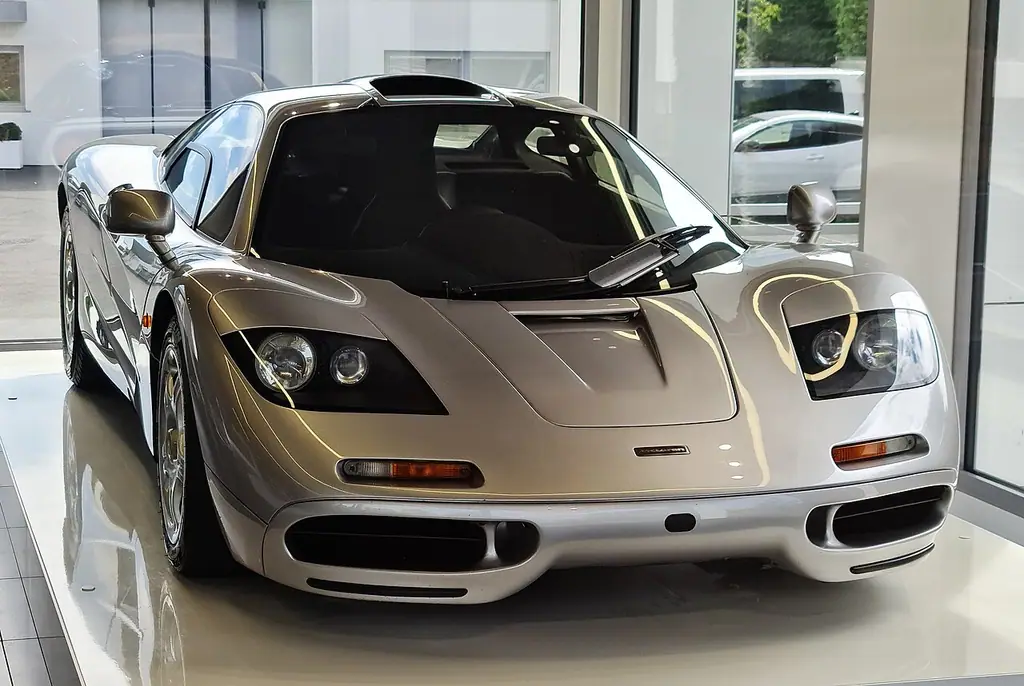
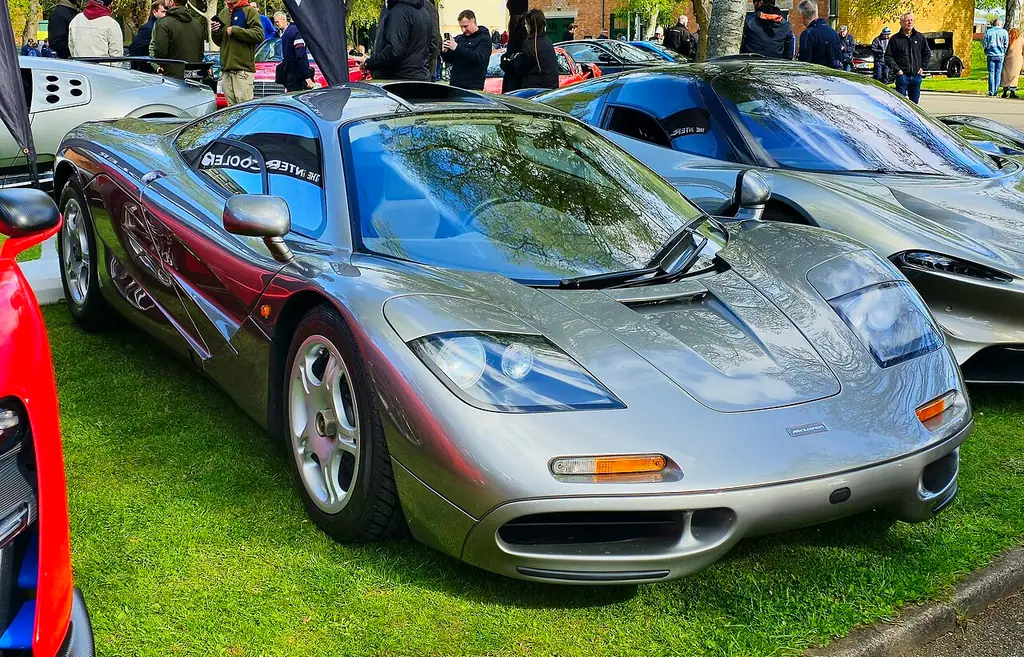
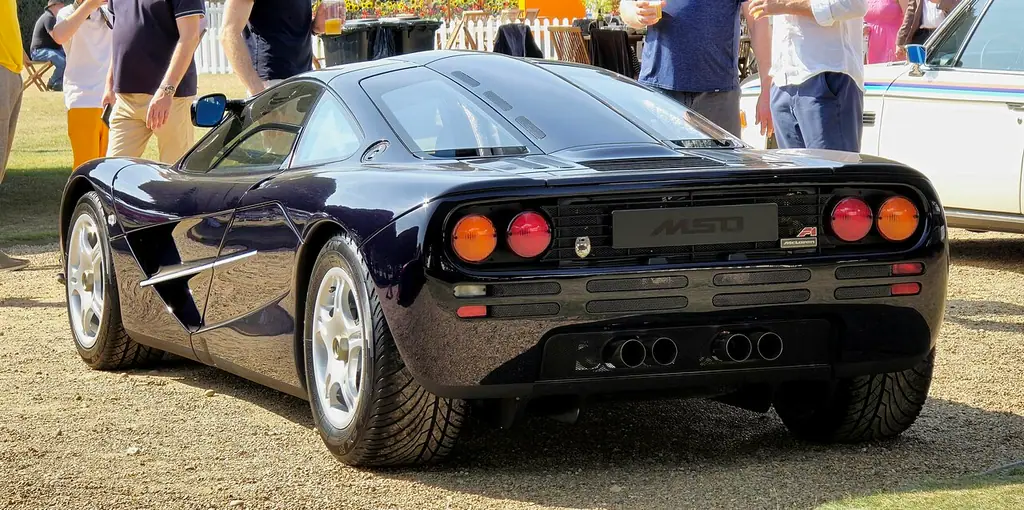
 McLaren F1 (road car) (Wikimedia Commons: McLaren F1)
Photo: Calreyn88 · CC BY-SA 4.0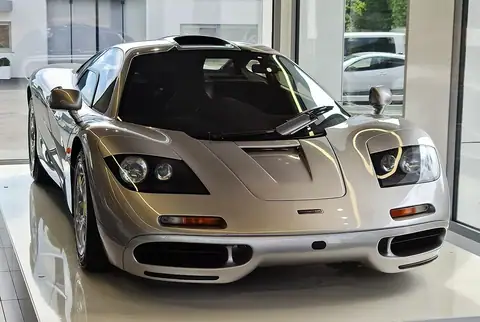 McLaren F1 (road car) (Wikimedia Commons: McLaren F1)
Photo: MrWalkr · CC BY-SA 4.0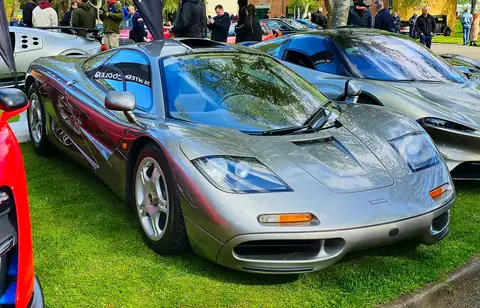 McLaren F1 (road car) (Wikimedia Commons: McLaren F1)
Photo: Calreyn88 · CC BY-SA 4.0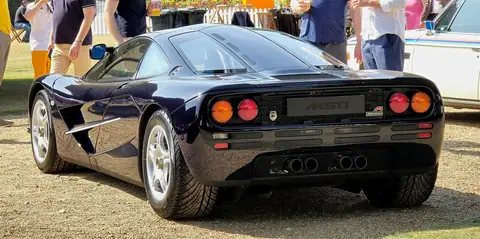 McLaren F1 (road car) (Wikimedia Commons: McLaren F1)
Photo: Calreyn88 · CC BY-SA 4.0


02Production & history
Production
Every figure says what it counts.
| What is counted | Figure | Basis | Status |
|---|---|---|---|
| Total model productionstandard production road cars (69 incl. 5 prototypes; 106 F1s of all variants) | 641,2 | Factory production | Factory reported |
Independent counts (e.g. engine and colour) are never combined into a calculated figure. Surviving examples are never presented as original production.
History
Talks about a McLaren road car began after the September 1988 Italian Grand Prix and the project was approved in early 1989, with Gordon Murray leading the design and Peter Stevens the styling. The prototype was shown at the Monaco Grand Prix in May 1992, the first production car was delivered in December 1993, and the last, chassis 075, was completed in mid-1998. In 1998 the prototype XP5 reached 241 mph at Volkswagen's Ehra-Lessien track.
Variants
How each version differs from the standard F1 (road car).
No variants documented yet. Have a source? Contribute it.
03Specifications
Technical specifications
Engine
| Engine family | Not yet verified |
|---|---|
| Engine code | S 70/23 |
| Layout | Mid-mounted 60-degree V12 (BMW Motorsport S70/2)4 Independently researched |
| Cylinders | 123 |
| Displacement | 6,064 cc / 6.1 LFactory: 6,064 cc4 Independently researched |
| Bore | 86 mmFactory: 86 mm3 |
| Stroke | 87 mmFactory: 87 mm3 |
| Compression ratio | 11.0:13 |
| Valvetrain | Chain-driven DOHC, 4 valves per cylinder, continuously variable inlet valve timing3 |
| Fuel system | Flexible safety fuel cell with in-tank high pressure pump3 |
| Induction | Naturally aspirated, 12 single throttle valves, carbon composite airbox3 |
| Power | 468 kW / 636 PSFactory: 627 hp · converted4 Independently researchedSource states bhp. |
| Power at | 7,500 rpm4 Independently researched |
| Torque | 651 NmFactory: 651 Nm3 |
| Torque at | 5,600 rpm3 |
Transmission & drivetrain
| Gearbox | Six-speed manual, transversely mounted4 Independently researched |
|---|---|
| Gears | 63 |
| Gear ratios | 3.23, 2.19, 1.71, 1.39, 1.16, 0.933 |
| Final drive | 2.37:13 |
| Driven wheels | Not yet verified |
Chassis, body & dimensions
| Chassis | Carbon fibre chassis and bodywork5 Independently researched |
|---|---|
| Front suspension | Double wishbones, light alloy dampers, co-axial coil springs, anti-roll bar3 |
| Rear suspension | Double wishbones, inclined axis shear mounting, light alloy dampers, co-axial coil springs, toe-in/toe-out control links3 |
| Brakes | Ventilated discs, 4-pot monobloc light-alloy calipers; front 332 mm x 32 mm, rear 305 mm x 26 mm3 |
| Steering | Unassisted rack and pinion, 2 turns lock to lock3 |
| Body construction | Not yet verified |
| Wheelbase | 2,718 mmFactory: 2,718 mm3 |
| Length | 4,287 mmFactory: 4,287 mm3 |
| Width | 1,820 mmFactory: 1,820 mm3 |
| Height | 1,140 mmFactory: 1,140 mm3 |
| Front track | 1,568 mmFactory: 1,568 mm3 |
| Rear track | 1,472 mmFactory: 1,472 mm3 |
| Kerb weight | 1,140 kgFactory: 1,140 kg3 |
| Dry weight | Not yet verified |
Performance
| Maximum speed | 388 km/hFactory: 241 mph · converted4 Independently researched |
|---|---|
| 0–100 km/h | Not yet verified |
| 0–60 mph | 3.2 s3 |
| Standing ¼ mile | 11.1 s3Trap speed 222 km/h / 138 mph. |
| Fuel tank | 90 LFactory: 90 L3 |
“Not yet verified” means no source has been checked for that value yet. Nothing is estimated to fill a gap.
04Colours & options
Factory colours & interiors
Original paint and trim, with the number of cars in each where a source gives it.
Not yet documented. Have a source? Contribute it.
Factory options & codes
Codes are shown exactly as written by the manufacturer.
Not yet documented. Have a source? Contribute it.
05Individual cars
Chassis register
Every documented car, with its colours, history and where it is now. Open a row for the full record. Known chassis are not automatically authenticated originals.
Not yet documented. Have a source? Contribute it.
Competition history
Every race result of the individual cars, in date order. Click a chassis number to open its full record in the register.
Not yet documented. Have a source? Contribute it.
Auction & sale history
Documented public sales of the individual cars. Click a chassis number to open its full record in the register.
Not yet documented. Have a source? Contribute it.
See one in person
Museums where an example of this car can be seen.
No example is documented on public display yet. Have a source? Contribute it.
06Reference
Identification guide
How to tell an original from a replica or later conversion.
Being verified against factory or registry sources before it is published. Have a source? Contribute it.
Sources
Each number links to the exact facts it supports.
-
1
McLaren F1 production Level A McLaren Automotive
- Of the 100 cars 64 were F1 road cars
-
2
Supercar Nostalgia: The New Standard – McLaren F1 Level C
- 64 standard production road cars (69 incl. 5 prototypes; 106 F1s of all variants)
-
3
McLaren F1 Road Car - Specification Level A McLaren Automotive
- Type Number S 70/2
- Cylinder Arrangement V12
- Bore 86.0 mm
- Stroke 87.0 mm
- Compression Ratio 11.0:1
- Chain driven double overhead camshaft with continuosly variable inlet valve timing
- Flexible safety fuel cell with in-tank high pressure pump
- 12 single throttle valves, carbon composite airbox
- Max. Torque 651 Nm / 480 lb.ft @ 5600 rpm
- Max. Torque 651 Nm @ 5600 rpm
- All synchro constant mesh 6 Speed
- 1st gear ratio 3.23 ... 6th gear ratio 0.93
- Final Drive Ratio 2.37:1
- Double wishbones ... co-axial coil springs, anti-roll bar
- Double wishbones, inclined Axis Shear mounting system
- Front brake disc diameter 332 mm; rear 305 mm; 4 pot monobloc calipers
- Unassisted rack and pinion; Two turns lock to lock
- Wheelbase 2718 mm
- Length 4287 mm
- Width 1820 mm
- Height 1140 mm
- Front Track 1568 mm
- Rear Track 1472 mm
- Kerb Weight 1140 kg
- 0-60: 3.2 s
- 1/4 mile 11.1 s @ 138 mph (222 km/h)
- Fuel Tank Capacity 90 litres
-
4
McLaren F1 Level C Supercar Nostalgia
- 60° V12, BMW Motorsport Type S70/2
- 6064cc
- Peak output was 627bhp at 7500rpm
- 627bhp at 7500rpm
- transversely mounted six-speed manual
- 241mph at Ehra-Lessien in 1998, chassis XP5
-
5
4Car 100 Greatest: the McLaren F1 Level C Channel 4
- chassis and bodywork are constructed from carbon fibre
Keep exploring
More from McLaren
-
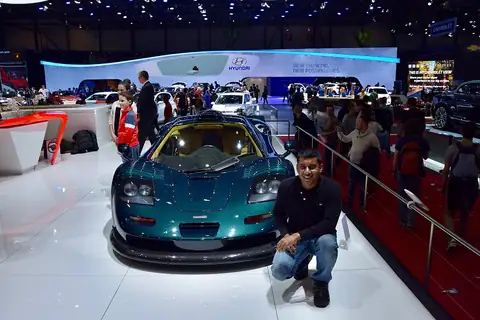
McLaren · 1997
F1 GT (longtail)
3 Built
-
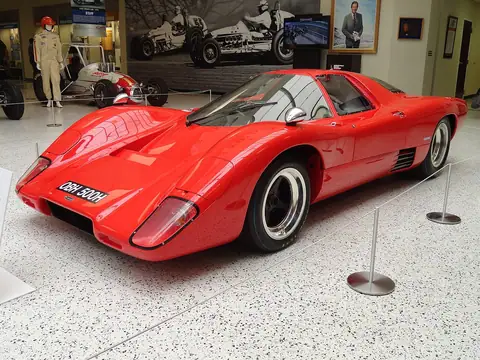
McLaren · 1969–1970
M6GT
3 Built
-
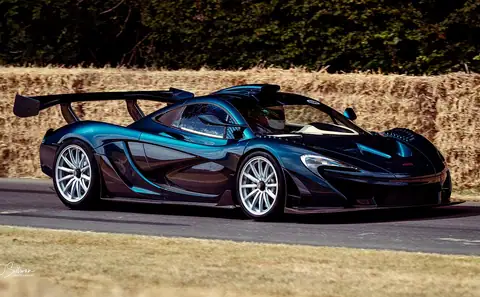
McLaren
P1 GT (Lanzante)
4 Built
-
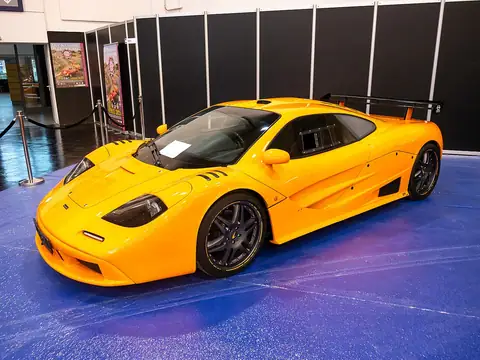
McLaren · 1995–1996
F1 LM
5 Built
More from United Kingdom
-
March · 1969
693
Production not yet verified
-
Berkeley
SE492 (1957-1959)
Production not yet verified
-
Triumph · 1980–1981
TR8
2,497 Built
-
Jaguar · 1993–1994
XJ220 S (TWR)
6 Built
133 other makes from United KingdomACAiredaleAlan Mann RacingAllardAlvisArabArashArielArmstrong SiddeleyArrowsAscariAston MartinAtalantaAtlantisAustinAustin-HealeyBedfordBentleyBerkeleyBluebirdBMCBondBrabhamBristolBritish LeylandBroadspeedBrookeBrough SuperiorCampbell-RailtonCaparoCaterhamChevronConnaughtCooperCrayfordDaimlerDavid BrownDawsonDeLoreanDuttonAll makes →