Makes › Mercedes-Benz › W 125 Grand Prix car · Factory competition · 1937 Ultra Rare
Mercedes-Benz
W 125 Grand Prix car
5.6-litre 750-kg formula GP car (not the W 125 Rekordwagen already listed)
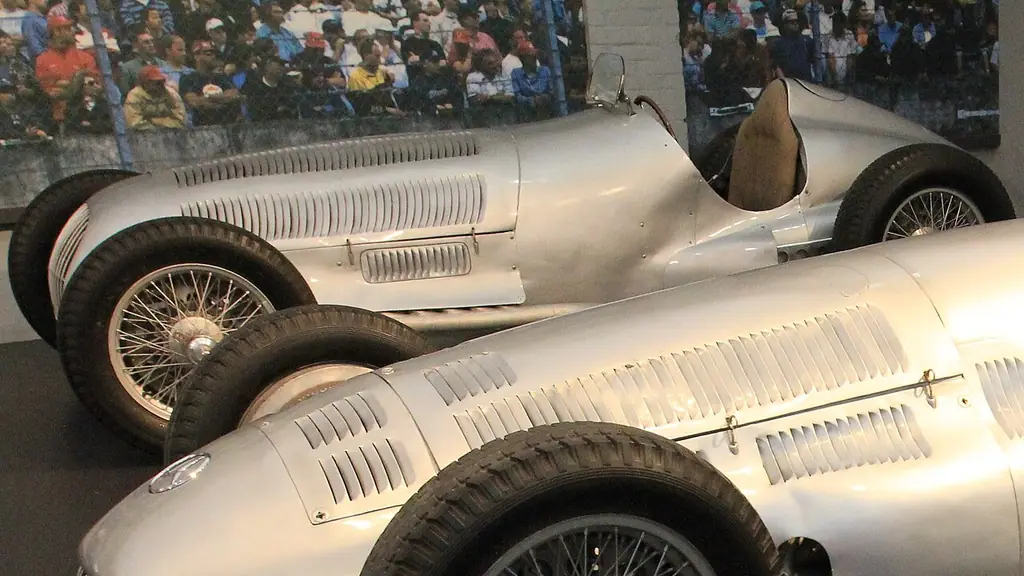
Photo: questa_ta · CC BY 2.0

Contents
01Overview
At a glance
- Built
- 11 Built
- Years
- 1937
- Engine
- Front-mounted, longitudinal straight-eight · 5,660 cc / 5.7 LFactory: 5,660 cc
- Power
- 441 kW / 600 PSFactory: 592 hp · converted
- Top speed
- 330 km/hFactory: 330 km/h
- Body
- Not yet verified
- Designer
- Rudolf Uhlenhaut
- In this archive
- Not yet verified
- Surviving
- Not yet verified
Sources and any conflicting figures are in the sections below.
Why it matters
The W 125 was Mercedes-Benz's Grand Prix car for 1937, the last season of the 750 kg formula, and one of the most powerful racing cars of the pre-war era. Its supercharged 5.66-litre straight-eight produced close to 600 bhp, and only nine were built.
How rare is it?
Six separate kinds of rarity – never combined into one number.
Each kind of rarity is rated separately and never combined.
02Production & history
Production
Every figure says what it counts.
| What is counted | Figure | Basis | Status |
|---|---|---|---|
| Total model productionW 125 cars built in Untertürkheim, nine of which were entered in circuit races in 1937 | 111,2 | Factory production | Factory reported |
Independent counts (e.g. engine and colour) are never combined into a calculated figure. Surviving examples are never presented as original production.
History
Developed for 1937 under Rudolf Uhlenhaut as the successor to the W 25K, the W 125 used a front-mounted M 125 F straight-eight with Roots-type supercharging and a four-speed gearbox. That season it won the Tripoli, German, Monaco, Swiss, Italian and Czechoslovak Grands Prix with Lang, Caracciola and von Brauchitsch. It was followed by the 3-litre W 154 when the formula changed for 1938.
Variants
How each version differs from the standard W 125 Grand Prix car.
No variants documented yet. Have a source? Contribute it.
03Specifications
Technical specifications
Engine
| Engine family | Not yet verified |
|---|---|
| Engine code | M 125 F3 Independently researched |
| Layout | Front-mounted, longitudinal straight-eight3 Independently researched |
| Cylinders | 81 |
| Displacement | 5,660 cc / 5.7 LFactory: 5,660 cc3 Independently researched |
| Bore | 94 mmFactory: 94 mm3 Independently researched |
| Stroke | 102 mmFactory: 102 mm3 Independently researched |
| Compression ratio | 8.8:13 Independently researched |
| Fuel system | Float carburettors upstream of the Roots blower (wet charging)1 |
| Induction | Roots-type supercharger3 Independently researched |
| Power | 441 kW / 600 PSFactory: 592 hp · converted3 Independently researchedSource: 592 bhp / 442 kW. |
| Power at | 5,800 rpm3 Independently researched |
| Torque | 926 NmFactory: 926 Nm3 Independently researched |
Transmission & drivetrain
| Gearbox | 4-speed manual, rear-wheel drive3 Independently researched |
|---|---|
| Gears | Not yet verified |
| Driven wheels | Not yet verified |
Chassis, body & dimensions
| Chassis | Ladder-type frame of oval longitudinal tubes with round-tube transverse bracing1 |
|---|---|
| Front suspension | Double trapezoidal control arms of unequal length, vertical coil springs, hydraulic dual-piston lever shock absorbers1 |
| Rear suspension | De Dion axle with torsion bars and hydraulic dual-piston lever shock absorbers1 |
| Brakes | Drum brakes, 400 mm diameter front and rear, 72 mm wide shoes1 |
| Steering | Not yet verified |
| Body construction | Not yet verified |
| Wheelbase | 2,798 mmFactory: 2,798 mm1 |
| Length | Not yet verified |
| Width | Not yet verified |
| Height | Not yet verified |
| Front track | Not yet verified |
| Rear track | Not yet verified |
| Kerb weight | Not yet verified |
| Dry weight | Not yet verified |
Performance
| Maximum speed | 330 km/hFactory: 330 km/h3 Independently researched |
|---|---|
| 0–100 km/h | Not yet verified |
| Fuel tank | Not yet verified |
“Not yet verified” means no source has been checked for that value yet. Nothing is estimated to fill a gap.
04Colours & options
Factory colours & interiors
Original paint and trim, with the number of cars in each where a source gives it.
Not yet documented. Have a source? Contribute it.
Factory options & codes
Codes are shown exactly as written by the manufacturer.
Not yet documented. Have a source? Contribute it.
05Individual cars
Chassis register
Every documented car, with its colours, history and where it is now. Open a row for the full record. Known chassis are not automatically authenticated originals.
Not yet documented. Have a source? Contribute it.
Competition history
Every race result of the individual cars, in date order. Click a chassis number to open its full record in the register.
Not yet documented. Have a source? Contribute it.
Auction & sale history
Documented public sales of the individual cars. Click a chassis number to open its full record in the register.
Not yet documented. Have a source? Contribute it.
See one in person
Museums where an example of this car can be seen.
No example is documented on public display yet. Have a source? Contribute it.
06Reference
Identification guide
How to tell an original from a replica or later conversion.
The W 125 differs from its W 25 predecessor in a ladder-type frame of oval longitudinal tubes with round-tube cross braces instead of a pressed-steel frame, a de Dion rear axle on torsion bars, and a front axle with unequal-length double trapezoidal links and vertical coil springs. The wheelbase is 2798 mm, 293 mm longer than the W 25, and the drum brakes are 400 mm in diameter with 72 mm shoes. The M 125 engine has a 94 mm bore, 5663 cc displacement and float carburettors ahead of the Roots blower; crankshafts with five and with nine main bearings were both used. Two cars were fitted with fully streamlined bodies and 22/24-inch wheels for the 1937 AVUS race, which is a separate configuration from the standard Grand Prix car.
Sources
Each number links to the exact facts it supports.
-
1
Mercedes-Benz Grand-Prix racing car W 125, 1937 (Classic M@RS) Level A Mercedes-Benz Group AG (Classic M@RS, Mercedes-Benz Public Archive)
- A total of eleven W 125s were built in Untertürkheim
- eight-cylinder inline engine with Roots blower
- float carburettors positioned upstream of the Roots blower
- ladder-type frame made of oval longitudinal tubes with transverse bracing
- dual trapezoidal control arms of unequal length ... vertically positioned coil springs
- de Dion rear-axle ... torsion bars with hydraulic dual-piston lever-type shock absorbers
- drum diameter remained at 400 mm ... brake shoes measuring 72 mm
- extension of the wheelbase by 293 mm to 2798 mm
-
2
1937 Mercedes-Benz W125 Specifications - Ultimatecarpage.com Level C
- 9 cars built
-
3
Mercedes-Benz W125 Level C Wouter Melissen · Ultimatecarpage.com · 2007-10-03
- M 125 F Straight 8
- Front, longitudinally mounted; M 125 F Straight 8
- 5,660 cc
- Bore / stroke 94.0 mm / 102.0 mm
- Compression 8.8:1
- Roots-type supercharger, two suction carburettors
- 592 bhp / 442 kW at 5,800 rpm
- at 5,800 rpm
- 926 Nm at 3,000 rpm
- 4-speed manual; rear-wheel drive
- Top speed 330 km/h
Keep exploring
More from Mercedes-Benz
-
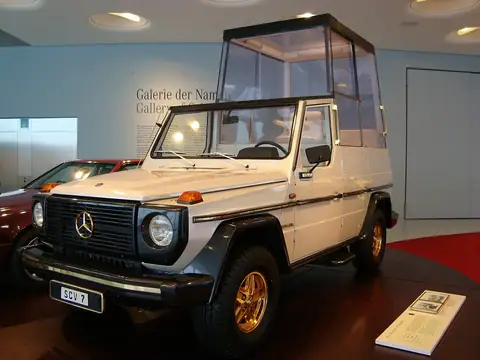
Mercedes-Benz · 1980
230 G Popemobile (W 460)
1 Built
-
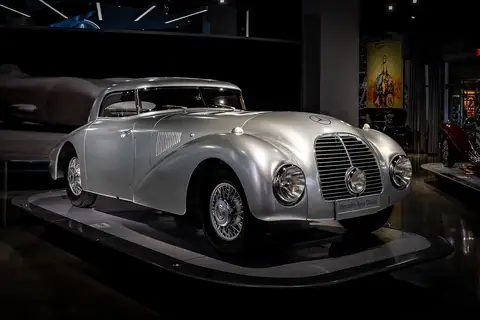
Mercedes-Benz · 1938
540 K Stromlinienwagen (Streamliner)
1 Built
-
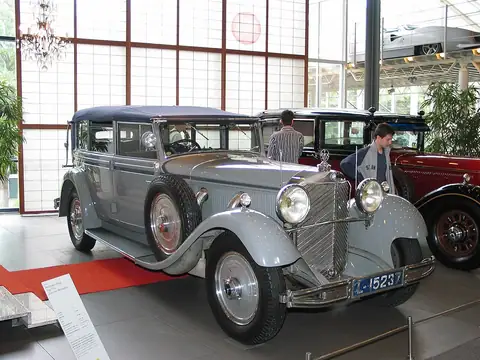
Mercedes-Benz · 1932
770 (W 07) Cabriolet F of Kaiser Wilhelm II
1 Built
-
Mercedes-Benz · 1991
C 112
1 Built
See all 212 cars by Mercedes-Benz →
More from Germany
-
BMW · 1965–1970
2000 CS (1965-1969)
Production not yet verified
-
Porsche
964 Speedster
Production not yet verified
-
Opel
Omega Evolution 500
509 Built
-
RUF · 2017
CTR (2017, carbon monocoque)
30 Built
71 other makes from Germany9ffAC SchnitzerAdlerAgria-WerkeAlbertAlpinaAMOAmphicarApolloArtegaAudiAuto UnionAutomobili PininfarinaBayerische AutowerkeBitterBMWBohseBoldmenBorgwardBovensiepenBrennaborBrütschChampionDauerDKWFMR (Messerschmitt)FuldamobilGemballaGepardGlasGoggomobilGoliathGumpertGutbrodHanomagHeinkelHorchHyundaiIFAIrmscherAll makes →