Makes › Mercedes-Benz › W 154 · Factory competition · 1938–1939 Ultra Rare
Mercedes-Benz
W 154
3-litre V12 GP car (1938 European champion)
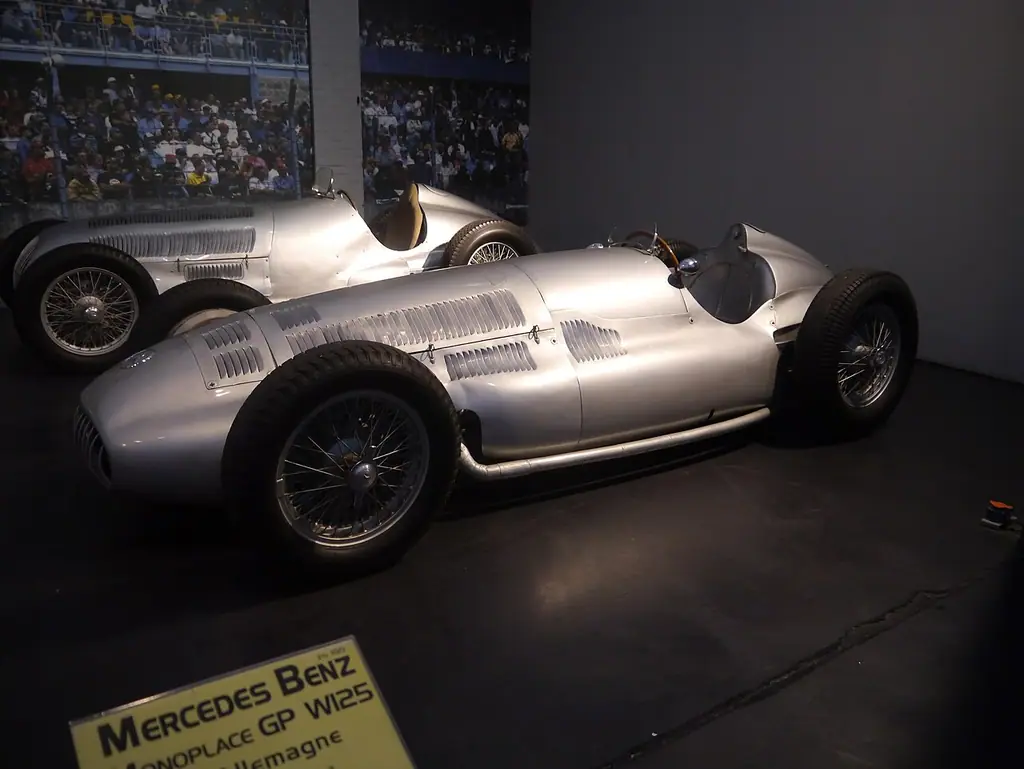
Photo: Zairon · CC BY-SA 4.0

Contents
01Overview
At a glance
- Built
- 14 Built
- Years
- 1938–1939
- Engine
- Front-mounted, longitudinal 60-degree V12 · 2,962 cc / 3.0 LFactory: 2,962 cc
- Power
- 360 kW / 490 PSFactory: 483 hp · converted
- Top speed
- 309 km/hFactory: 309 km/h
- Body
- Not yet verified
- Designer
- Mercedes-Benz racing department; engine design team around Albert Heess
- In this archive
- Not yet verified
- Surviving
- Not yet verified
Sources and any conflicting figures are in the sections below.
Why it matters
The W 154 was Mercedes-Benz's answer to the 3-litre supercharged Grand Prix formula of 1938–1939, and it dominated both seasons. Its two-stage supercharged V12 gave more than 160 bhp per litre, and 16 cars were built.
How rare is it?
Six separate kinds of rarity – never combined into one number.
Each kind of rarity is rated separately and never combined.
02Production & history
Production
Every figure says what it counts.
| What is counted | Figure | Basis | Status |
|---|---|---|---|
| Total model productionW 154 chassis built for the 1938 and 1939 races; a fifteenth car was assembled from parts by Daimler-Benz after the war and raced in Argentina in 1951 | 141,2 | Factory production | Factory reported |
Independent counts (e.g. engine and colour) are never combined into a calculated figure. Surviving examples are never presented as original production.
History
Replacing the W 125 for 1938, the W 154 used a front-mounted 2,962 cc M163 V12 with two-stage Roots supercharging and a five-speed gearbox in an oval-tube chassis with De Dion rear axle. In 1938 it won the Tripoli, French, German, Swiss and Coppa Acerbo races, among others, with Lang, von Brauchitsch, Seaman and Caracciola. In 1939 it added wins including the Pau, Belgian, German and Swiss Grands Prix.
Variants
How each version differs from the standard W 154.
No variants documented yet. Have a source? Contribute it.
03Specifications
Technical specifications
Engine
| Engine family | Not yet verified |
|---|---|
| Engine code | M1633 Independently researched |
| Layout | Front-mounted, longitudinal 60-degree V123 Independently researched |
| Cylinders | 121 |
| Displacement | 2,962 cc / 3.0 LFactory: 2,962 cc3 Independently researched |
| Bore | 67 mmFactory: 67 mm3 Independently researched |
| Stroke | 70 mmFactory: 70 mm3 Independently researched |
| Compression ratio | 7.5:13 Independently researched |
| Valvetrain | Two overhead camshafts per cylinder bank driven by a spur-gear cascade; two intake and two exhaust valves per cylinder via rocker arms1 |
| Fuel system | Twin-barrel intake carburettor upstream of the superchargers plus an additional slide carburettor1 |
| Induction | Two-stage Roots-type supercharger3 Independently researched |
| Power | 360 kW / 490 PSFactory: 483 hp · converted3 Independently researchedSource: 483 bhp / 360 kW. |
| Power at | 7,800 rpm3 Independently researched |
| Torque | 490 NmFactory: 490 Nm3 Independently researched |
Transmission & drivetrain
| Gearbox | 5-speed manual, rear-wheel drive3 Independently researched |
|---|---|
| Gears | 51 |
| Driven wheels | Rear wheels (transaxle)1 |
Chassis, body & dimensions
| Chassis | Nickel-chrome-molybdenum oval tube frame with aluminium body3 Independently researched |
|---|---|
| Front suspension | Double trapezoidal links with coil springs and hydraulic dual-piston shock absorbers1 |
| Rear suspension | De Dion axle with torsion bars and hydraulic dual-piston shock absorbers1 |
| Brakes | Four drums, 400 mm diameter; rear drums enlarged to 470 mm for some races; finned turbo-cooled drums from 19391,4 |
| Steering | Not yet verified |
| Body construction | Not yet verified |
| Wheelbase | 2,720 mmFactory: 2,720 mm3 Independently researched |
| Length | Not yet verified |
| Width | Not yet verified |
| Height | Not yet verified |
| Front track | Not yet verified |
| Rear track | Not yet verified |
| Kerb weight | Not yet verified |
| Dry weight | 859 kgFactory: 859 kg41939 car, regulation weighing without fuel, coolant and driver. The 1938 car weighed 981 kg under the same conditions. |
Performance
| Maximum speed | 309 km/hFactory: 309 km/h3 Independently researched |
|---|---|
| 0–100 km/h | Not yet verified |
| Fuel tank | 420 LFactory: 420 L41939 specification (235 L saddle tank, 185 L rear tank). 1938 cars carried around 400 L, and up to 475 L on some cars. |
“Not yet verified” means no source has been checked for that value yet. Nothing is estimated to fill a gap.
04Colours & options
Factory colours & interiors
Original paint and trim, with the number of cars in each where a source gives it.
Not yet documented. Have a source? Contribute it.
Factory options & codes
Codes are shown exactly as written by the manufacturer.
Not yet documented. Have a source? Contribute it.
05Individual cars
Chassis register
Every documented car, with its colours, history and where it is now. Open a row for the full record. Known chassis are not automatically authenticated originals.
Not yet documented. Have a source? Contribute it.
Competition history
Every race result of the individual cars, in date order. Click a chassis number to open its full record in the register.
Not yet documented. Have a source? Contribute it.
Auction & sale history
Documented public sales of the individual cars. Click a chassis number to open its full record in the register.
Not yet documented. Have a source? Contribute it.
See one in person
Museums where an example of this car can be seen.
No example is documented on public display yet. Have a source? Contribute it.
06Reference
Identification guide
How to tell an original from a replica or later conversion.
The W 154 has a 60-degree V12 with two overhead camshafts per bank, four valves per cylinder, a 67 x 70 mm bore and stroke, and two upright Roots blowers on the 1938 car; in 1939 many cars had a single two-stage blower mounted horizontally at the front. The engine is tilted 6.5 degrees to the right so the propeller shaft runs offset to the left beside a very low driver position. The frame is an oval-tube ladder frame, the wheelbase is 2730 mm, and the fuel is carried in a saddle tank ahead of a rear tank (420 litres in total in 1939, 235 litres of it in the saddle tank). The 1939 cars have a rounder, higher front because the combined water and oil cooler moved forward, and finned turbo-cooled brake drums.
Sources
Each number links to the exact facts it supports.
-
1
Mercedes-Benz Grand-Prix racing car W 154, 1938 (Classic M@RS) Level A Mercedes-Benz Group AG (Classic M@RS, Mercedes-Benz Public Archive)
- A total of fourteen W 154 chassis were built for the various races
- M 154, was designed as a V12
- two overhead camshafts per cylinder bank driven by a spur gear cascade
- twin-barrel intake carburettor was installed upstream of the two superchargers
- five-speed gearbox for the first time
- drive shaft running to the transaxle
- double trapezoidal links with coil springs and hydraulic dual-piston shock absorbers
- torsion-bar-sprung de Dion axle with hydraulic dual-piston shock absorbers
- four drums measuring 400 mm ... rear brake drums were enlarged to 470 mm
-
2
1938 - 1939 Mercedes-Benz W154 Specifications - Ultimatecarpage.com Level C
- 16 cars built
-
3
Mercedes-Benz W154 Level C Wouter Melissen · Ultimatecarpage.com · 2009-12-21
- M163 60º V12
- M163 60º V12; front, longitudinally mounted
- 2,962 cc
- 67.0 mm / 70.0 mm
- Compression 7.5:1
- Two Stage Roots-Type Supercharger
- 483 bhp / 360 kW @ 7,800 rpm
- @ 7,800 rpm
- 490 Nm @ 5,000 rpm
- 5-speed manual; rear-wheel drive
- Aluminium body on a nickel-chrome molybdenum oval tube frame
- Wheelbase: 2,720 mm
- Top speed: 309 km/h
-
4
Mercedes-Benz Grand-Prix racing car W 154, 1939 (Classic M@RS) Level A Mercedes-Benz Group AG (Classic M@RS, Mercedes-Benz Public Archive)
- so-called turbo brake
- reduce the vehicle weight to 859 kg ... excluding fuel, coolant and driver
- A total capacity of 420 litres was chosen
Keep exploring
More from Mercedes-Benz
-
Mercedes-Benz · 1980
230 G Popemobile (W 460)
1 Built
-
Mercedes-Benz · 1938
540 K Stromlinienwagen (Streamliner)
1 Built
-
Mercedes-Benz · 1932
770 (W 07) Cabriolet F of Kaiser Wilhelm II
1 Built
-
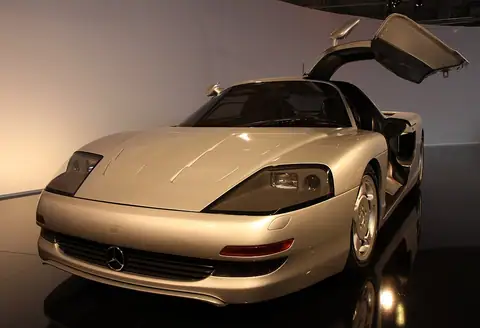
Mercedes-Benz · 1991
C 112
1 Built
See all 212 cars by Mercedes-Benz →
More from Germany
-
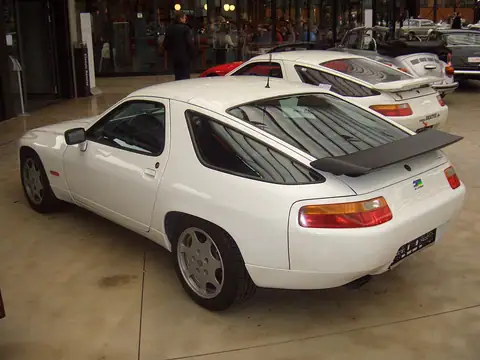
Porsche · 1988–1989
928 S4 Clubsport
19 Built
-
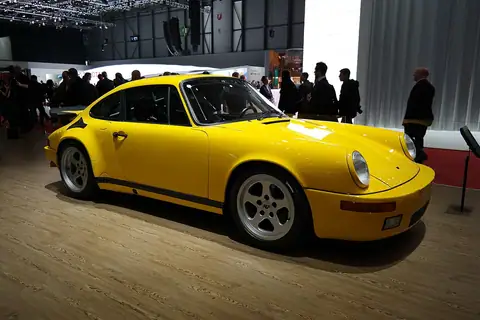
RUF · 2017
CTR (2017, carbon monocoque)
30 Built
-
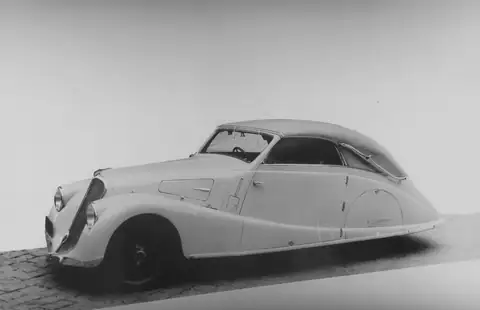
Walter
Standard S
Production not yet verified
-
AMO · 1924–1931
AMO F-15
Production not yet verified
71 other makes from Germany9ffAC SchnitzerAdlerAgria-WerkeAlbertAlpinaAMOAmphicarApolloArtegaAudiAuto UnionAutomobili PininfarinaBayerische AutowerkeBitterBMWBohseBoldmenBorgwardBovensiepenBrennaborBrütschChampionDauerDKWFMR (Messerschmitt)FuldamobilGemballaGepardGlasGoggomobilGoliathGumpertGutbrodHanomagHeinkelHorchHyundaiIFAIrmscherAll makes →