Makes › Pegaso › Z-102 › Z-102 (all bodies) · Rare production · 1951–1958 Extremely Rare
Pegaso
Z-102 (all bodies)
ENASA's DOHC V8 grand tourer built in Barcelona; ENASA, Touring, Saoutchik and Serra bodies
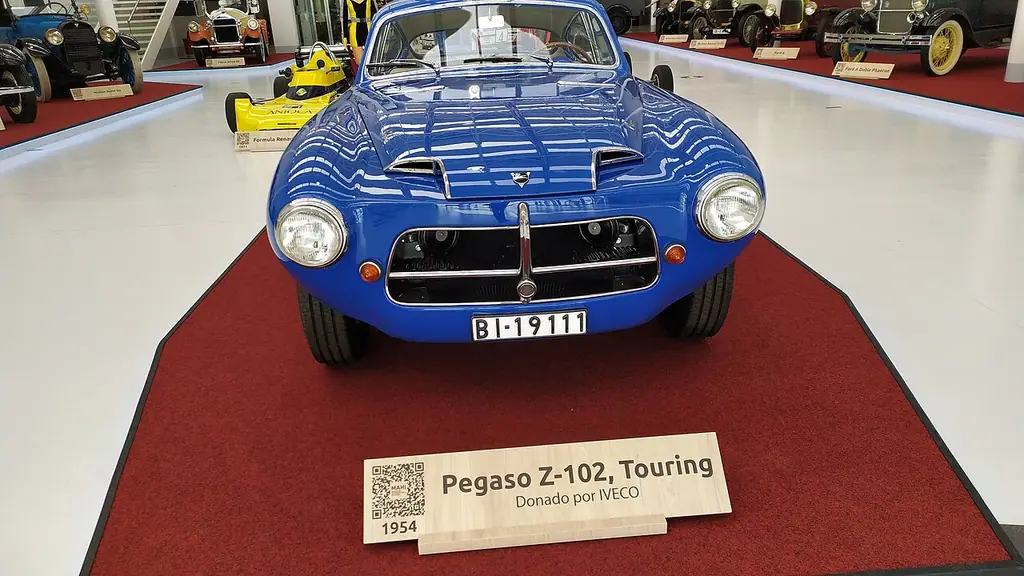
Photo: Jose.cfr · CC BY-SA 4.0

Contents
01Overview
At a glance
- Built
- 84 Built
- Years
- 1951–1958
- Engine
- Front-mounted quad-cam all-alloy V8, dry sump · 2,500 cc / 2.5 LFactory: 2.5 L
- Power
- 130 kW / 177 PSFactory: 175 hp · converted
- Top speed
- 257 km/hFactory: 160 mph · converted
- Body
- Not yet verified
- Designer
- Wifredo Ricart (engineering)
- In this archive
- Not yet verified
- Surviving
- Not yet verified
Sources and any conflicting figures are in the sections below.
Why it matters
The Z-102 was Spain's post-war technical showpiece: a quad-cam, all-alloy V8 grand tourer from a truck and bus maker, designed by former Alfa Romeo engineer Wifredo Ricart. Between 84 and 125 were built, and the fastest versions reached about 160 mph, claimed at the time as the world's fastest production car.
How rare is it?
Six separate kinds of rarity – never combined into one number.
Each kind of rarity is rated separately and never combined.
02Production & history
Production
Every figure says what it counts.
| What is counted | Figure | Basis | Status |
|---|---|---|---|
| Total model productionlower bound of 84–125 cars range | 841 | Factory production | Independently researched |
Independent counts (e.g. engine and colour) are never combined into a calculated figure. Surviving examples are never presented as original production.
History
Pegaso began the Z-102 with two prototypes in 1951; their steel bodies proved too heavy, so production cars received alloy coachwork on a pressed-steel chassis. The dry-sump V8 grew from 2.5 to 2.8 and 3.2 litres, with outputs from 175 to 360 hp, driving a five-speed non-synchromesh transaxle and De Dion rear axle. Bodies came from Pegaso itself and from Touring, Serra and Saoutchik. The car was costly to build, competition results were modest, and the model ended after 1958.
Variants
How each version differs from the standard Z-102 (all bodies).
No variants documented yet. Have a source? Contribute it.
03Specifications
Technical specifications
Engine
| Engine family | Not yet verified |
|---|---|
| Engine code | Not yet verified |
| Layout | Front-mounted quad-cam all-alloy V8, dry sump2 Independently researched |
| Cylinders | 83 Independently researched |
| Displacement | 2,500 cc / 2.5 LFactory: 2.5 L2 Independently researched |
| Bore | Not yet verified |
| Stroke | Not yet verified |
| Compression ratio | 7.8:1 to 9.0:1 depending on fuel quality3 Independently researched |
| Valvetrain | DOHC per bank (four gear-driven camshafts), sodium-filled exhaust valves3,4 Independently researched |
| Fuel system | One, two or four Weber carburettors (supercharged versions available)3 Independently researched |
| Power | 130 kW / 177 PSFactory: 175 hp · converted2 Independently researched |
| Power at | Not yet verified |
| Torque | Not yet verified |
Transmission & drivetrain
| Gearbox | Five-speed non-synchromesh transaxle2 Independently researched |
|---|---|
| Gears | 53 Independently researched |
| Driven wheels | Not yet verified |
Chassis, body & dimensions
| Chassis | Not yet verified |
|---|---|
| Front suspension | Unequal-length control arms with longitudinal torsion bars4,3 Independently researched |
| Rear suspension | De Dion axle with transverse torsion bars3 Independently researched |
| Brakes | Finned ventilated drums, outboard front, inboard rear, twin hydraulic circuits3 Independently researched |
| Steering | Worm and sector, 1.7 turns lock to lock, unassisted4 Independently researched |
| Body construction | Not yet verified |
| Wheelbase | 2,337 mmFactory: 2,337 mm3 Independently researched |
| Length | Not yet verified |
| Width | Not yet verified |
| Height | Not yet verified |
| Front track | Not yet verified |
| Rear track | Not yet verified |
| Kerb weight | 998 kgFactory: 998 kg3 Independently researchedListed as the weight of the car; not specified as kerb or dry. |
| Dry weight | Not yet verified |
Performance
| Maximum speed | 257 km/hFactory: 160 mph · converted2 Independently researched |
|---|---|
| 0–100 km/h | Not yet verified |
| Fuel tank | Not yet verified |
“Not yet verified” means no source has been checked for that value yet. Nothing is estimated to fill a gap.
04Colours & options
Factory colours & interiors
Original paint and trim, with the number of cars in each where a source gives it.
Not yet documented. Have a source? Contribute it.
Factory options & codes
Codes are shown exactly as written by the manufacturer.
Not yet documented. Have a source? Contribute it.
05Individual cars
Chassis register
Every documented car, with its colours, history and where it is now. Open a row for the full record. Known chassis are not automatically authenticated originals.
Not yet documented. Have a source? Contribute it.
Competition history
Every race result of the individual cars, in date order. Click a chassis number to open its full record in the register.
Not yet documented. Have a source? Contribute it.
Auction & sale history
Documented public sales of the individual cars. Click a chassis number to open its full record in the register.
Not yet documented. Have a source? Contribute it.
See one in person
Museums where an example of this car can be seen.
No example is documented on public display yet. Have a source? Contribute it.
06Reference
Identification guide
How to tell an original from a replica or later conversion.
Z-102 cars have a front-mounted four-cam V8 with a rear-mounted five-speed transaxle, torsion-bar suspension all round with a De Dion rear axle, and large ventilated aluminium-finned drums (inboard at the rear). The factory produced its own body or supplied chassis for coachwork by Touring, Saoutchik or Serra; Touring built most of them. Later Touring cars have the Panoramica windscreen with reverse-raked pillars on the revised Z-103 chassis.
Sources
Each number links to the exact facts it supports.
-
1
Sports Car Digest – Car profile: Pegaso Z-102 Level B
- 84 lower bound of 84–125 cars range
-
2
Car Profile: Pegaso Z-102 Level B Sports Car Digest
- four-cam, all-alloy V8 with dry-sump lubrication
- started at 2.5 litres, later 2.8 and 3.2
- Output across the range 175 to 360 hp
- five-speed, non-synchromesh gearbox in unit with differential
- Up to 160 mph for the fastest versions
-
3
Motoring Memories: Pegaso, 1951 - 1958 (Bill Vance) Level C CanadianDriver (Wayback capture)
- He chose a V8 engine
- compression ratios ranged from 7.8:1 to 9.0:1
- double overhead camshafts
- One, two or four Weber carburetors could be fitted
- rear-mounted, five-speed manual transaxle
- torsion bars all around, longitudinal in front
- lateral at the rear, where a solid De Dion axle was fitted
- huge finned and ventilated drums, outboard at the front and inboard at the rear
- wheelbase of only 2,337 mm (92 in.)
- Performance of the 998 kg (2,200 lb) car
-
4
1956 Pegaso Z-103 Panoramica Level C Motor Trend Classic
- four gear-driven camshafts running in needle bearings
- Front geometry was the typical unequal-length control arms
- Unassisted worm-and-sector steering was geared for 1.7 turns lock-to-lock
Keep exploring
More from Pegaso
-
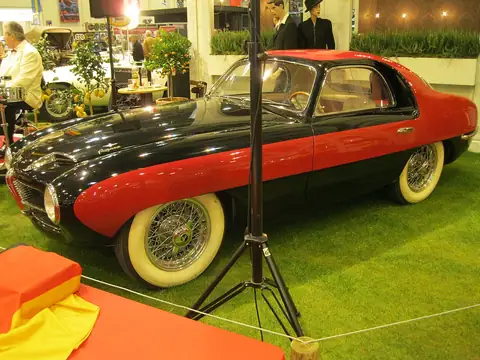
Pegaso · 1953
Z-102 Thrill (Touring)
1 Built
-
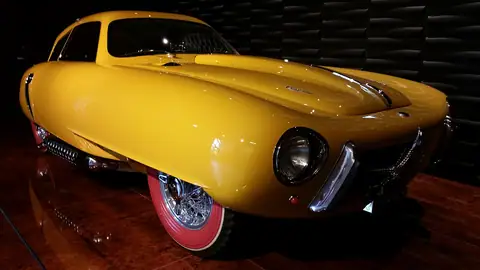
Pegaso · 1952
Z-102 Cúpula (ENASA)
2 Built
-
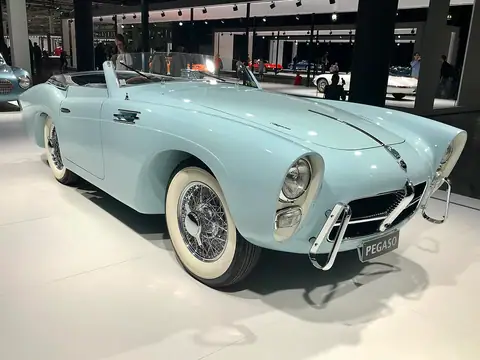
Pegaso
Z-102 by Saoutchik
18 Built
-
No licensed photo yet
Pegaso · 1951–1956
Z-103
Production not yet verified
More from Spain
-
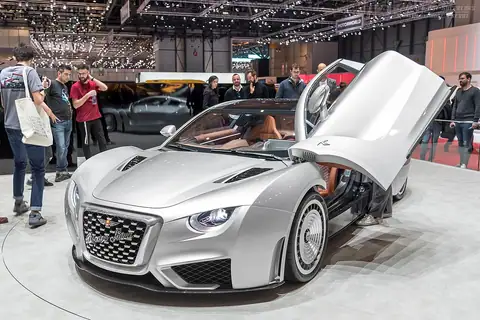
Hispano-Suiza
Carmen
Production not yet verified
-
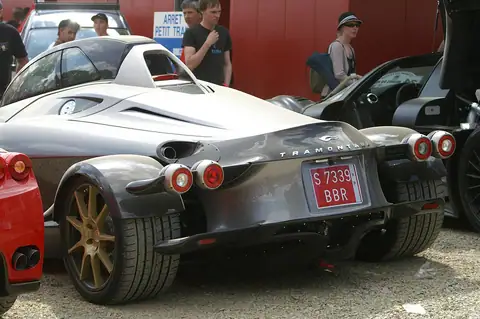
Advanced Design Tramontana · 2006
Tramontana
Production not yet verified
-
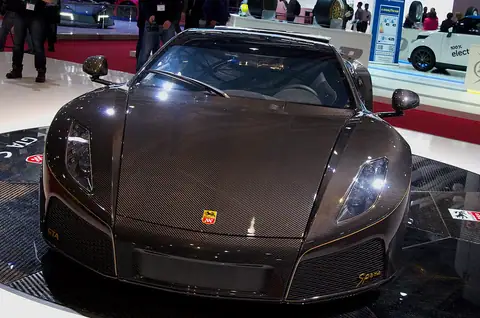
GTA Motor
GTA Spano
Production not yet verified
-
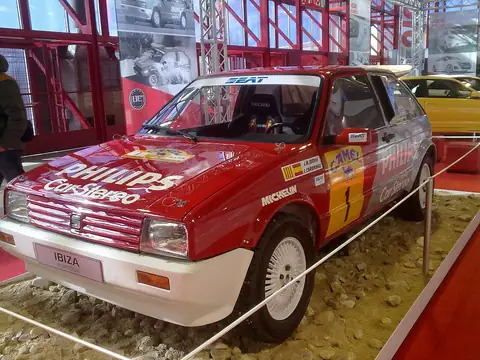
SEAT
Ibiza Bimotor
Production not yet verified
9 other makes from SpainAdvanced Design TramontanaAspidCupraElizaldeGTA MotorHirikoHispano-SuizaRicart-EspañaSEAT