Makes › Porsche › 356 › 356/2 Gmünd Coupé · Rare production · 1948–1950 Ultra Rare
Porsche
356/2 Gmünd Coupé
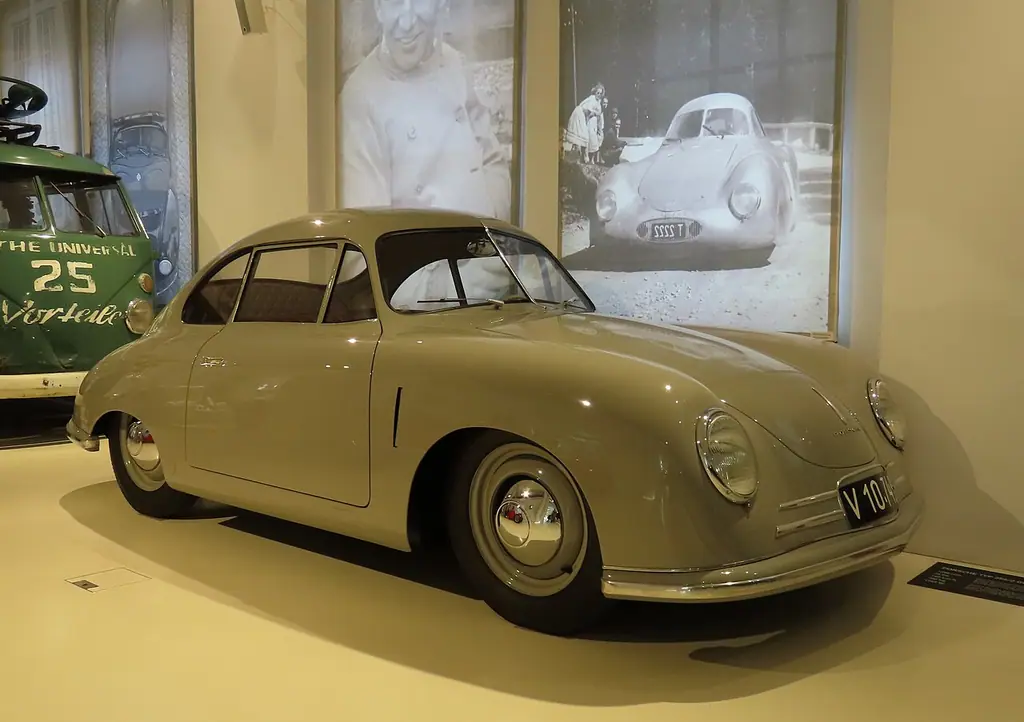
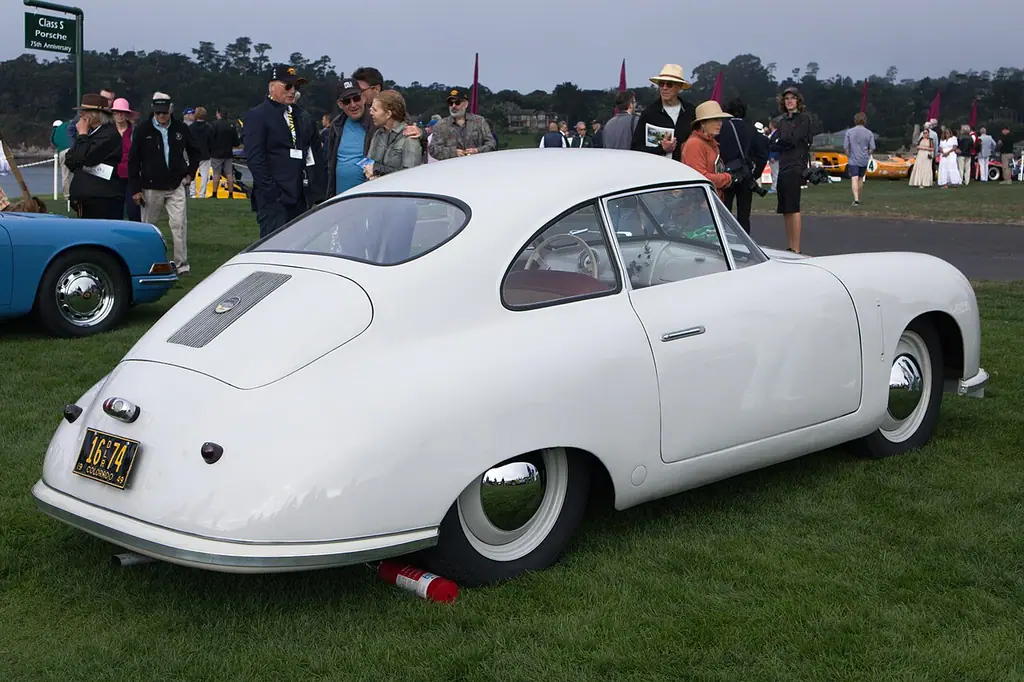
Hand-built aluminium-bodied coupés from the Gmünd (Austria) works before the move to Stuttgart.
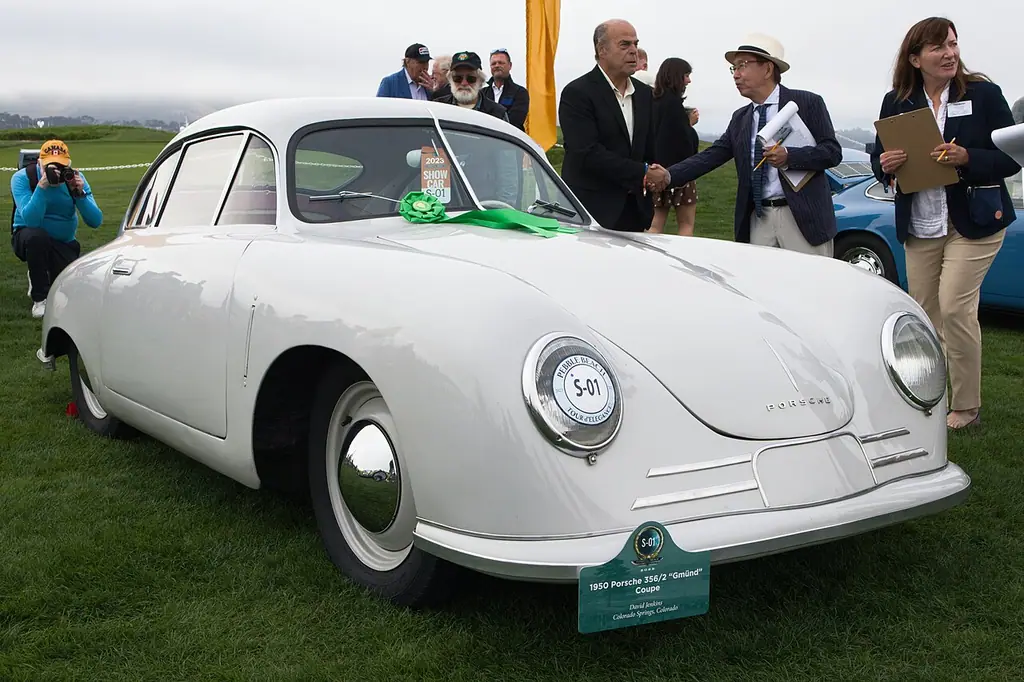
Photo: Prova MO · CC BY-SA 4.0
Contents
01Overview
At a glance
- Built
- 44 Built
- Years
- 1948–1950
- Engine
- Rear-mounted four-cylinder boxer · 1,086 cc / 1.1 LFactory: 1,086 cc
- Power
- 29.4 kW / 40 PSFactory: 40 PS
- Top speed
- 137 km/hFactory: 85 mph · converted
- Body
- Not yet verified
- Designer
- Erwin Komenda (body design); Ferry Porsche (overall design)
- In this archive
- Not yet verified
- Surviving
- 30 (independently researched)
Sources and any conflicting figures are in the sections below.
Why it matters
The Gmünd coupé is the first Porsche built in series: 44 were hand-made in Austria before production moved to Stuttgart. Its rear-engined layout on a steel box frame set the pattern for every 356 that followed.
How rare is it?
Six separate kinds of rarity – never combined into one number.
Each kind of rarity is rated separately and never combined.
Photos
Exterior, interior and detail photos with their licences.
 Porsche 356/2 Gmünd Coupé (Wikimedia Commons search)
Photo: Prova MO · CC BY-SA 4.0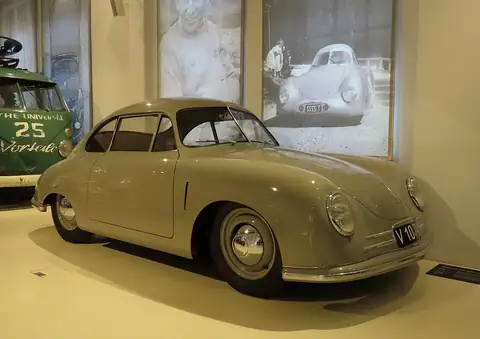 Porsche 356/2 Gmünd Coupé (Wikimedia Commons search)
Photo: Ad Meskens You are free to use this picture for any purpose as long as you credit its author, Ad Meskens. Example: © Ad Meskens / Wikimedia Commons If you use this work outside of the Wikimedia projec · CC BY-SA 4.0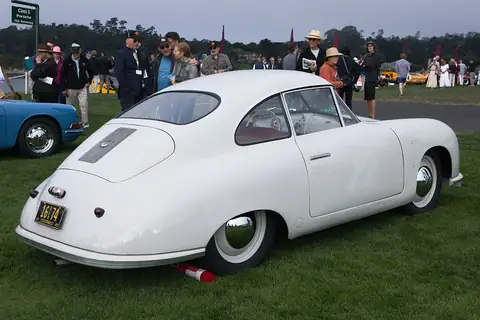 Porsche 356/2 Gmünd Coupé (Wikimedia Commons search)
Photo: Prova MO · CC BY-SA 4.0


02Production & history
Production
Every figure says what it counts.
| What is counted | Figure | Basis | Status |
|---|---|---|---|
| Total model productionAbout 30 of the 47 Gmünd coupés that this source counts are known to exist (only 7 or 8 were factory works race cars) | 304 | Surviving examples | Independently researched |
| Total model production356/2 coupés built in Gmünd, winter 1948/49–1950 | 441,2,3 | Factory production | Factory reported |
Independent counts (e.g. engine and colour) are never combined into a calculated figure. Surviving examples are never presented as original production.
History
The first 356/2 coupé was completed in August 1948, with the engine moved from the middle of the No. 1 Roadster to the rear and output raised to 40 PS. Bodies were hammer-formed from aluminium sheet by small specialists, among them Kastenhofer, Keibl and Tatra in Vienna and Beutler in Switzerland. The coupé was shown to an international audience at the Geneva Motor Show in spring 1949, and 44 were built before production in Austria ended in 1950.
Variants
How each version differs from the standard 356/2 Gmünd Coupé.
No variants documented yet. Have a source? Contribute it.
03Specifications
Technical specifications
Engine
| Engine family | Not yet verified |
|---|---|
| Engine code | Type 3695 Independently researched |
| Layout | Rear-mounted four-cylinder boxer2 |
| Displacement | 1,086 cc / 1.1 LFactory: 1,086 cc5 Independently researchedBore cut by 1.5 mm after the first handful of cars; the earliest engines were 1131 cc (75 x 64 mm). |
| Bore | Not yet verified |
| Stroke | Not yet verified |
| Compression ratio | 7.0:15 Independently researchedThe Stuttcars cabriolet spec table gives 6.5:1. |
| Valvetrain | Pushrod OHV5 Independently researched |
| Fuel system | Solex 26 VFJ downdraught carburettor5 Independently researched |
| Power | 29.4 kW / 40 PSFactory: 40 PS2 |
| Power at | 4,200 rpm5 Independently researched |
| Torque | Not yet verified |
Transmission & drivetrain
| Gearbox | Not yet verified |
|---|---|
| Gears | 45 Independently researched |
| Driven wheels | Not yet verified |
Chassis, body & dimensions
| Chassis | Steel box frame2 |
|---|---|
| Front suspension | Transverse torsion bars and trailing arms (VW-based), Boge hydraulic shock absorbers5 Independently researched |
| Rear suspension | Not yet verified |
| Brakes | Lockheed hydraulic drums, 230 mm (twin-leading-shoe front, single-trailing-shoe rear)5 Independently researchedCable-operated VW drums on a handful of early cars. |
| Steering | Not yet verified |
| Body construction | Hand hammer-formed aluminium sheet2 |
| Wheelbase | 2,100 mmFactory: 2,100 mm5 Independently researched |
| Length | Not yet verified |
| Width | Not yet verified |
| Height | Not yet verified |
| Front track | Not yet verified |
| Rear track | Not yet verified |
| Kerb weight | 615 kgFactory: 615 kg5 Independently researchedTypical figure for the 356/2 as stated by the source. |
| Dry weight | Not yet verified |
Performance
| Maximum speed | 137 km/hFactory: 85 mph · converted5 Independently researched |
|---|---|
| 0–100 km/h | Not yet verified |
| Fuel tank | 50 LFactory: 50 L5 Independently researched |
“Not yet verified” means no source has been checked for that value yet. Nothing is estimated to fill a gap.
04Colours & options
Factory colours & interiors
Original paint and trim, with the number of cars in each where a source gives it.
Not yet documented. Have a source? Contribute it.
Factory options & codes
Codes are shown exactly as written by the manufacturer.
Not yet documented. Have a source? Contribute it.
05Individual cars
Chassis register
Every documented car, with its colours, history and where it is now. Open a row for the full record. Known chassis are not automatically authenticated originals.
Not yet documented. Have a source? Contribute it.
Competition history
Every race result of the individual cars, in date order. Click a chassis number to open its full record in the register.
Not yet documented. Have a source? Contribute it.
Auction & sale history
Documented public sales of the individual cars. Click a chassis number to open its full record in the register.
Not yet documented. Have a source? Contribute it.
See one in person
Museums where an example of this car can be seen.
No example is documented on public display yet. Have a source? Contribute it.
06Reference
Identification guide
How to tell an original from a replica or later conversion.
Gmünd coupés are the aluminium-bodied 356/2 cars: a steel box frame carries a body hammer-formed from aluminium sheet by small Austrian and Swiss specialists, Porsche names Kastenhofer, Keibl, Tatra (all Vienna) and Beutler (Switzerland). The engine is a four-cylinder boxer of about 40 PS mounted behind the rear axle. The first coupé was completed in August 1948. Unfinished aluminium bodies left behind at the move to Stuttgart were completed at Tatra in 1950 and delivered to Zuffenhausen; chassis numbers follow the pattern 356/2-0xx.
Sources
Each number links to the exact facts it supports.
-
1
Porsche 356/2 "Gmünd" Coupe (1948 - 1951) - Ultimate Guide Level B Stuttcars · 2014-12-30
- eight being cabriolets and the other 44 being coupes
-
2
Made in Austria – the history of the Porsche 356 Level A Porsche Newsroom · 2019-11-06
- 44 Coupés and eight Cabriolet models of the 356/2 were built
- the engine was moved to the rear
- output increased to 40 PS
- a steel box frame as the chassis
- hammer-formed from aluminium sheets by small specialists
-
3
Made in Austria – Porsche Newsroom Level A
- 44 356/2 coupés built in Gmünd, winter 1948/49–1950
-
4
1951 Porsche 356 SL Gmünd Coupe Level B Stuttcars
- Only about 30 of the total 47 Gmund coupes are known to exist
-
5
Guide: Porsche 356/2 Gmund - a Historical & Technical Appraisal Level B Supercar Nostalgia · 2020-03-23
- this Type 369 overhead valve pushrod unit
- displacement down to 1086cc
- compression was increased from 5.8:1 to 7.0:1
- overhead valve pushrod unit
- replaced with a VFJ component
- 40bhp at 4200rpm
- four-speed non-synchromesh Volkswagen gearbox
- transverse torsion bars and trailing arms; Boge
- hydraulic system supplied by Lockheed; drums 230mm
- shortened by 50mm to 2100mm
- Weight was typically around 615kg
- top speed of around 85mph was possible
- 50-litre fuel tank
Keep exploring
More from Porsche
-
Porsche · 1948
356 "No. 1" Roadster (Sport 356/1)
1 Built
-
Porsche · 1986–1987
961
1 Built
-
Porsche · 1984
953 (911 4x4 Paris–Dakar)
3 Built
-
Porsche · 1939–1940
Type 64 (60K10) "Berlin–Rome"
3 Built
More from Germany
-
Audi · 1989–1991
quattro 20V (RR)
934 Built
-
Opel
GT Roadster (2007) (2007-2009)
Production not yet verified
-
Mercedes-Benz · 1990
190 E 2.5-16 Evolution II
502 Built
-
BMW
ActiveE
Production not yet verified
73 other makes from GermanyAC SchnitzerAdlerAgria-WerkeAlbertAlpinaAMGAMOAmphicarApolloArtegaAudiAuto UnionAutomobili PininfarinaBayerische AutowerkeBenzBenz & Cie.BitterBMWBohseBoldmenBorgwardBovensiepenBrabusBrennaborBrütschCarlssonChampionDaimler-Motoren-GesellschaftDKWFMR (Messerschmitt)FuldamobilGepardGlasGoggomobilGoliathGumpertGutbrodHanomagHeinkelHorchAll makes →