Makes › Porsche › 911 › Original 911 › 911 R (1967) · Factory competition · 1967 Ultra Rare
Porsche
911 R (1967)
Lightweight competition 911 with 906-derived engine – four prototypes plus a numbered series of 20 built by Karl Baur
Contents
01Overview
At a glance
- Built
- 20 Built
- Years
- 1967
- Engine
- flat-six · 1,991 cc / 2.0 LFactory: 1,991 cc
- Power
- 157 kW / 213 PSFactory: 210 hp · converted
- Top speed
- 248 km/hFactory: 154 mph · converted
- Body
- Not yet verified
- Designer
- Ferdinand Piëch (head of R&D, initiator of the 911 R programme)
- In this archive
- Not yet verified
- Surviving
- Not yet verified
Sources and any conflicting figures are in the sections below.
Why it matters
The 1967 911 R was a lightweight, road-registered racing 911 and the forerunner of the later Carrera RS and RSR line. It competed in rallies, the Targa Florio and speed-record runs. Porsche describes it as a road-homologated racing car, although the FIA refused homologation and the cars ran as prototypes.
How rare is it?
Six separate kinds of rarity – never combined into one number.
Each kind of rarity is rated separately and never combined.
02Production & history
Production
Every figure says what it counts.
| What is counted | Figure | Basis | Status |
|---|---|---|---|
| Total model productionNumbered production series built by Karl Baur (plus four prototypes, 24 in all) | 201Strongest evidence | Factory production | Independently researched |
| Prototypes and pre-series carsAll 911 R built: four prototypes (R1-R4) built at Weissach plus 20 customer cars built by Baur | 242 | Factory production | Independently researched |
Independent counts (e.g. engine and colour) are never combined into a calculated figure. Surviving examples are never presented as original production.
History
Under Ferdinand Piëch, engineers took weight out of the 911 S to compete in the FIA 2.0-litre GT category. Four prototypes were built first, then coachbuilder Karl Baur assembled a numbered production series of 20 cars, 118990001R to 118990020R. Management ended the programme for cost reasons.
The FIA would not accept the R as a variant of the 911 S, so the cars raced as prototypes and most were sold to privateers, eight of the 20 going to France. Bonhams, citing Jürgen Barth, says it was one of four works cars and records that the group totalled no more than 16.
Variants
How each version differs from the standard 911 R (1967).
No variants documented yet. Have a source? Contribute it.
03Specifications
Technical specifications
Engine
| Engine family | Not yet verified |
|---|---|
| Engine code | 901/223 Independently researchedBonhams lists engine type 90102 for chassis 004. |
| Layout | flat-six3 Independently researched |
| Displacement | 1,991 cc / 2.0 LFactory: 1,991 cc4 Independently researched |
| Bore | 80 mmFactory: 80 mm4 Independently researched |
| Stroke | 66 mmFactory: 66 mm4 Independently researched |
| Compression ratio | 10.3:14 Independently researched |
| Fuel system | Twin triple-barrel Weber 35 mm carburettors5 Independently researchedStated for works chassis 004. |
| Power | 157 kW / 213 PSFactory: 210 hp · converted3 Independently researchedCompared by the source with 160 bhp for the 911 S engine. |
| Power at | 8,000 rpm4 Independently researchedStuttcars gives 210 bhp @ 6200 rpm and 152 lb-ft; Ultimatecarpage says the Type 916 option made 230 bhp. |
| Torque | 197 NmFactory: 145 lb-ft · converted4 Independently researchedStuttcars gives 152 lb-ft @ 6000 rpm. |
| Torque at | 6,000 rpm4 Independently researched |
Transmission & drivetrain
| Gearbox | Not yet verified |
|---|---|
| Gears | 54 Independently researched |
| Driven wheels | Not yet verified |
Chassis, body & dimensions
| Chassis | 911 steel unibody retained3 Independently researched |
|---|---|
| Front suspension | MacPherson struts, stiffer Koni dampers, thicker anti-roll bars4 Independently researched |
| Rear suspension | Semi-trailing arms with transverse torsion bar4 Independently researched |
| Brakes | Ventilated discs all round with competition Ferodo pads4 Independently researched |
| Steering | Not yet verified |
| Body construction | Fibreglass removable panels, plastic side and rear glass3 Independently researched |
| Wheelbase | Not yet verified |
| Length | Not yet verified |
| Width | Not yet verified |
| Height | Not yet verified |
| Front track | Not yet verified |
| Rear track | Not yet verified |
| Kerb weight | Not yet verified |
| Dry weight | 816 kgFactory: 1,800 lb · converted3 Independently researchedSource says less than 1,800 lb dry. |
Performance
| Maximum speed | 248 km/hFactory: 154 mph · converted4 Independently researchedStuttcars gives 152 mph. |
|---|---|
| 0–100 km/h | 5.7 s4 Independently researchedSource states 0-62 mph; gearing-dependent. |
| Fuel tank | 100 LFactory: 100 L4 Independently researched |
“Not yet verified” means no source has been checked for that value yet. Nothing is estimated to fill a gap.
04Colours & options
Factory colours & interiors
Original paint and trim, with the number of cars in each where a source gives it.
Not yet documented. Have a source? Contribute it.
Factory options & codes
Codes are shown exactly as written by the manufacturer.
Not yet documented. Have a source? Contribute it.
05Individual cars
Chassis register
Every documented car, with its colours, history and where it is now. Open a row for the full record. Known chassis are not automatically authenticated originals.
Not yet documented. Have a source? Contribute it.
Competition history
Every race result of the individual cars, in date order. Click a chassis number to open its full record in the register.
Not yet documented. Have a source? Contribute it.
Auction & sale history
Documented public sales of the individual cars. Click a chassis number to open its full record in the register.
Not yet documented. Have a source? Contribute it.
See one in person
Museums where an example of this car can be seen.
No example is documented on public display yet. Have a source? Contribute it.
06Reference
Identification guide
How to tell an original from a replica or later conversion.
The production chassis run 118990001R to 118990020R, and Bonhams shows the format 118 99 004R. The four prototypes were 305876 (R1), 306681 (R2), 307671 (R3) and 307670 (R4). The steel unibody is retained, with fibreglass removable panels (R3 used aluminium doors and lids) and plastic side and rear glass. Wheels are Fuchs Deep Sixes at the front and Seven Rs at the rear. The engine is the 210 hp Type 901/22 from the 906. Eighteen of the 20 cars were Light Ivory with black lightweight interiors, and two were painted to order.
Sources
Each number links to the exact facts it supports.
-
1
RM Sotheby's Monterey 2021 – 1968 Porsche 911 R Level B
- 20 Numbered production series built by Karl Baur (plus four prototypes, 24 in all)
- 2
-
3
1968 Porsche 911 R (Monterey 2021, titled as 1967) Level C RM Sotheby's
- Type 901/22 flat-six racing engine from the 906
- 210-brake horsepower Type 901/22 flat-six racing engine from the 906
- the 210-brake horsepower Type 901/22 flat-six racing engine
- the 911’s steel unibody was retained
- all the removable panels were replaced by fiberglass
- curb weight was reduced to less than 1,800 pounds dry
-
4
Guide: Porsche 911 R - a Historical & Technical Appraisal Level B Supercar Nostalgia
- displacement was 1991cc thanks to a bore and stroke of 80mm and 66mm
- bore and stroke of 80mm and 66mm
- a 10.3:1 compression ratio
- 210bhp at 8000rpm and 145lb-ft at 6000rpm
- 145lb-ft at 6000rpm
- five-speed manual gearbox, single-plate clutch and limited-slip differential
- MacPherson struts up front
- semi-trailing arms with a transverse torsion bar at the rear
- ventilated disc brakes were used all round
- top speed of 154mph was possible
- 0-62mph time of 5.7 seconds
- 100-litre fuel tank was fitted in the trunk
-
5
Ex-Works / Jo Siffert / Le Mans film 1967 Porsche 911R Lightweight, chassis 118 99 004R Level C Bonhams · 2005-05-16
- Twin triple barrelled Weber 35mm carbs are fitted
Keep exploring
More from Porsche
-
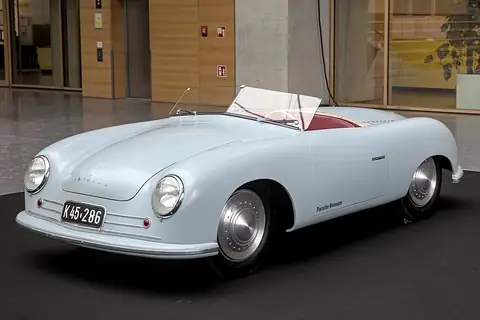
Porsche · 1948
356 "No. 1" Roadster (Sport 356/1)
1 Built
-
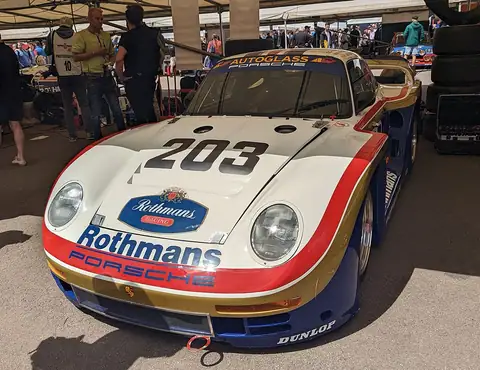
Porsche · 1986–1987
961
1 Built
-
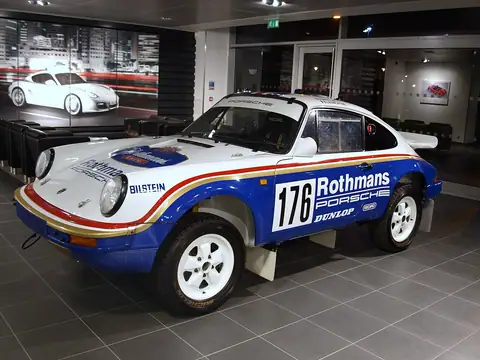
Porsche · 1984
953 (911 4x4 Paris–Dakar)
3 Built
-
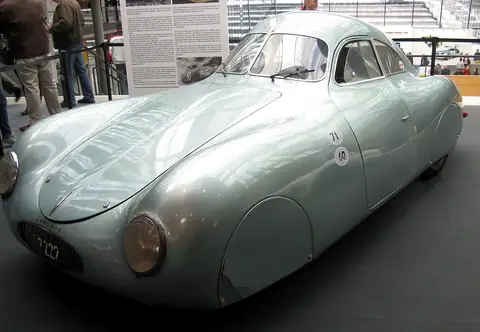
Porsche · 1939–1940
Type 64 (60K10) "Berlin–Rome"
3 Built
More from Germany
-
Volkswagen
Passat W8
2,359 Built
-
BMW
M5 Touring (E61) (2007-2010)
1,025 Built
-
smart
#1 Launch Edition
1,000 Built
-
Borgward · 1959–1961
P 100
2,587 Built
73 other makes from GermanyAC SchnitzerAdlerAgria-WerkeAlbertAlpinaAMGAMOAmphicarApolloArtegaAudiAuto UnionAutomobili PininfarinaBayerische AutowerkeBenzBenz & Cie.BitterBMWBohseBoldmenBorgwardBovensiepenBrabusBrennaborBrütschCarlssonChampionDaimler-Motoren-GesellschaftDKWFMR (Messerschmitt)FuldamobilGepardGlasGoggomobilGoliathGumpertGutbrodHanomagHeinkelHorchAll makes →