Makes › Porsche › 917 (homologation series) · Factory competition · 1969 Ultra Rare
Porsche
917 (homologation series)
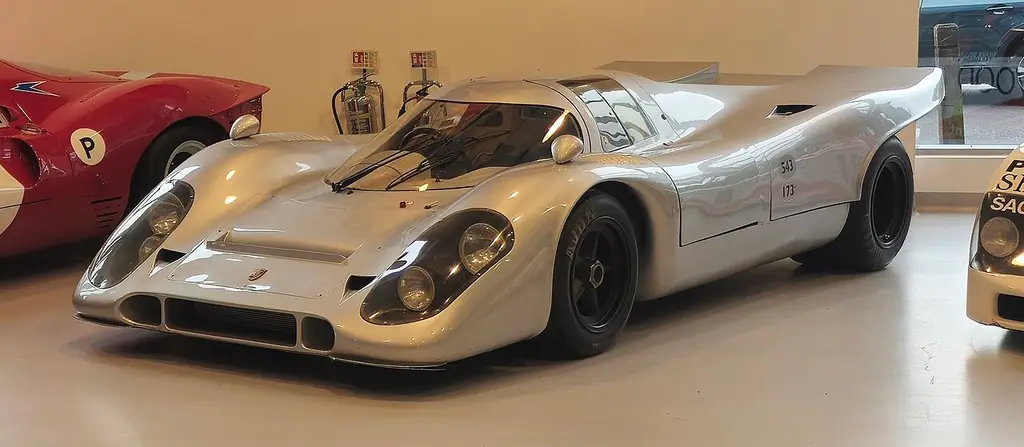
25 cars built to homologate the 4.5-litre flat-12 917 as a Group 4 sports car; Le Mans winner 1970–71.
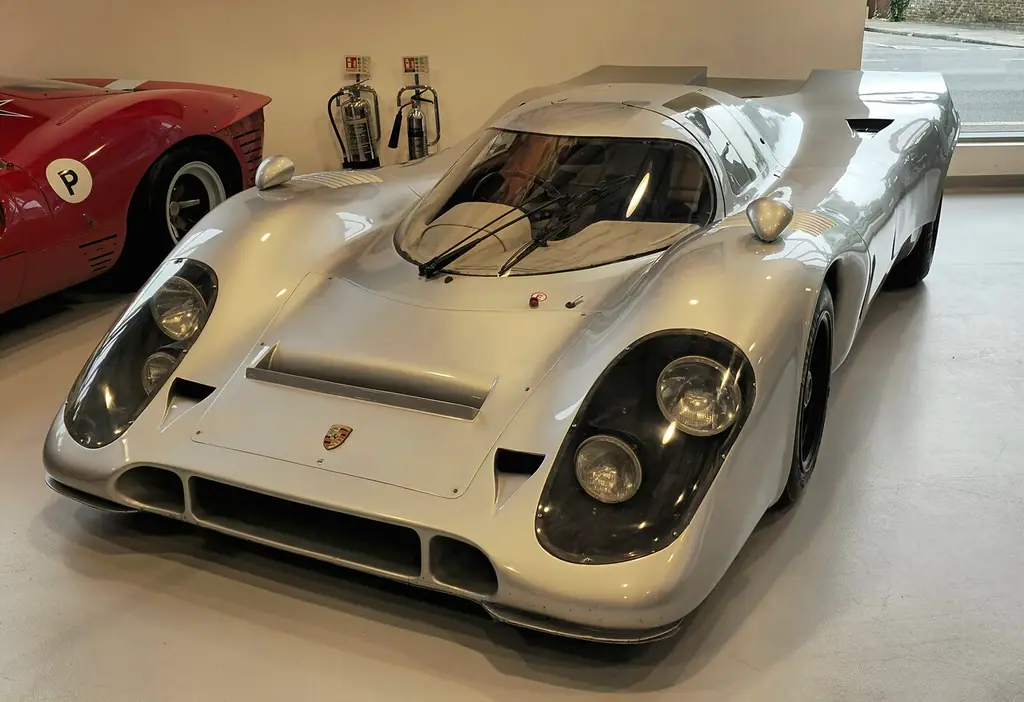
Photo: Calreyn88 · CC BY-SA 4.0
Contents
01Overview
At a glance
- Built
- 25 Built
- Years
- 1969
- Engine
- Twelve-cylinder (described by Porsche as a V12) · 4,500 cc / 4.5 LFactory: 4.5 L
- Power
- 388 kW / 527 PSFactory: 520 hp · converted
- Top speed
- 380 km/hFactory: 380 km/h
- Body
- Not yet verified
- Designer
- Hans Mezger (chief engineer); body shape by Eugen Kolb
- In this archive
- Not yet verified
- Surviving
- Not yet verified
Sources and any conflicting figures are in the sections below.
Why it matters
The 917 was Porsche's first car built for the five-litre sports-car class, and the 25 homologation cars made it eligible to race. It gave Porsche its first overall victory at the Le Mans 24 Hours in 1970.
How rare is it?
Six separate kinds of rarity – never combined into one number.
Each kind of rarity is rated separately and never combined.
Photos
Exterior, interior and detail photos with their licences.
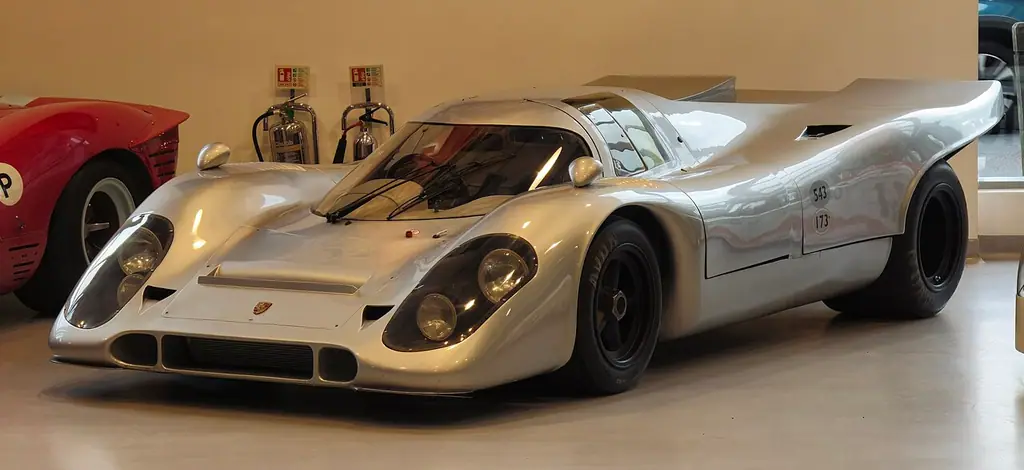
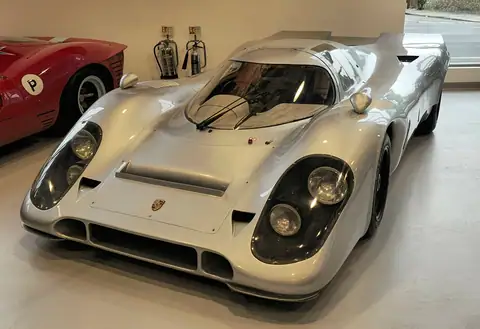 Porsche 917 (homologation series) (Wikimedia Commons: Porsche 917)
Photo: Calreyn88 · CC BY-SA 4.0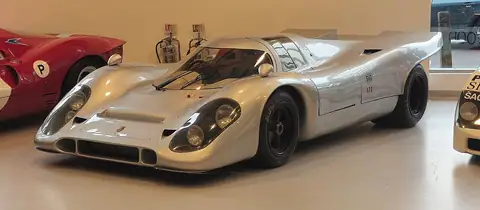 Porsche 917 (homologation series) (Wikimedia Commons: Porsche 917)
Photo: Calreyn88 · CC BY-SA 4.0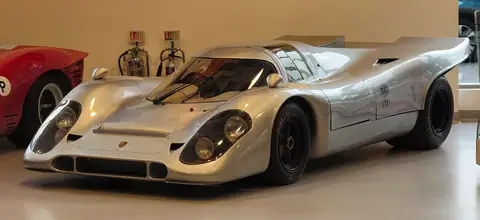 Porsche 917 (homologation series) (Wikimedia Commons: Porsche 917)
Photo: Calreyn88 · CC BY-SA 4.0


02Production & history
Production
Every figure says what it counts.
| What is counted | Figure | Basis | Status |
|---|---|---|---|
| Total model productionhomologation vehicles inspected by the FIA in April 1969 | 251,2 | Factory production | Independently researched |
Independent counts (e.g. engine and colour) are never combined into a calculated figure. Surviving examples are never presented as original production.
History
The 917 went from idea to 25 finished cars in under a year. Chassis 001 was completed on 10 March 1969 and shown at the Geneva Motor Show on 12 March. The rules originally called for 50 cars, but the requirement was cut to 25, and the FIA inspected the line-up in the Plant 1 car park on 21 April 1969. The cars used a 4.5-litre twelve-cylinder engine designed under Hans Mezger, hand-assembled by Gerhard Küchle's team, in a 45 kg tubular space frame with a glass-fibre body shaped by Eugen Kolb; Porsche listed the car for sale at 140,000 marks. Its first win came at the Zeltweg 1,000 km in 1969.
Variants
How each version differs from the standard 917 (homologation series).
No variants documented yet. Have a source? Contribute it.
03Specifications
Technical specifications
Engine
| Engine family | Not yet verified |
|---|---|
| Engine code | Not yet verified |
| Layout | Twelve-cylinder (described by Porsche as a V12)3S1 gives 580 PS for the twelve-cylinder without stating it applies to the 1969 4.5-litre homologation engine; power omitted. |
| Cylinders | 124 Independently researchedStated for a 1970 917K in the auction listing; scope is the type, not a specific homologation chassis. |
| Displacement | 4,500 cc / 4.5 LFactory: 4.5 L3 |
| Bore | 85 mmFactory: 85 mm1 Independently researchedOriginal 4494 cc engine kept the 908 bore and stroke; 85 mm is implied by the 1970 enlargement from 85 to 86 mm. |
| Stroke | 66 mmFactory: 66 mm1 Independently researchedOriginal 4.5-litre stroke; 70.2 mm in the 1970 4907 cc engine. |
| Compression ratio | Not yet verified |
| Valvetrain | DOHC4 Independently researchedStated for a 1970 917K in the auction listing; scope is the type, not a specific homologation chassis. |
| Fuel system | Bosch mechanical fuel injection4 Independently researchedStated for a 1970 917K in the auction listing; scope is the type, not a specific homologation chassis. |
| Power | 388 kW / 527 PSFactory: 520 hp · converted1 DisputedThe same page also says 540 HP for the 4.5-litre engine; Stuttcars 917 guide says about 580 bhp initially. |
| Power at | Not yet verified |
| Torque | Not yet verified |
Transmission & drivetrain
| Gearbox | Not yet verified |
|---|---|
| Gears | 51 Independently researchedFive-speed in 1969, four-speed adopted for 1970. |
| Driven wheels | Not yet verified |
Chassis, body & dimensions
| Chassis | Tubular aluminium space frame (45 kg), glass-fibre body3,5 |
|---|---|
| Front suspension | Independent, coil-over shock absorbers4 Independently researchedStated for a 1970 917K in the auction listing; scope is the type, not a specific homologation chassis. |
| Rear suspension | Independent, coil-over shock absorbers4 Independently researchedStated for a 1970 917K in the auction listing; scope is the type, not a specific homologation chassis. |
| Brakes | 4-wheel hydraulic ventilated discs4 Independently researchedStated for a 1970 917K in the auction listing; scope is the type, not a specific homologation chassis. |
| Steering | Not yet verified |
| Body construction | Not yet verified |
| Wheelbase | Not yet verified |
| Length | Not yet verified |
| Width | Not yet verified |
| Height | Not yet verified |
| Front track | Not yet verified |
| Rear track | Not yet verified |
| Kerb weight | Not yet verified |
| Dry weight | Not yet verified |
Performance
| Maximum speed | 380 km/hFactory: 380 km/h1 Independently researchedPer the factory according to the source; Le Mans 1969. |
|---|---|
| 0–100 km/h | Not yet verified |
| Fuel tank | Not yet verified |
“Not yet verified” means no source has been checked for that value yet. Nothing is estimated to fill a gap.
04Colours & options
Factory colours & interiors
Original paint and trim, with the number of cars in each where a source gives it.
Not yet documented. Have a source? Contribute it.
Factory options & codes
Codes are shown exactly as written by the manufacturer.
Not yet documented. Have a source? Contribute it.
05Individual cars
Chassis register
Every documented car, with its colours, history and where it is now. Open a row for the full record. Known chassis are not automatically authenticated originals.
Not yet documented. Have a source? Contribute it.
Competition history
Every race result of the individual cars, in date order. Click a chassis number to open its full record in the register.
Not yet documented. Have a source? Contribute it.
Auction & sale history
Documented public sales of the individual cars. Click a chassis number to open its full record in the register.
Not yet documented. Have a source? Contribute it.
See one in person
Museums where an example of this car can be seen.
No example is documented on public display yet. Have a source? Contribute it.
06Reference
Identification guide
How to tell an original from a replica or later conversion.
Early 1969 details documented on chassis 001 include an aluminium tubular frame without a diagonal brace in front of the pedals, twin fuel tanks, a 1969 exhaust recess in the right sill, static front and moving rear aero flaps, and a Plexidur (not Plexiglas) engine cover.
Sources
Each number links to the exact facts it supports.
-
1
Porsche 917 technical details Level B Stuttcars
- CSI had inspected 25 Porsche 917 fully finished
- increasing the diameter of the cylinders from 85 to 86 mm
- piston stroke from 66 to 70.2 mm
- It delivered a power of 520 HP
- four-speed gearbox instead of the five-speed one
- the car reached 380 km / h on the L'Hunnadieres straight
-
2
Makers' day - Porsche Newsroom Level A
- 25 homologation vehicles inspected by the FIA in April 1969
-
3
Makers' day Level A Porsche Newsroom · 2019-05-02
- the 4.5-litre V12 engine
- tubular space frame weighing a mere 45 kilograms
-
4
1970 Porsche 917K (Pebble Beach 2017) Level C Gooding & Company
- 4,998 CC DOHC Air-Cooled Flat 12-Cylinder Engine
- DOHC Air-Cooled Flat 12-Cylinder Engine
- Bosch Mechanical Fuel Injection
- 4-Wheel Independent Suspension with Coil-Over Shock Absorbers
- 4-Wheel Hydraulic Ventilated Disc Brakes
- 5
Keep exploring
More from Porsche
-
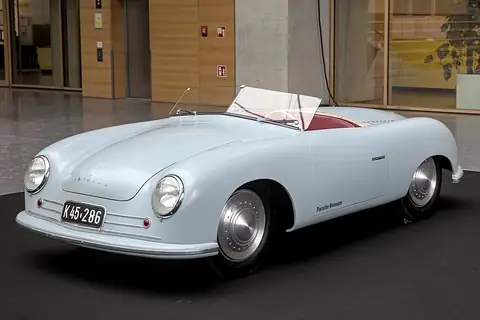
Porsche · 1948
356 "No. 1" Roadster (Sport 356/1)
1 Built
-
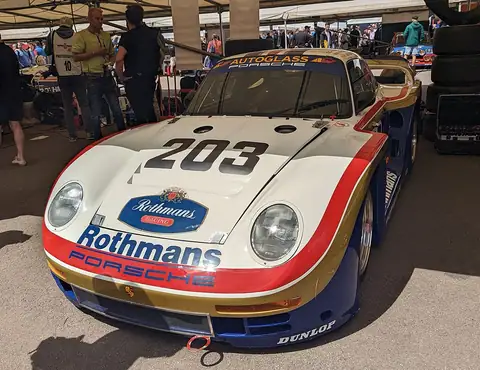
Porsche · 1986–1987
961
1 Built
-
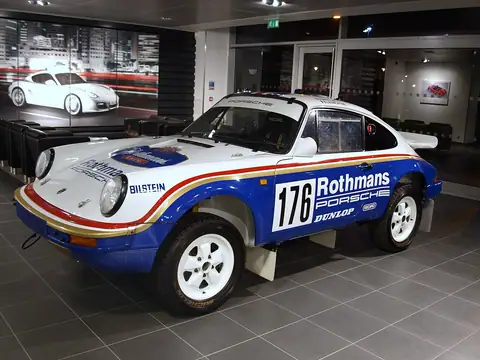
Porsche · 1984
953 (911 4x4 Paris–Dakar)
3 Built
-
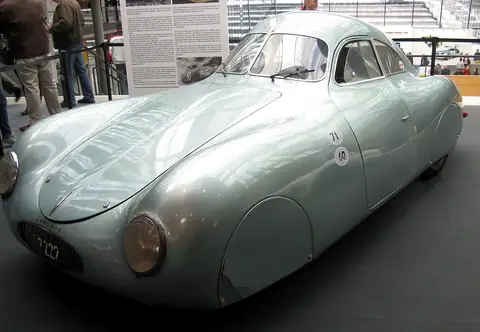
Porsche · 1939–1940
Type 64 (60K10) "Berlin–Rome"
3 Built
More from Germany
-
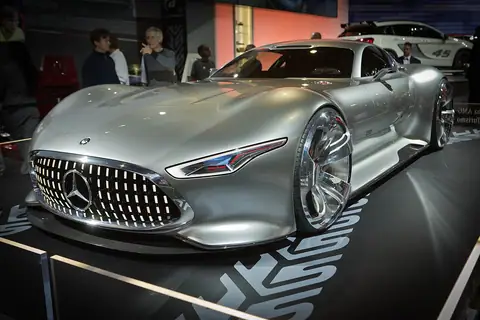
Mercedes-Benz
AMG Vision Gran Turismo (2013-2014)
Production not yet verified
-
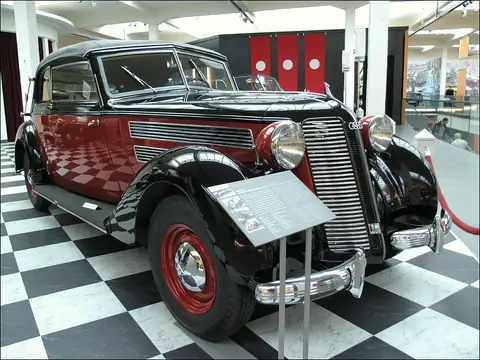
Audi
920 (1938-1940)
Production not yet verified
-
Alpina
B9
Production not yet verified
-
BMW · 2003–2004
M3 CSL (E46)
1,383 Built
73 other makes from GermanyAC SchnitzerAdlerAgria-WerkeAlbertAlpinaAMGAMOAmphicarApolloArtegaAudiAuto UnionAutomobili PininfarinaBayerische AutowerkeBenzBenz & Cie.BitterBMWBohseBoldmenBorgwardBovensiepenBrabusBrennaborBrütschCarlssonChampionDaimler-Motoren-GesellschaftDKWFMR (Messerschmitt)FuldamobilGepardGlasGoggomobilGoliathGumpertGutbrodHanomagHeinkelHorchAll makes →