Contents
01Overview
At a glance
- Built
- Not yet verified
- Years
- 1929–1930
- Engine
- Two V12 light-alloy engines, front and rear in a chain-drive chassis · 48,000 cc / 48 LFactory: 48 L
- Power
- 686 kW / 933 PSFactory: 920 hp · converted
- Top speed
- 299.412 km/hFactory: 186.046 mph · converted
- Body
- Not yet verified
- Designer
- Louis Coatalen (planned the car)
- In this archive
- Not yet verified
- Surviving
- Not yet verified
Sources and any conflicting figures are in the sections below.
Why it matters
The Silver Bullet was Sunbeam's twin-engined land speed record challenger of 1929-30, planned by Louis Coatalen. It failed at Daytona Beach: in 18 runs over a month its best timed speed was 186.046 mph over the mile, far short of the Golden Arrow's record.
How rare is it?
Six separate kinds of rarity – never combined into one number.
Each kind of rarity is rated separately and never combined.
02Production & history
Production
Every figure says what it counts.
No production figures recorded yet.
History
Coatalen announced the twin-engined 48-litre car in 1929. It was built at the Moorfield factory in Wolverhampton, with the crankcase castings ready on 1 October 1929. Kaye Don was nominated as driver, and the car left for Daytona early in 1930 amid heavy publicity. Its timed speeds ranged from just over 69 mph to a best of 186.046 mph, and it returned to England without the record.
Variants
How each version differs from the standard "Silver Bullet" record car.
No variants documented yet. Have a source? Contribute it.
03Specifications
Technical specifications
Engine
| Engine manufacturer | Sunbeam1 Independently researched |
|---|---|
| Engine family | Not yet verified |
| Engine code | Not yet verified |
| Layout | Two V12 light-alloy engines, front and rear in a chain-drive chassis2 Independently researchedFour vertical valves per cylinder, twin gear-driven overhead camshafts over each block, roller bearings, two blocks of three cylinders per bank; centrifugal supercharger driven from the rear engine. |
| Cylinders | 121 Independently researched |
| Displacement | 48,000 cc / 48 LFactory: 48 L2 Independently researchedDescribed as a twin-engined 48-litre car. |
| Bore | 140 mmFactory: 140 mm1 Independently researched |
| Stroke | 130 mmFactory: 130 mm1 Independently researched |
| Compression ratio | Not yet verified |
| Fuel system | Not yet verified |
| Induction | Supercharged, large centrifugal blower geared to 17,000 rpm1 Independently researched |
| Power | 686 kW / 933 PSFactory: 920 hp · converted2 Independently researchedStated as 920 bhp at the road wheels; Coatalen claimed 4,000 horsepower for the combined installation. |
| Power at | Not yet verified |
| Torque | Not yet verified |
Transmission & drivetrain
| Gearbox | Not yet verified |
|---|---|
| Gears | Not yet verified |
| Driven wheels | Not yet verified |
Chassis, body & dimensions
| Chassis | Not yet verified |
|---|---|
| Front suspension | Not yet verified |
| Rear suspension | Not yet verified |
| Brakes | Lockheed hydraulic four-wheel brakes with Buxton linings2 Independently researched |
| Steering | Not yet verified |
| Body construction | Not yet verified |
| Wheelbase | 4,699.01 mmFactory: 15.4167 ft · converted2 Independently researchedStated as 15 ft 5 in. |
| Length | 9,450 mmFactory: 31 ft · converted2 Independently researchedStated as just over 31 ft. |
| Width | Not yet verified |
| Height | Not yet verified |
| Front track | Not yet verified |
| Rear track | Not yet verified |
| Kerb weight | Not yet verified |
| Dry weight | Not yet verified |
Performance
| Maximum speed | 299.412 km/hFactory: 186.046 mph · converted2 Independently researchedBest timed speed at Daytona, 1930; not a record. |
|---|---|
| 0–100 km/h | Not yet verified |
| Fuel tank | Not yet verified |
“Not yet verified” means no source has been checked for that value yet. Nothing is estimated to fill a gap.
04Colours & options
Factory colours & interiors
Original paint and trim, with the number of cars in each where a source gives it.
Not yet documented. Have a source? Contribute it.
Factory options & codes
Codes are shown exactly as written by the manufacturer.
Not yet documented. Have a source? Contribute it.
05Individual cars
Chassis register
Every documented car, with its colours, history and where it is now. Open a row for the full record. Known chassis are not automatically authenticated originals.
Not yet documented. Have a source? Contribute it.
Competition history
Every race result of the individual cars, in date order. Click a chassis number to open its full record in the register.
Not yet documented. Have a source? Contribute it.
Auction & sale history
Documented public sales of the individual cars. Click a chassis number to open its full record in the register.
Not yet documented. Have a source? Contribute it.
See one in person
Museums where an example of this car can be seen.
No example is documented on public display yet. Have a source? Contribute it.
06Reference
Identification guide
How to tell an original from a replica or later conversion.
The car carried two supercharged V12 aero engines, each of 24.02 litres with a 50 degree vee angle, in place of a conventional radiator. Cooling came from an 11.5 cu ft ice tank and a one-gallon mixing tank in the nose, which needed 5.5 cwt of ice after each run. The centrifugal blowers were geared to turn at 17,000 rpm. Only two of these engines were ever built, and neither was fitted to an aircraft.
Sources
Each number links to the exact facts it supports.
-
1
Overhead Cam Engines (Sunbeam aero engines and the 2,000 HP Sunbeam car) Level C Wolverhampton local history museum site (archived copy)
- This was Sunbeam's last aero engine.
- car would be powered by two of them ... a V12
- The cylinder bore was 140mm and the stroke was 130mm
- supercharged, using a large centrifugal blower, geared to rotate at 17,000r.p.m.
-
2
The Inside Story of the Sunbeam 'Silver Bullet' Level B Bill Boddy · Motor Sport Magazine · 1976-04-01
- two special V12 light-alloy, roller-bearing power units, with four vertical valves per cylinder
- twin-engined, 48-litre 'Silver Bullet'
- the power delivered to the road wheels was 920 b.h.p.
- Lockheed hydraulic four-wheel brakes, with Buxton linings
- The wheelbase was 15 ft. 5 in.
- the car was just over 31 ft. long
- a best of 186.046, over the measured mile
Keep exploring
More from Sunbeam
-
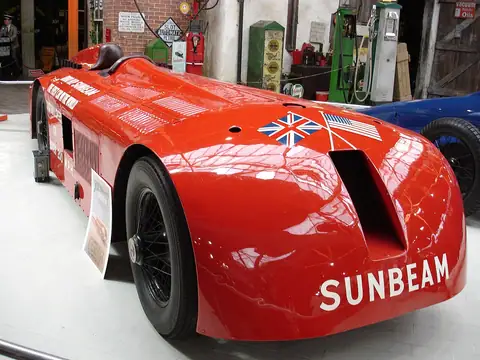
Sunbeam · 1927
1000hp ("The Slug")
1 Built
-
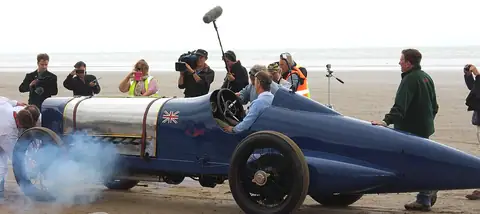
Sunbeam · 1920
350hp (Blue Bird)
1 Built
-
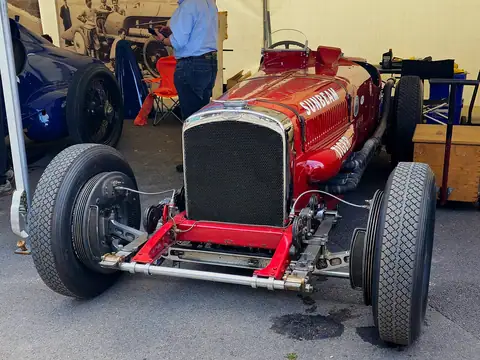
Sunbeam · 1925
Tiger (V12 record car)
1 Built
-
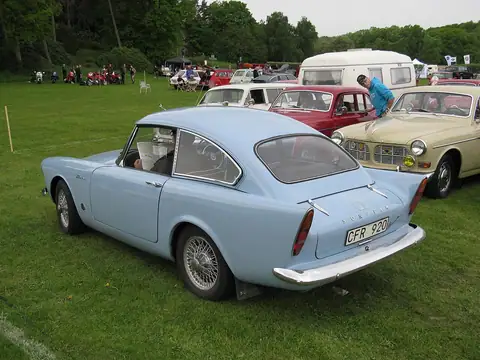
Sunbeam · 1962–1963
Harrington Alpine Series C
20 Built
More from United Kingdom
-
Peel
Viking Sport (1970)
Production not yet verified
-
TVR · 1980–1987
Tasmin (1980-1987)
Production not yet verified
-
Bentley · 2010
Mulsanne (2010)
7,300 Built
-
Panther
Panther Kallista
Production not yet verified
134 other makes from United KingdomACAiredaleAlan Mann RacingAllardAlvisArabArashArielArmstrong SiddeleyArrowsAscariAston MartinAtalantaAtlantisAustinAustin-HealeyBedfordBentleyBerkeleyBluebirdBMCBondBrabhamBristolBritish LeylandBroadspeedBrookeBrough SuperiorCampbell-RailtonCaparoCaterhamChevronConnaughtCooperCrayfordDaimlerDavid BrownDawsonDeLoreanDuttonAll makes →