Contents
01Overview
At a glance
- Built
- 351 Built
- Years
- 1967–1970
- Engine
- DOHC straight six · 2,000 cc / 2 LFactory: 2 L
- Power
- 112 kW / 152 PSFactory: 150 hp · converted
- Top speed
- 219 km/hFactory: 136 mph · converted
- Body
- Not yet verified
- Designer
- Satoru Nozaki
- In this archive
- Not yet verified
- Surviving
- Not yet verified
Sources and any conflicting figures are in the sections below.
Why it matters
The 2000GT is widely acclaimed as Japan's first supercar and was Toyota's range-topping grand tourer of the late 1960s. Built in small, hand-finished batches by Yamaha rather than on Toyota's own lines, it showed that a Japanese maker could produce a world-class sports car.
How rare is it?
Six separate kinds of rarity – never combined into one number.
Each kind of rarity is rated separately and never combined.
02Production & history
Production
Every figure says what it counts.
| What is counted | Figure | Basis | Status |
|---|---|---|---|
| Total model productiontotal units built, of which 337 sold as road cars | 3511Strongest evidence | Factory production | Independently researched |
| Total model productionroad cars sold (Toyota Global: 337 units made before production ended in 1970) | 3372 | Manufacturer reported | Factory reported |
351 is the total units built including prototypes and test cars; 337 are the road cars sold.
Independent counts (e.g. engine and colour) are never combined into a calculated figure. Surviving examples are never presented as original production.
History
Yamaha completed the first prototype under contract to Toyota in August 1965, and it was shown at the 12th Tokyo Motor Show that autumn. In 1966 a Tosco-prepared car set several records in the 72-hour Yatabe speed trials, averaging 128.76 mph. The road car went on sale in Japan in May 1967 under chassis code MF10, gaining revised driving lights, optional air conditioning and an automatic gearbox in 1969. Production ended in 1970 after 351 cars, 337 of them road cars; two prototypes were converted to open cars for the film You Only Live Twice.
Variants
How each version differs from the standard 2000GT.
No variants documented yet. Have a source? Contribute it.
03Specifications
Technical specifications
Engine
| Engine family | Not yet verified |
|---|---|
| Engine code | 3M3 |
| Layout | DOHC straight six3 |
| Displacement | 2,000 cc / 2 LFactory: 2 L3 |
| Bore | 75 mmFactory: 75 mm4 Independently researched |
| Stroke | 75 mmFactory: 75 mm4 Independently researched |
| Compression ratio | Not yet verified |
| Valvetrain | DOHC, duplex chain drive, hemispherical combustion chambers4 Independently researched |
| Fuel system | Three dual-throat Mikuni-Solex side-draught carburettors4 Independently researched |
| Power | 112 kW / 152 PSFactory: 150 hp · converted3Source states bhp. |
| Power at | 6,600 rpm5 |
| Torque | 176 NmFactory: 130 lb-ft · converted4 Independently researched |
| Torque at | 5,000 rpm4 Independently researched |
| Redline | 7,000 rpm4 Independently researched |
Transmission & drivetrain
| Gearbox | Five-speed manual; three-speed automatic available from 19693 |
|---|---|
| Gears | 54 Independently researched |
| Driven wheels | Not yet verified |
Chassis, body & dimensions
| Chassis | X-shape backbone frame3 |
|---|---|
| Front suspension | Independent, double wishbones with coil springs5 |
| Rear suspension | Independent, double wishbones with coil springs5 |
| Brakes | Four-wheel disc brakes5 |
| Steering | Rack and pinion4 Independently researched |
| Body construction | Not yet verified |
| Materials | Steel body hammered over wooden bucks; magnesium-alloy wheels4,2 Independently researched |
| Wheelbase | 2,330 mmFactory: 2,330 mm5 |
| Length | 4,175 mmFactory: 4,175 mm5 |
| Width | 1,600 mmFactory: 1,600 mm5 |
| Height | 1,160 mmFactory: 1,160 mm5 |
| Front track | Not yet verified |
| Rear track | Not yet verified |
| Kerb weight | 1,120 kgFactory: 1,120 kg5 |
| Dry weight | Not yet verified |
Performance
| Maximum speed | 219 km/hFactory: 136 mph · converted3 |
|---|---|
| 0–100 km/h | 8.6 s5 |
| Standing ¼ mile | 15.9 s50-400 m, not 0-1/4 mile. |
| Fuel tank | Not yet verified |
“Not yet verified” means no source has been checked for that value yet. Nothing is estimated to fill a gap.
04Colours & options
Factory colours & interiors
Original paint and trim, with the number of cars in each where a source gives it.
Not yet documented. Have a source? Contribute it.
Factory options & codes
Codes are shown exactly as written by the manufacturer.
Not yet documented. Have a source? Contribute it.
05Individual cars
Chassis register
Every documented car, with its colours, history and where it is now. Open a row for the full record. Known chassis are not automatically authenticated originals.
Not yet documented. Have a source? Contribute it.
Competition history
Every race result of the individual cars, in date order. Click a chassis number to open its full record in the register.
Not yet documented. Have a source? Contribute it.
Auction & sale history
Documented public sales of the individual cars. Click a chassis number to open its full record in the register.
Not yet documented. Have a source? Contribute it.
See one in person
Museums where an example of this car can be seen.
No example is documented on public display yet. Have a source? Contribute it.
06Reference
Identification guide
How to tell an original from a replica or later conversion.
The 2000GT is an ultra-low two-seat coupe with an X-shaped backbone frame carrying a 2.0 litre DOHC straight six with three twin-choke Mikuni-Solex side-draught carburettors and 75 x 75 mm bore and stroke. It has independent double-wishbone suspension, four-wheel disc brakes and four magnesium-alloy wheels, a rosewood-trimmed interior, fender access panels housing the battery and air filter, and pop-up headlights. The four-speed gearbox is a truck unit with a fifth gear and reverse extension added.
Sources
Each number links to the exact facts it supports.
-
1
Toyota UK Magazine: Toyota 2000GT – history of a Japanese icon Level A
- 351 total units built, of which 337 sold as road cars
-
2
Toyota 2000GT, Vehicle Lineage (75 Years of Toyota) Level A Toyota Motor Corporation
- A total of 337 units were made before production ended in 1970
- four magnesium alloy wheels
-
3
Toyota 2000GT – history of a Japanese icon Level A Joe Clifford · Toyota UK Magazine · 2015-06-03
- 3M engine, derived from the Crown's SOHC unit
- 2.0-litre DOHC straight six
- 150bhp
- five-speed manual; three-speed automatic available from 1969
- X-shape backbone frame
- top speed 136mph
-
4
Toyota 2000GT profile Level C Japanese Nostalgic Car (archived) · 2007-07-04
- perfect 75 by 75mm
- duplex chain drove twin overhead cams
- three dual-throat Mikuni-Solex sidedraft carbs
- 130lb-ft of torque at 5000
- capable of spinning the engine at 7000rpm
- synchronized 5-speed transmission
- light, quick rack and pinion steering
- steel skin ... savagely hammered over wooden bucks
-
5
Toyota 2000GT, Vehicle Lineage (75 Years of Toyota) Level A Toyota Motor Corporation, Toyota Global website
- Max. output 150 PS at 6600 rpm (net)
- 4-wheel independent suspension with a double wishbone and coil spring layout
- 4-wheel disc brakes
- Wheelbase(mm) 2330
- Length(mm) 4175
- Width(mm) 1600
- Height(mm) 1160
- Curb mass(kg) 1120
- 0-100 km/h acceleration of 8.6 seconds
- 0-400 m acceleration of 15.9 seconds
Keep exploring
More from Toyota
-
No licensed photo yet
Toyota · 1966
2000GT Yatabe speed-record car
1 Built
-
No licensed photo yet
Toyota · 2019
Century open car (2019 enthronement parade car)
1 Built
-
No licensed photo yet
Toyota · 1970
EX-7 concept
1 Built
-
No licensed photo yet
Toyota
2000GT Roadster (James Bond cars)
2 Built
More from Japan
-
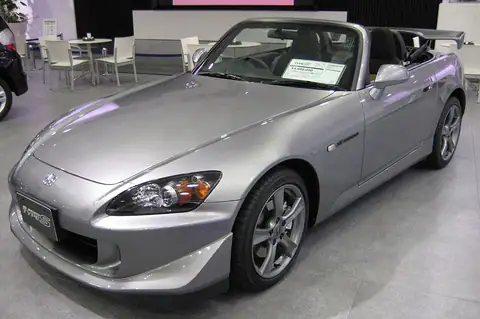
Honda
S2000 Type S
Production not yet verified
-
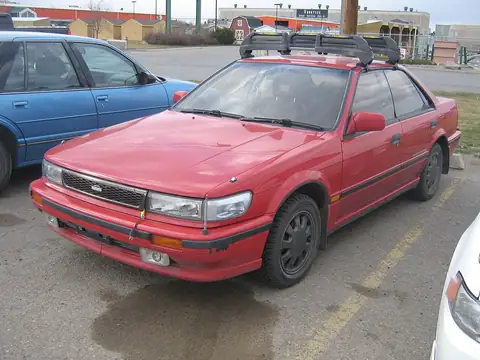
Nissan
Bluebird SSS-R (U12)
Production not yet verified
-
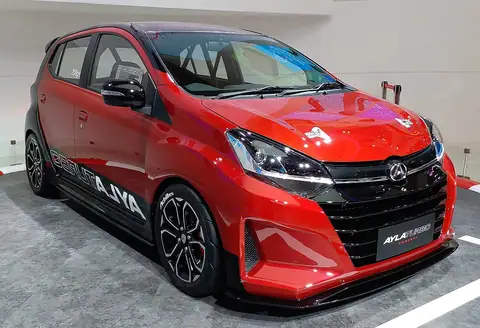
Daihatsu
Ayla Turbo Concept
Production not yet verified
-
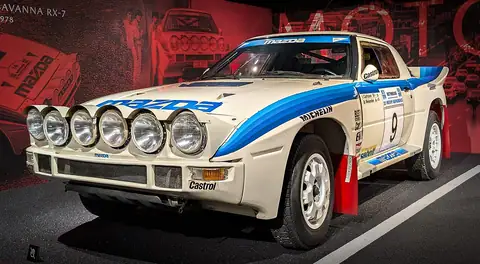
Mazda · 1984–1985
RX-7 Group B (SA22C)
20 Built
30 other makes from JapanAriaAsparkAutechAutozamDaihatsuDatsunDomeHinoHondaInfinitiIsuzuJiottoKuroganeLexusMazdaMazdaspeedMitsubishiMitsuokaMossMugenNismoNissanOrcaPrinceScionSubaruSuzukiTommykairaVemacYamaha