Makes › Daimler-Motoren-Gesellschaft › Mercedes › Mercedes 100 hp / 90 hp Grand Prix racing cars · Factory competition · 1913 Ultra Rare
Daimler-Motoren-Gesellschaft
Mercedes 100 hp / 90 hp Grand Prix racing cars
Aero-engined racers for the 1913 Grand Prix de France at Le Mans
Still being researched: full specifications. Everything shown is checked against the cited sources. Know more? Send us a source.
Contents
01Overview
At a glance
- Built
- 4 Built
- Years
- 1913
- Engine
- 9,200 cc / 9.2 LFactory: 9.2 L
- Power
- 74.6 kW / 101 PSFactory: 100 hp · converted
- Top speed
- Not yet verified
- Body
- Not yet verified
- Designer
- Not yet verified
- In this archive
- Not yet verified
- Surviving
- Not yet verified
Sources and any conflicting figures are in the sections below.
Why it matters
These were the first Mercedes racing cars of the 1913 season and were improvised rather than designed for racing: Daimler-Motoren-Gesellschaft fitted new aircraft engines into a chain-driven chassis because it had no purpose-built racing engine ready. The cars gave the factory practical experience before the 4.5-litre Grand Prix car of 1914.
How rare is it?
Six separate kinds of rarity – never combined into one number.
Each kind of rarity is rated separately and never combined.
02Production & history
Production
Every figure says what it counts.
| What is counted | Figure | Basis | Status |
|---|---|---|---|
| Total model productionvehicles in the 1913 DMG race delegation (three aero-engined) | 41 | Factory production | Independently researched |
Independent counts (e.g. engine and colour) are never combined into a calculated figure. Surviving examples are never presented as original production.
History
After the end of the manufacturers' boycott, DMG at first worked through its Belgian importer Theodore Pilette. His entries were refused for the A.C.F. Grand Prix, which only accepted cars entered directly by the factory, but were accepted for the Grand Prix de France near Le Mans on 5 August 1913.
Four Mercedes started. Pilette drove the 100 hp car with the four-cylinder aircraft engine, Lautenschlager and Salzer the 90 hp cars with the six-cylinder engine, and Elskamp a 37/90 hp car. Pilette was in contention for the win until a puncture near the end dropped him to third. Salzer finished fourth and Lautenschlager sixth. The six-cylinder cars suffered torsional vibration from their long stroke and four-bearing crankshaft.
Variants
How each version differs from the standard Mercedes 100 hp / 90 hp Grand Prix racing cars.
No variants documented yet. Have a source? Contribute it.
03Specifications
Technical specifications
Engine
| Engine family | Not yet verified |
|---|---|
| Engine code | G 4 F (four-cylinder, 100 hp); DF 80 (six-cylinder, 90 hp)2,3 |
| Layout | Not yet verified |
| Displacement | 9,200 cc / 9.2 LFactory: 9.2 L2100 hp car. The 90 hp six-cylinder DF 80 displaced 7.3 litres (S2). |
| Bore | 140 mmFactory: 140 mm2100 hp four-cylinder; the 90 hp six-cylinder had 105 mm bore (S2). |
| Stroke | 150 mmFactory: 150 mm2100 hp four-cylinder; the 90 hp six-cylinder had 140 mm stroke (S2). |
| Compression ratio | Not yet verified |
| Valvetrain | Overhead camshaft driven by a vertical shaft, one angled intake and one exhaust valve per cylinder via rocker arms; two spark plugs per cylinder from two magnetos2 |
| Fuel system | Not yet verified |
| Power | 74.6 kW / 101 PSFactory: 100 hp · converted2Rating: manufacturer100 hp car (74 kW). The 90 hp car produced 91 hp/67 kW at 1600 rpm (S2). |
| Power at | 1,350 rpm2100 hp car; the 90 hp car peaked at 1600 rpm. |
| Torque | Not yet verified |
Transmission & drivetrain
| Gearbox | Chain drive to the rear axle2 |
|---|---|
| Gears | Not yet verified |
| Driven wheels | Not yet verified |
Chassis, body & dimensions
| Chassis | Not yet verified |
|---|---|
| Front suspension | Not yet verified |
| Rear suspension | Not yet verified |
| Brakes | Not yet verified |
| Steering | Not yet verified |
| Body construction | Not yet verified |
| Wheelbase | Not yet verified |
| Length | Not yet verified |
| Width | Not yet verified |
| Height | Not yet verified |
| Front track | Not yet verified |
| Rear track | Not yet verified |
| Kerb weight | Not yet verified |
| Dry weight | Not yet verified |
Performance
| Maximum speed | Not yet verified |
|---|---|
| 0–100 km/h | Not yet verified |
| Fuel tank | Not yet verified |
“Not yet verified” means no source has been checked for that value yet. Nothing is estimated to fill a gap.
04Colours & options
Factory colours & interiors
Original paint and trim, with the number of cars in each where a source gives it.
Not yet documented. Have a source? Contribute it.
Factory options & codes
Codes are shown exactly as written by the manufacturer.
Not yet documented. Have a source? Contribute it.
05Individual cars
Chassis register
Every documented car, with its colours, history and where it is now. Open a row for the full record. Known chassis are not automatically authenticated originals.
Not yet documented. Have a source? Contribute it.
Competition history
Every race result of the individual cars, in date order. Click a chassis number to open its full record in the register.
Not yet documented. Have a source? Contribute it.
Auction & sale history
Documented public sales of the individual cars. Click a chassis number to open its full record in the register.
Not yet documented. Have a source? Contribute it.
See one in person
Museums where an example of this car can be seen.
No example is documented on public display yet. Have a source? Contribute it.
06Reference
Identification guide
How to tell an original from a replica or later conversion.
Both versions had a pointed radiator, tapered longitudinal frame members, wire-spoke wheels with a central nut and chain drive to the rear axle. The two engines can be told apart by the exhaust manifolds on the left side of the car: four for the four-cylinder 100 hp, three for the six-cylinder 90 hp.
Sources
Each number links to the exact facts it supports.
-
1
Mercedes 100 hp Grand Prix racing car, 1913 – Mercedes-Benz Classic M@RS archive Level A
- 4 vehicles in the 1913 DMG race delegation (three aero-engined)
-
2
Mercedes 100 hp Grand Prix racing car, 1913 Level A Mercedes-Benz Group AG, Mercedes-Benz Public Archive (Classic M@RS)
- four-cylinder aircraft engine G 4 F
- 9.2-litre four-cylinder aircraft engine G 4 F
- cylinder dimensions of 140 x 150 mm
- overhead camshaft driven by a vertical shaft
- peak output of 100 hp/74 kW at 1350 rpm
- 100 hp/74 kW at 1350 rpm
- all four Mercedes cars still had a chain drive to the rear axle
-
3
Mercedes 90 hp Grand Prix racing car, 1913 Level A Mercedes-Benz Group AG, Mercedes-Benz Public Archive (Classic M@RS)
- six-cylinder DF 80
Keep exploring
More from Daimler-Motoren-Gesellschaft
-
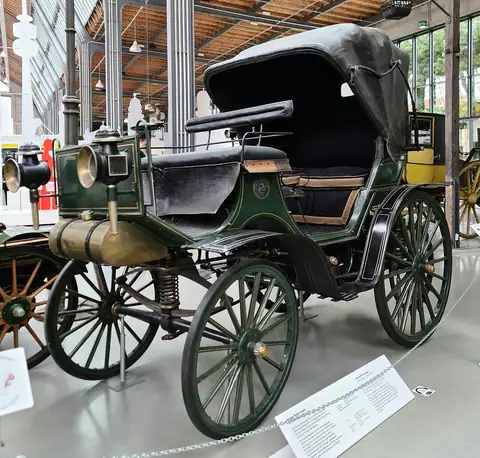
Daimler-Motoren-Gesellschaft
Riemenwagen (1890s)
Production not yet verified
-
No licensed photo yet
Daimler-Motoren-Gesellschaft · 1915
Mercedes 79/200 hp one-off (airship engine)
1 Built
-
No licensed photo yet
Daimler-Motoren-Gesellschaft · 1902
Mercedes Simplex 40 hp – W.K. Vanderbilt Jr. car
1 Built
-
No licensed photo yet
Daimler-Motoren-Gesellschaft · 1901–1903
"Paul Daimler car" prototypes
3 Built
See all 20 cars by Daimler-Motoren-Gesellschaft →The Mercedes-Benz family →
More from Germany
-
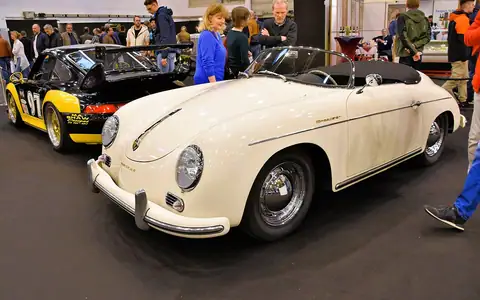
Porsche · 1955–1959
356 A Carrera 1500 GS Speedster
148 Built
-
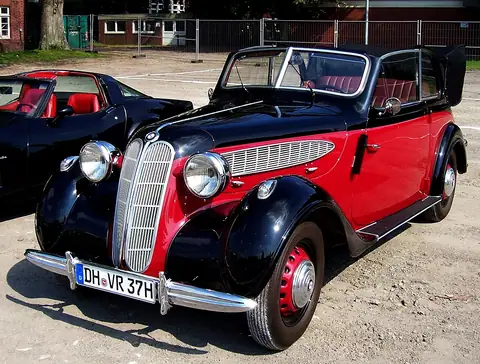
BMW
BMW 329
Production not yet verified
-
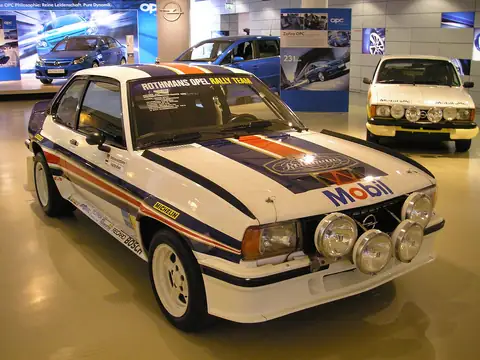
Opel · 1979–1982
Ascona 400
268 Built
-
Hyundai
Creta Black Edition
Production not yet verified
71 other makes from Germany9ffAC SchnitzerAdlerAgria-WerkeAlbertAlpinaAMOAmphicarApolloArtegaAudiAuto UnionAutomobili PininfarinaBayerische AutowerkeBitterBMWBohseBoldmenBorgwardBovensiepenBrennaborBrütschChampionDauerDKWFMR (Messerschmitt)FuldamobilGemballaGepardGlasGoggomobilGoliathGumpertGutbrodHanomagHeinkelHorchHyundaiIFAIrmscherAll makes →