Makes › Daimler-Motoren-Gesellschaft › "Paul Daimler car" prototypes · Prototype · 1901–1903 Ultra Rare
Daimler-Motoren-Gesellschaft
"Paul Daimler car" prototypes
Paul Daimler's small-car design; built as prototypes at Cannstatt and shown again in Vienna 1903, never series-produced
Still being researched: full specifications. Everything shown is checked against the cited sources. Know more? Send us a source.
Contents
01Overview
At a glance
- Built
- 3 Built
- Years
- 1901–1903
- Engine
- Transverse two-cylinder in-line, automatic inlet valves, side exhaust valves · 1,400 cc / 1.4 LFactory: 1.4 L
- Power
- 5.97 kW / 8.11 PSFactory: 8 hp · converted
- Top speed
- Not yet verified
- Body
- Not yet verified
- Designer
- Paul Daimler
- In this archive
- Not yet verified
- Surviving
- Not yet verified
Sources and any conflicting figures are in the sections below.
Why it matters
A small two-cylinder car designed in a separate office by Paul Daimler as a rival to Maybach's work and to enter the French voiturette market. It was never produced in series because it would have competed with the Mercedes and DMG's capacity was full.
How rare is it?
Six separate kinds of rarity – never combined into one number.
Each kind of rarity is rated separately and never combined.
02Production & history
Production
Every figure says what it counts.
| What is counted | Figure | Basis | Status |
|---|---|---|---|
| Total model productionprototypes ordered from the Cannstatt workshop | 31 | Factory production | Independently researched |
Independent counts (e.g. engine and colour) are never combined into a calculated figure. Surviving examples are never presented as original production.
History
Paul Daimler began the design in 1899, paused in June 1900 to help finish the Mercedes 35 hp, and finished the drawings in October 1900 for three prototypes. The first, a two-seater, was completed in October 1901 and the second two months later. The third, in April 1902, was a four-seater tonneau with a slanted steering column and conventional chain drive.
After becoming technical director of the Austrian Daimler company in June 1902, Paul Daimler showed a modified lightweight version as a coupe and double phaeton at the Vienna exhibition in March 1903, again without series production.
Variants
How each version differs from the standard "Paul Daimler car" prototypes.
No variants documented yet. Have a source? Contribute it.
03Specifications
Technical specifications
Engine
| Engine family | Not yet verified |
|---|---|
| Engine code | Not yet verified |
| Layout | Transverse two-cylinder in-line, automatic inlet valves, side exhaust valves2 |
| Cylinders | 22 |
| Displacement | 1,400 cc / 1.4 LFactory: 1.4 L2 |
| Bore | Not yet verified |
| Stroke | Not yet verified |
| Compression ratio | Not yet verified |
| Fuel system | Not yet verified |
| Power | 5.97 kW / 8.11 PSFactory: 8 hp · converted2Rating: manufacturer |
| Power at | 850 rpm2 |
| Torque | Not yet verified |
Transmission & drivetrain
| Gearbox | Not yet verified |
|---|---|
| Gears | Not yet verified |
| Driven wheels | Not yet verified |
Chassis, body & dimensions
| Chassis | Not yet verified |
|---|---|
| Front suspension | Not yet verified |
| Rear suspension | Not yet verified |
| Brakes | Not yet verified |
| Steering | Not yet verified |
| Body construction | Not yet verified |
| Wheelbase | Not yet verified |
| Length | Not yet verified |
| Width | Not yet verified |
| Height | Not yet verified |
| Front track | Not yet verified |
| Rear track | Not yet verified |
| Kerb weight | Not yet verified |
| Dry weight | Not yet verified |
Performance
| Maximum speed | Not yet verified |
|---|---|
| 0–100 km/h | Not yet verified |
| Fuel tank | Not yet verified |
“Not yet verified” means no source has been checked for that value yet. Nothing is estimated to fill a gap.
04Colours & options
Factory colours & interiors
Original paint and trim, with the number of cars in each where a source gives it.
Not yet documented. Have a source? Contribute it.
Factory options & codes
Codes are shown exactly as written by the manufacturer.
Not yet documented. Have a source? Contribute it.
05Individual cars
Chassis register
Every documented car, with its colours, history and where it is now. Open a row for the full record. Known chassis are not automatically authenticated originals.
Not yet documented. Have a source? Contribute it.
Competition history
Every race result of the individual cars, in date order. Click a chassis number to open its full record in the register.
Not yet documented. Have a source? Contribute it.
Auction & sale history
Documented public sales of the individual cars. Click a chassis number to open its full record in the register.
Not yet documented. Have a source? Contribute it.
See one in person
Museums where an example of this car can be seen.
No example is documented on public display yet. Have a source? Contribute it.
06Reference
Identification guide
How to tell an original from a replica or later conversion.
The first version had a straight steering column and an internal chain drive to inner gear rings on the rear wheels via sprockets; the third version had a slanted steering column and conventional chain drive to the rear wheels. Both used a transverse two-cylinder in-line engine.
Sources
Each number links to the exact facts it supports.
-
1
"Paul Daimler car", 1901 - 1903 – Mercedes-Benz Classic M@RS archive Level A
- 3 prototypes ordered from the Cannstatt workshop
-
2
"Paul Daimler car", 1901 - 1903 Level A Mercedes-Benz Group AG, Mercedes-Benz Public Archive (Classic M@RS)
- automatic inlet valves and sideways-positioned outlet valves
- two-cylinder
- capacity of 1.4 litres
- performance of 8 hp at 850 rpm
- 8 hp at 850 rpm
Keep exploring
More from Daimler-Motoren-Gesellschaft
-
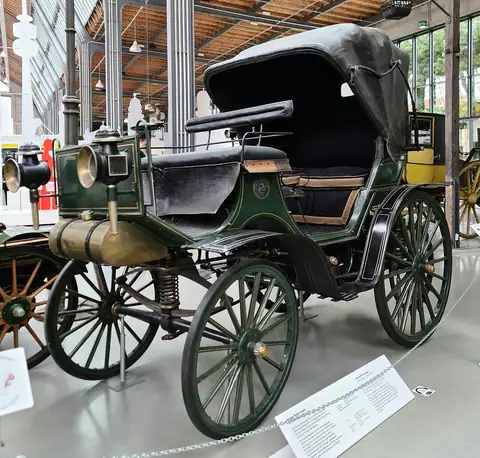
Daimler-Motoren-Gesellschaft
Riemenwagen (1890s)
Production not yet verified
-
No licensed photo yet
Daimler-Motoren-Gesellschaft · 1915
Mercedes 79/200 hp one-off (airship engine)
1 Built
-
No licensed photo yet
Daimler-Motoren-Gesellschaft · 1902
Mercedes Simplex 40 hp – W.K. Vanderbilt Jr. car
1 Built
-
No licensed photo yet
Daimler-Motoren-Gesellschaft · 1913
Mercedes 100 hp / 90 hp Grand Prix racing cars
4 Built
See all 20 cars by Daimler-Motoren-Gesellschaft →The Mercedes-Benz family →
More from Germany
-
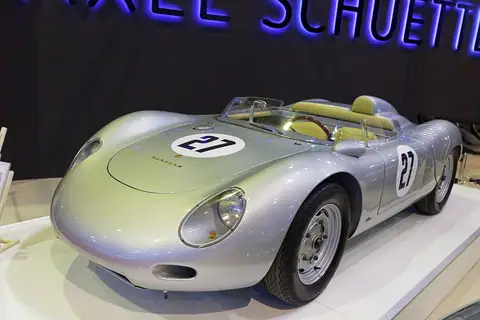
Porsche · 1957–1959
718 RSK Spyder
34 Built
-
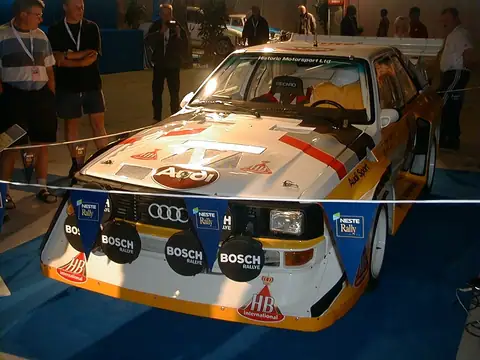
Audi
Sport quattro S1 (E1)
Production not yet verified
-
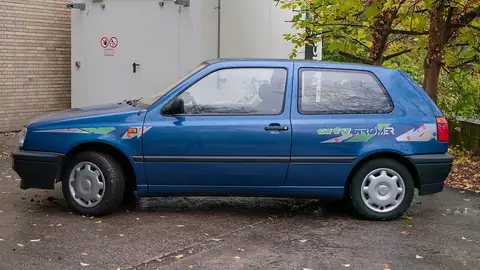
Volkswagen · 1993–1996
Golf III CitySTROMer
120 Built
-
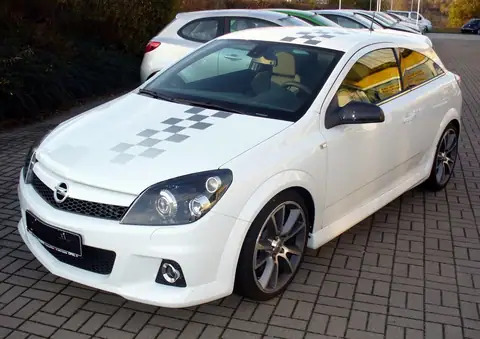
Opel
Astra H Nürburgring Edition (2005-2006)
Production not yet verified
71 other makes from Germany9ffAC SchnitzerAdlerAgria-WerkeAlbertAlpinaAMOAmphicarApolloArtegaAudiAuto UnionAutomobili PininfarinaBayerische AutowerkeBitterBMWBohseBoldmenBorgwardBovensiepenBrennaborBrütschChampionDauerDKWFMR (Messerschmitt)FuldamobilGemballaGepardGlasGoggomobilGoliathGumpertGutbrodHanomagHeinkelHorchHyundaiIFAIrmscherAll makes →