Makes › Daimler-Motoren-Gesellschaft › Mercedes › Mercedes 115 hp (4.5-litre) Grand Prix racing car · Factory competition · 1914 Ultra Rare
Daimler-Motoren-Gesellschaft
Mercedes 115 hp (4.5-litre) Grand Prix racing car
1–2–3 winners of the 1914 Grand Prix de l'A.C.F. at Lyon; first DMG four-valve engine; three examples still exist (winner and reserve car in US collections, 1922 Targa Florio car at Mercedes-Benz Classic)
Contents
01Overview
At a glance
- Built
- 6 Built
- Years
- 1914
- Engine
- Water-cooled inline four · 4,483 cc / 4.5 LFactory: 4,483 cc
- Power
- 85.83 kW / 116.7 PSFactory: 115.1 hp · converted
- Top speed
- 160 km/hFactory: 160 km/h
- Body
- Not yet verified
- Designer
- Paul Daimler (chief engineer)
- In this archive
- Not yet verified
- Surviving
- 3 (factory reported)
Sources and any conflicting figures are in the sections below.
Why it matters
The 4.5-litre Mercedes won the 1914 French Grand Prix at Lyon in the first one-two-three finish in Grand Prix history, a few weeks before the outbreak of the First World War. Its four-valve engine, built with aircraft-engine techniques, also influenced Rolls-Royce engine design.
How rare is it?
Six separate kinds of rarity – never combined into one number.
Each kind of rarity is rated separately and never combined.
02Production & history
Production
Every figure says what it counts.
| What is counted | Figure | Basis | Status |
|---|---|---|---|
| Total model productionThree examples of the 4.5-litre car exist per the archive (two in American collections, one in the Mercedes-Benz Classic collection) | 32 | Surviving examples | Factory reported |
| Total model productioncars taken to Lyon 1914: five racers plus one reserve car | 61 | Factory production | Independently researched |
Independent counts (e.g. engine and colour) are never combined into a calculated figure. Surviving examples are never presented as original production.
History
The A.C.F. introduced a 4500 cc displacement limit for 1914, and Paul Daimler responded with a long-stroke four-cylinder carried over from aircraft-engine practice. The car debuted at the A.C.F. Grand Prix near Lyon on 4 July 1914, where five works cars plus a reserve were present. Lautenschlager, Wagner and Salzer finished first, second and third.
After the outbreak of war the engine of the winning car, which was on display in London, was passed to Rolls-Royce for testing and dismantling. Ralph DePalma bought Wagner's car and won the 1915 Indianapolis 500 with it. A car was also used in the 1922 Targa Florio, which Count Masetti won in an ex-works car painted red. In 1924 one of these engines received a supercharger and was installed in a Targa Florio chassis, the car later nicknamed "Grandmother".
Variants
How each version differs from the standard Mercedes 115 hp (4.5-litre) Grand Prix racing car.
No variants documented yet. Have a source? Contribute it.
03Specifications
Technical specifications
Engine
| Engine family | Not yet verified |
|---|---|
| Engine code | M 936542 |
| Layout | Water-cooled inline four3 Independently researched |
| Cylinders | 42 |
| Displacement | 4,483 cc / 4.5 LFactory: 4,483 cc3 Independently researched |
| Bore | 93 mmFactory: 93 mm3 Independently researched |
| Stroke | 165 mmFactory: 165 mm3 Independently researched |
| Compression ratio | Not yet verified |
| Valvetrain | Single overhead camshaft driven by vertical shaft; four 43 mm valves per cylinder2 |
| Fuel system | Not yet verified |
| Power | 85.83 kW / 116.7 PSFactory: 115.1 hp · converted3 DisputedSource states bhp (brake horsepower, mechanical). |
| Power at | 3,200 rpm3 Disputed |
| Torque | Not yet verified |
Transmission & drivetrain
| Gearbox | Cardan shaft drive to rigid rear axle2 |
|---|---|
| Gears | Not yet verified |
| Driven wheels | Not yet verified |
Chassis, body & dimensions
| Chassis | Pressed steel frame with two longitudinal members and X-shaped cross struts2 |
|---|---|
| Front suspension | Rigid axle on semi-elliptic springs with friction shock absorbers2 |
| Rear suspension | Rigid axle on semi-elliptic springs with friction shock absorbers2 |
| Brakes | Rear inside shoe brakes (hand lever) and outside band brake on the transmission output shaft (foot pedal); no front brakes2 |
| Steering | Not yet verified |
| Body construction | Not yet verified |
| Wheelbase | 2,845 mmFactory: 2,845 mm3 Independently researched |
| Length | Not yet verified |
| Width | Not yet verified |
| Height | Not yet verified |
| Front track | Not yet verified |
| Rear track | Not yet verified |
| Kerb weight | Not yet verified |
| Dry weight | Not yet verified |
Performance
| Maximum speed | 160 km/hFactory: 160 km/h2Archive says "over 160 km/h". |
|---|---|
| 0–100 km/h | Not yet verified |
| Fuel tank | Not yet verified |
“Not yet verified” means no source has been checked for that value yet. Nothing is estimated to fill a gap.
04Colours & options
Factory colours & interiors
Original paint and trim, with the number of cars in each where a source gives it.
Not yet documented. Have a source? Contribute it.
Factory options & codes
Codes are shown exactly as written by the manufacturer.
Not yet documented. Have a source? Contribute it.
05Individual cars
Chassis register
Every documented car, with its colours, history and where it is now. Open a row for the full record. Known chassis are not automatically authenticated originals.
Not yet documented. Have a source? Contribute it.
Competition history
Every race result of the individual cars, in date order. Click a chassis number to open its full record in the register.
Not yet documented. Have a source? Contribute it.
Auction & sale history
Documented public sales of the individual cars. Click a chassis number to open its full record in the register.
Not yet documented. Have a source? Contribute it.
See one in person
Museums where an example of this car can be seen.
No example is documented on public display yet. Have a source? Contribute it.
06Reference
Identification guide
How to tell an original from a replica or later conversion.
The engine, type M 93654, has four individual steel cylinders with welded-on thin-walled steel water jackets on a two-part aluminium crankcase, three spark plugs per cylinder (two on the intake side, one on the exhaust side) and a five-bearing crankshaft. Drive is by cardan shaft, and the car has no front brakes. The identity of the surviving cars is complicated because the winning race number was painted on several cars after the Grand Prix.
Sources
Each number links to the exact facts it supports.
-
1
Mercedes 115 hp Grand Prix racing car, 1914 – Mercedes-Benz Classic M@RS archive Level A
- 6 cars taken to Lyon 1914: five racers plus one reserve car
-
2
Mercedes 115 hp Grand Prix racing car, 1914 Level A Mercedes-Benz Group AG, Mercedes-Benz Public Archive (Classic M@RS)
- Three examples of the 4.5-litre Grand Prix racing car still exist
- new engine with the designation M 93654
- long-stroke four-cylinder engine
- four 43 mm valves per combustion chamber
- Paul Daimler decided in favour of power transmission via a cardan shaft
- pressed steel frame with two longitudinal members
- front and rear axles remained rigid and semi-elliptic
- decided not to equip the cars with additional front brakes
- top speeds of over 160 km/h measured there
-
3
Mercedes 1914 GP (spec sheet) Level C Dennis David · Sports Car Digest
- Water-cooled, inline-4
- Capacity: 4483 cc
- 93 mm x 165 mm
- 85.8 kW / 115.1 bhp at 3200 rpm
- 115.1 bhp at 3200 rpm
- Wheelbase: 2845 mm
Keep exploring
More from Daimler-Motoren-Gesellschaft
-
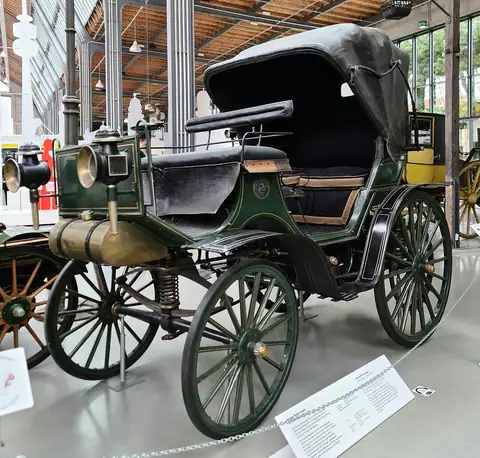
Daimler-Motoren-Gesellschaft
Riemenwagen (1890s)
Production not yet verified
-
No licensed photo yet
Daimler-Motoren-Gesellschaft · 1915
Mercedes 79/200 hp one-off (airship engine)
1 Built
-
No licensed photo yet
Daimler-Motoren-Gesellschaft · 1902
Mercedes Simplex 40 hp – W.K. Vanderbilt Jr. car
1 Built
-
No licensed photo yet
Daimler-Motoren-Gesellschaft · 1901–1903
"Paul Daimler car" prototypes
3 Built
See all 20 cars by Daimler-Motoren-Gesellschaft →The Mercedes-Benz family →
More from Germany
-
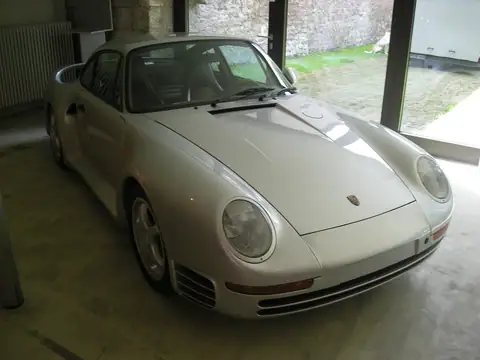
Porsche · 1987–1988
959
292 Built 1987–88 · Porsche
-
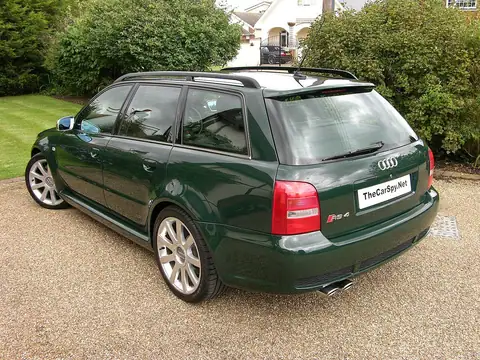
Audi · 2000–2001
RS4 Avant (B5)
6,030 Built
-
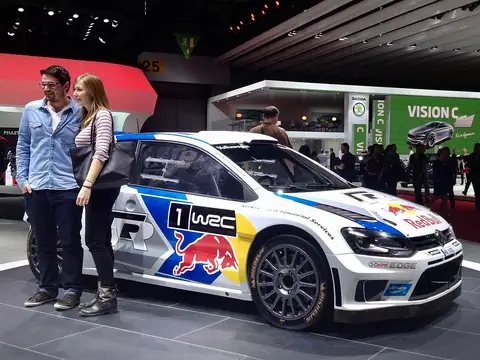
Volkswagen · 2013–2016
Polo R WRC (works cars)
32 Built
-
Veritas · 1948–1950
RS
22 Built
71 other makes from Germany9ffAC SchnitzerAdlerAgria-WerkeAlbertAlpinaAMOAmphicarApolloArtegaAudiAuto UnionAutomobili PininfarinaBayerische AutowerkeBitterBMWBohseBoldmenBorgwardBovensiepenBrennaborBrütschChampionDauerDKWFMR (Messerschmitt)FuldamobilGemballaGepardGlasGoggomobilGoliathGumpertGutbrodHanomagHeinkelHorchHyundaiIFAIrmscherAll makes →