Makes › Daimler-Motoren-Gesellschaft › Mercedes › Mercedes 35 hp (first Mercedes) · Rare production · 1900–1901
Daimler-Motoren-Gesellschaft
Mercedes 35 hp (first Mercedes)
Maybach's first Mercedes – regarded as the first modern automobile; dominated Nice Week 1901
Still being researched: full specifications. Everything shown is checked against the cited sources. Know more? Send us a source.
Contents
01Overview
At a glance
- Built
- Not yet verified
- Years
- 1900–1901
- Engine
- Four-cylinder, cylinders cast in pairs with heads, lower intake camshaft in the block
- Power
- 26.1 kW / 35.5 PSFactory: 35 hp · converted
- Top speed
- 90 km/hFactory: 90 km/h
- Body
- Not yet verified
- Designer
- Wilhelm Maybach (chief designer) with engine designer Josef Brauner
- In this archive
- Not yet verified
- Surviving
- Not yet verified
Sources and any conflicting figures are in the sections below.
Why it matters
Built on Emil Jellinek's initiative, the 35 hp is regarded as the first modern automobile: it abandoned the carriage layout for a low, long-wheelbase design with a light engine and a honeycomb radiator. It gave the Mercedes name to a product for the first time and dominated Nice race week in 1901.
How rare is it?
Six separate kinds of rarity – never combined into one number.
Each kind of rarity is rated separately and never combined.
02Production & history
Production
Every figure says what it counts.
No production figures recorded yet.
History
After Nice race week in March 1900, DMG and Jellinek agreed that a new engine would carry the name Daimler-Mercedes. Wilhelm Maybach and engine designer Josef Brauner then created a new car; the first was completed on 22 November 1900 and shipped to Jellinek on 22 December after trials. DMG decided on regular production five days earlier.
At Nice race week in March 1901, works driver Wilhelm Werner won the long-distance race, the sprint and the La Turbie hill climb in a car owned by Baron Henri de Rothschild, raising the hill-climb average from 31.3 to 51.4 km/h. Werner reached 86 km/h over the flying kilometre.
Variants
How each version differs from the standard Mercedes 35 hp (first Mercedes).
No variants documented yet. Have a source? Contribute it.
03Specifications
Technical specifications
Engine
| Engine family | Not yet verified |
|---|---|
| Engine code | Not yet verified |
| Layout | Four-cylinder, cylinders cast in pairs with heads, lower intake camshaft in the block1 |
| Cylinders | 41 |
| Displacement | Not yet verified |
| Bore | Not yet verified |
| Stroke | Not yet verified |
| Compression ratio | Not yet verified |
| Fuel system | Not yet verified |
| Power | 26.1 kW / 35.5 PSFactory: 35 hp · converted1Rating: manufacturer26 kW. |
| Power at | 1,000 rpm1 |
| Torque | Not yet verified |
Transmission & drivetrain
| Gearbox | Not yet verified |
|---|---|
| Gears | Not yet verified |
| Driven wheels | Not yet verified |
Chassis, body & dimensions
| Chassis | Not yet verified |
|---|---|
| Front suspension | Not yet verified |
| Rear suspension | Not yet verified |
| Brakes | Not yet verified |
| Steering | Not yet verified |
| Body construction | Not yet verified |
| Wheelbase | 2,245 mmFactory: 2,245 mm1 |
| Length | Not yet verified |
| Width | Not yet verified |
| Height | Not yet verified |
| Front track | Not yet verified |
| Rear track | Not yet verified |
| Kerb weight | 1,112 kgFactory: 1,112 kg1S2 gives about 1000 kg for the first car; conflict not resolved. |
| Dry weight | Not yet verified |
Performance
| Maximum speed | 90 km/hFactory: 90 km/h2"Almost 90 km/h". |
|---|---|
| 0–100 km/h | Not yet verified |
| Fuel tank | Not yet verified |
“Not yet verified” means no source has been checked for that value yet. Nothing is estimated to fill a gap.
04Colours & options
Factory colours & interiors
Original paint and trim, with the number of cars in each where a source gives it.
Not yet documented. Have a source? Contribute it.
Factory options & codes
Codes are shown exactly as written by the manufacturer.
Not yet documented. Have a source? Contribute it.
05Individual cars
Chassis register
Every documented car, with its colours, history and where it is now. Open a row for the full record. Known chassis are not automatically authenticated originals.
Not yet documented. Have a source? Contribute it.
Competition history
Every race result of the individual cars, in date order. Click a chassis number to open its full record in the register.
Not yet documented. Have a source? Contribute it.
Auction & sale history
Documented public sales of the individual cars. Click a chassis number to open its full record in the register.
Not yet documented. Have a source? Contribute it.
See one in person
Museums where an example of this car can be seen.
No example is documented on public display yet. Have a source? Contribute it.
06Reference
Identification guide
How to tell an original from a replica or later conversion.
The defining feature is the honeycomb radiator built from about 5800 small square tubes, which halved the cooling water to 9 litres and became the brand-defining front of Mercedes cars. The car has a pressed steel U-section frame, the engine mounted directly on the joined front frame members, and an inclined steering column.
Sources
Each number links to the exact facts it supports.
-
1
Mercedes 35 hp racing and touring car, 1900 / 1901 Level A Mercedes-Benz Group AG, Mercedes-Benz Public Archive (Classic M@RS)
- cylinders cast together in pairs with the cylinder heads
- new four-cylinder engine designed by Brauner
- peak output of 35 hp/26 kW at 1000 rpm
- 35 hp/26 kW at 1000 rpm
- wheelbase of 2245 mm
- weighed 1112 kg
-
2
First Mercedes model series, 1900/1901 Level A Mercedes-Benz Group AG, Mercedes-Benz Public Archive (Classic M@RS)
- allowed a top speed of almost 90 km/h
Keep exploring
More from Daimler-Motoren-Gesellschaft
-
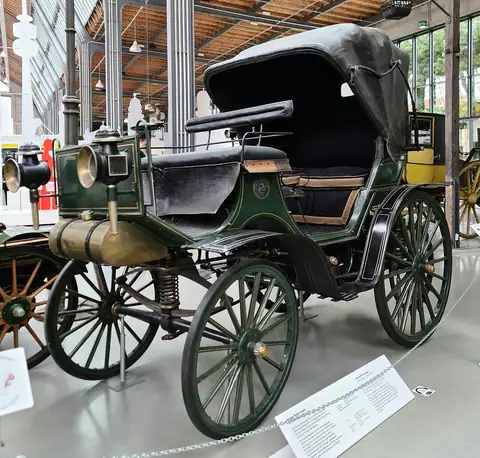
Daimler-Motoren-Gesellschaft
Riemenwagen (1890s)
Production not yet verified
-
No licensed photo yet
Daimler-Motoren-Gesellschaft · 1915
Mercedes 79/200 hp one-off (airship engine)
1 Built
-
No licensed photo yet
Daimler-Motoren-Gesellschaft · 1902
Mercedes Simplex 40 hp – W.K. Vanderbilt Jr. car
1 Built
-
No licensed photo yet
Daimler-Motoren-Gesellschaft · 1901–1903
"Paul Daimler car" prototypes
3 Built
See all 20 cars by Daimler-Motoren-Gesellschaft →The Mercedes-Benz family →
More from Germany
-
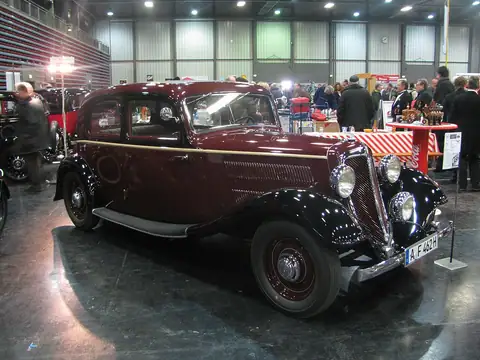
Wanderer
W21
Production not yet verified
-
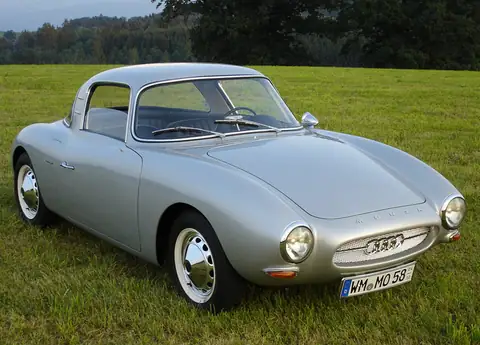
DKW · 1955–1959
Monza
Production not yet verified
-
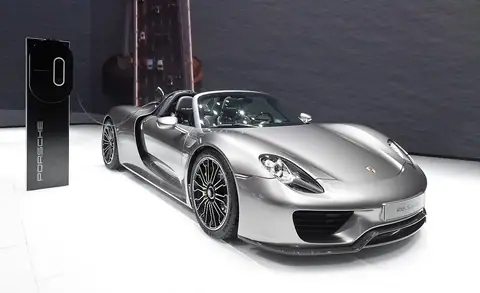
Porsche · 2013–2015
918 Spyder
918 Built
-
Gutbrod
Superior (1951-1952)
Production not yet verified
71 other makes from Germany9ffAC SchnitzerAdlerAgria-WerkeAlbertAlpinaAMOAmphicarApolloArtegaAudiAuto UnionAutomobili PininfarinaBayerische AutowerkeBitterBMWBohseBoldmenBorgwardBovensiepenBrennaborBrütschChampionDauerDKWFMR (Messerschmitt)FuldamobilGemballaGepardGlasGoggomobilGoliathGumpertGutbrodHanomagHeinkelHorchHyundaiIFAIrmscherAll makes →