Makes › De Tomaso › Pantera › Pantera (1971-1993) · Rare production · 1970–1991 Limited Production
De Tomaso
Pantera (1971-1993)
Whole Pantera run, about 7,260 built.
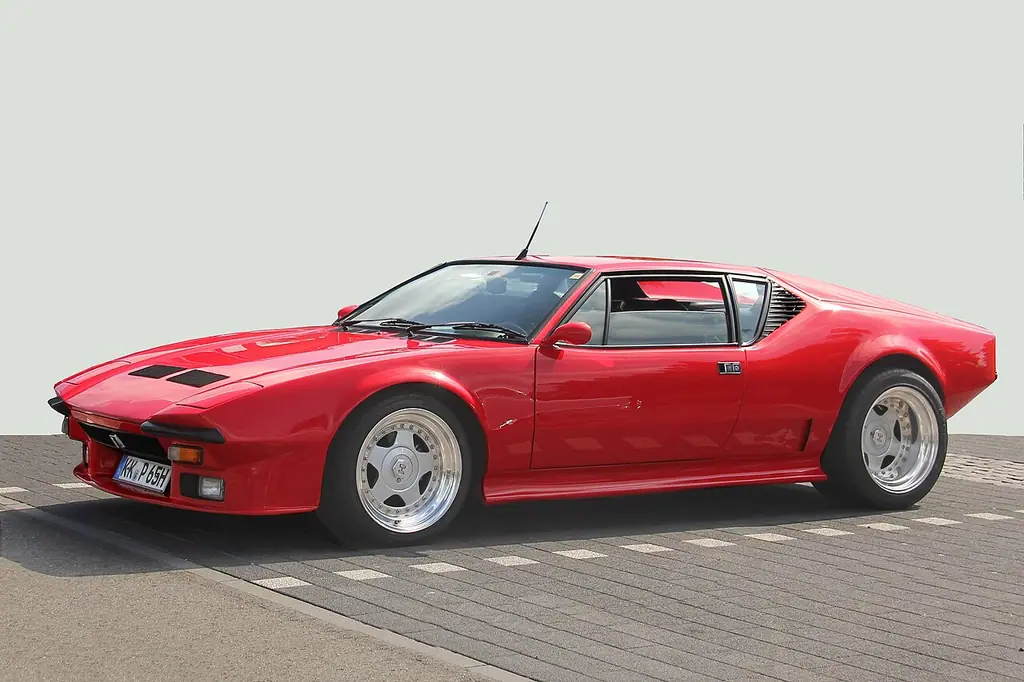
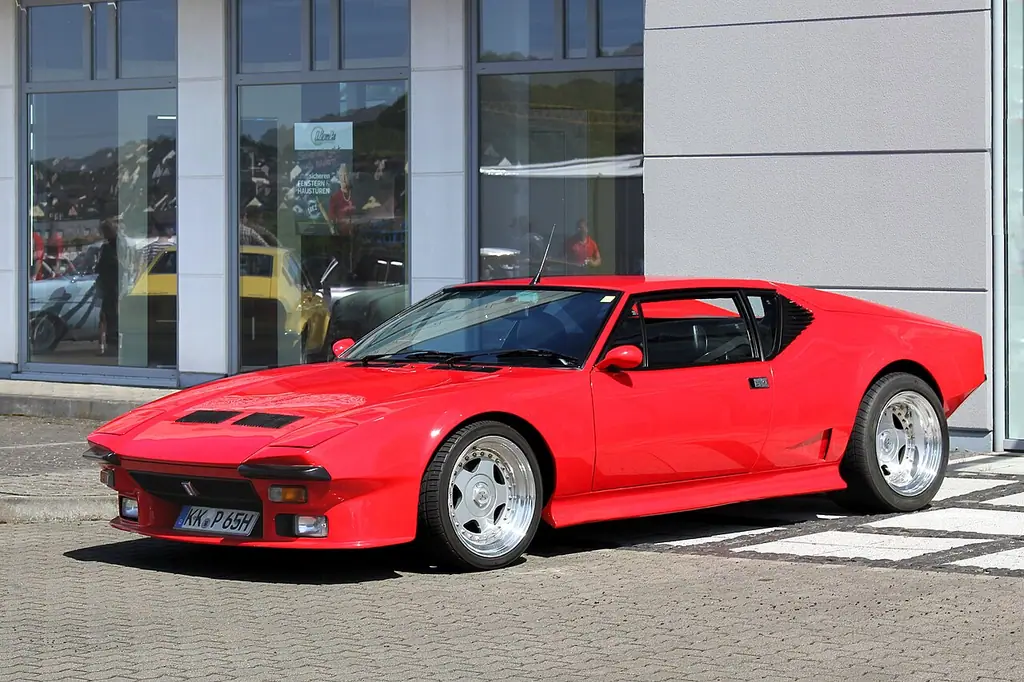
Photo: Lothar Spurzem · CC BY-SA 2.0
Contents
01Overview
At a glance
- Built
- 7,260 Built
- Years
- 1970–1991
- Engine
- Mid-mounted V8 · 5,700 cc / 5.7 LFactory: 5.7 L
- Power
- 231 kW / 314 PSFactory: 310 hp · converted
- Top speed
- 241 km/hFactory: 150 mph · converted
- Body
- Not yet verified
- Designer
- Tom Tjaarda (Ghia)
- In this archive
- Not yet verified
- Surviving
- Not yet verified
Sources and any conflicting figures are in the sections below.
Why it matters
The Pantera is the best-known De Tomaso model. It was a mid-engined car with Ford V8 power, sold in the US through Lincoln-Mercury dealers, and it was one of the first affordable mid-engined exotics. The 1991 version was restyled by Marcello Gandini.
How rare is it?
Six separate kinds of rarity – never combined into one number.
Each kind of rarity is rated separately and never combined.
Photos
Exterior, interior and detail photos with their licences.
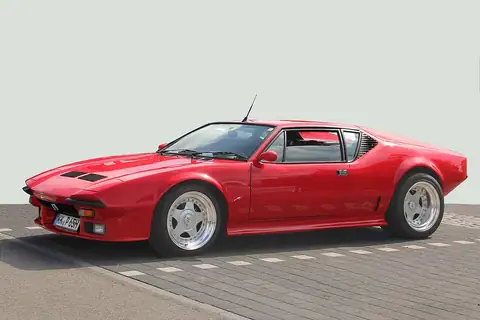 De Tomaso Pantera (1971-1993) (Wikimedia Commons search)
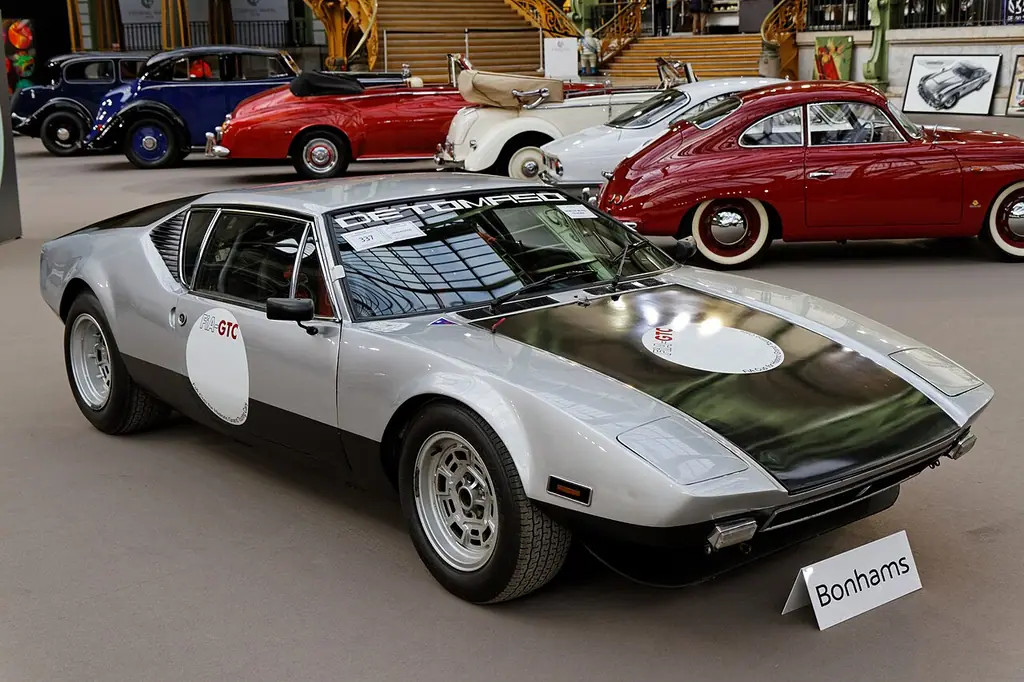
Photo: Lothar Spurzem · CC BY-SA 2.0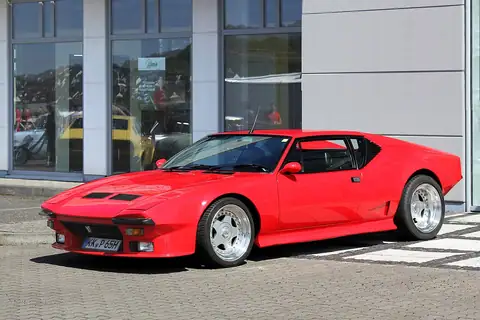 De Tomaso Pantera (1971-1993) (Wikimedia Commons search)
Photo: Lothar Spurzem · CC BY-SA 2.0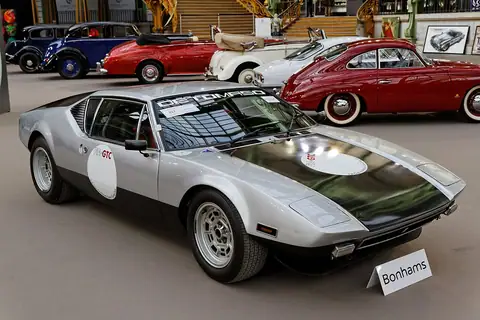 De Tomaso Pantera (1971-1993) (Wikimedia Commons search)
Photo: Thesupermat · CC BY-SA 3.0


02Production & history
Production
Every figure says what it counts.
| What is counted | Figure | Basis | Status |
|---|---|---|---|
| Total model productionPantera built between 1970 and 1991 per the company website | 7,2601 | Factory production | Independently researched |
Independent counts (e.g. engine and colour) are never combined into a calculated figure. Surviving examples are never presented as original production.
History
The Pantera was conceived as a Ford contender to the Corvette for the American market. Bodies were made at Vignale in Turin and the mechanical parts were fitted at the Fossalta plant near Modena. The model was renamed Pantera L in 1972 and the GTS followed in 1973. Ford and De Tomaso ended their relationship in September 1973.
Variants
How each version differs from the standard Pantera (1971-1993).
No variants documented yet. Have a source? Contribute it.
03Specifications
Technical specifications
Engine
| Engine family | Ford 351 Cleveland V-82 Independently researched |
|---|---|
| Engine code | Not yet verified |
| Layout | Mid-mounted V83 Independently researched |
| Displacement | 5,700 cc / 5.7 LFactory: 5.7 L4 Independently researchedRounded as 5.7 L; the source also gives 351 cubic inches. |
| Bore | Not yet verified |
| Stroke | Not yet verified |
| Compression ratio | 11.0:12 Independently researched |
| Fuel system | Single 4-barrel carburettor (US spec)2 Independently researched |
| Power | 231 kW / 314 PSFactory: 310 hp · converted2,4 Independently researchedUS spec. European models were rated 330 hp. The US figure fell to 250 hp by 1973 according to HowStuffWorks. |
| Power at | 5,400 rpm2 Independently researched |
| Torque | Not yet verified |
Transmission & drivetrain
| Manufacturer | ZF4 Independently researched |
|---|---|
| Gearbox | 5-speed ZF manual trans-axle2 Independently researched |
| Gears | 54 Independently researched |
| Gear ratios | Top gear overall 2.97:1 (fourth and fifth are overdrive)2 Independently researched |
| Final drive | 4.22:12 Independently researched |
| Driven wheels | Not yet verified |
Chassis, body & dimensions
| Chassis | Newly designed pressed-steel unitized structure4 Independently researched |
|---|---|
| Front suspension | All-independent; 6-degree front caster5,2 Independently researchedFront suspension caster is given by the test. The rear suspension is not described separately. |
| Rear suspension | Not yet verified |
| Brakes | All-disc5,2 Independently researchedCar and Driver test: 80 mph to a stop in 232 feet (0.92 g). |
| Steering | Rack-and-pinion, zero play2 Independently researched |
| Body construction | Not yet verified |
| Wheelbase | Not yet verified |
| Length | Not yet verified |
| Width | Not yet verified |
| Height | Not yet verified |
| Front track | Not yet verified |
| Rear track | Not yet verified |
| Kerb weight | 1,417 kgFactory: 3,123 lb · converted2 Independently researchedCar and Driver test-car weight. The source does not say whether it is kerb or dry weight. |
| Dry weight | Not yet verified |
Performance
| Maximum speed | 241 km/hFactory: 150 mph · converted5 Independently researchedApproximate figure from the historian's text, not a measured top speed. |
|---|---|
| 0–100 km/h | Not yet verified |
| Fuel tank | Not yet verified |
“Not yet verified” means no source has been checked for that value yet. Nothing is estimated to fill a gap.
04Colours & options
Factory colours & interiors
Original paint and trim, with the number of cars in each where a source gives it.
Not yet documented. Have a source? Contribute it.
Factory options & codes
Codes are shown exactly as written by the manufacturer.
Not yet documented. Have a source? Contribute it.
05Individual cars
Chassis register
Every documented car, with its colours, history and where it is now. Open a row for the full record. Known chassis are not automatically authenticated originals.
Not yet documented. Have a source? Contribute it.
Competition history
Every race result of the individual cars, in date order. Click a chassis number to open its full record in the register.
Not yet documented. Have a source? Contribute it.
Auction & sale history
Documented public sales of the individual cars. Click a chassis number to open its full record in the register.
Not yet documented. Have a source? Contribute it.
See one in person
Museums where an example of this car can be seen.
No example is documented on public display yet. Have a source? Contribute it.
06Reference
Identification guide
How to tell an original from a replica or later conversion.
The 1972 car was renamed Pantera L after changes to the early cars. US cars from 1973 had a black rubber nose guard and larger rear bumpers. The US-spec 1974 GTS had all De Tomaso badges replaced with GTS or Ghia badges, according to a dealer listing.
Sources
Each number links to the exact facts it supports.
-
1
DE TOMASO - The Cars: Yesterday: Pantera Level A
- 7260 Pantera built between 1970 and 1991 per the company website
-
2
DeTomaso Pantera Archived Test - Review Level C Car and Driver · 1971-08-01
- The engine is a 351 Cleveland V-8 with a 4-bbl. carburetor
- the same 11.0-to-one option offered last year
- with a 4-bbl. carburetor
- 310 hp @ 5400 rpm
- 5-speed ZF trans-axle which has a 4.22-to-one final ratio
- top gear overall works out to 2.97-to-one
- 4.22-to-one final ratio
- the extreme caster (6°) working against you
- the car stopped from 80 mph at .92G (232 feet)
- A rack and pinion gear with zero play is used
- It's not too heavy—3123 lbs.
-
3
DE TOMASO - The Cars: Yesterday: Pantera Level C De Tomaso (company website, archived)
- The mid-mounted engine
-
4
DeTomaso Pantera Level C HowStuffWorks (Consumer Guide auto editors)
- H.O. (high-output) version of the American 5.7-liter/351-cubic-inch
- Horsepower was initially rated at 310 in U.S. form and 330 for European models
- the usual 5-speed ZF transaxle
- newly designed pressed-steel unitized structure
-
5
1971-74 DeTomaso Pantera: History by Dan Jedlicka Level C Dan Jedlicka · Dan Jedlicka
- all-independent suspension, all-disc brakes, magnesium wheels
- all-disc brakes
- hit about 150 mph
Keep exploring
More from De Tomaso
-
De Tomaso
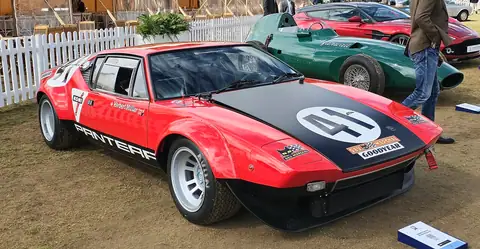
Pantera Group 4 (1972)
8 Built
-
De Tomaso
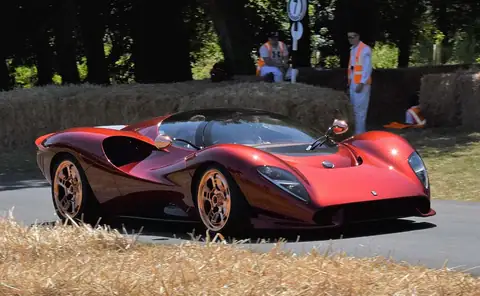
P72
72 Built
-
De Tomaso · 1970–1985
Deauville (1970-1988)
244 Built
-
De Tomaso · 1967–1971
Mangusta
401 Built
See all 20 cars by De Tomaso →
More from Italy
-
Lancia · 1929–1935
Dilambda (1929-1935)
1,685 Built
-
Ferrari · 1967–1968
275 GTB/4*S N.A.R.T. Spider
10 Built
-
Maserati · 1947–1953
A6GCS (1947-1950)
15 Built
-
Fiat
Downtown (Stola electric)
Production not yet verified
62 other makes from ItalyAbarthACM AutomobiliAlfa RomeoAres DesignATSAuto Avio CostruzioniAutobianchiAznomB EngineeringBandiniBertoneBizzarriniBrixia-ZüstCagivaCarrozzeria Touring SuperleggeraCeiranoChiribiriCisitaliaCizetaColoniCoviniDallaraDiattoF.I.A.L. LegnanoFerrariFervesFiatFissoreFlorentiaGhiaInnocentiIntermeccanicaIsoIsotta FraschiniItalaItaldesignLaffiteLamborghiniLanciaMaseratiAll makes →