Makes › Ford › Escort › Escort RS1700T · Prototype · 1981–1983 Ultra Rare
Ford
Escort RS1700T
Cancelled Group B rally homologation car; prototypes including road cars.
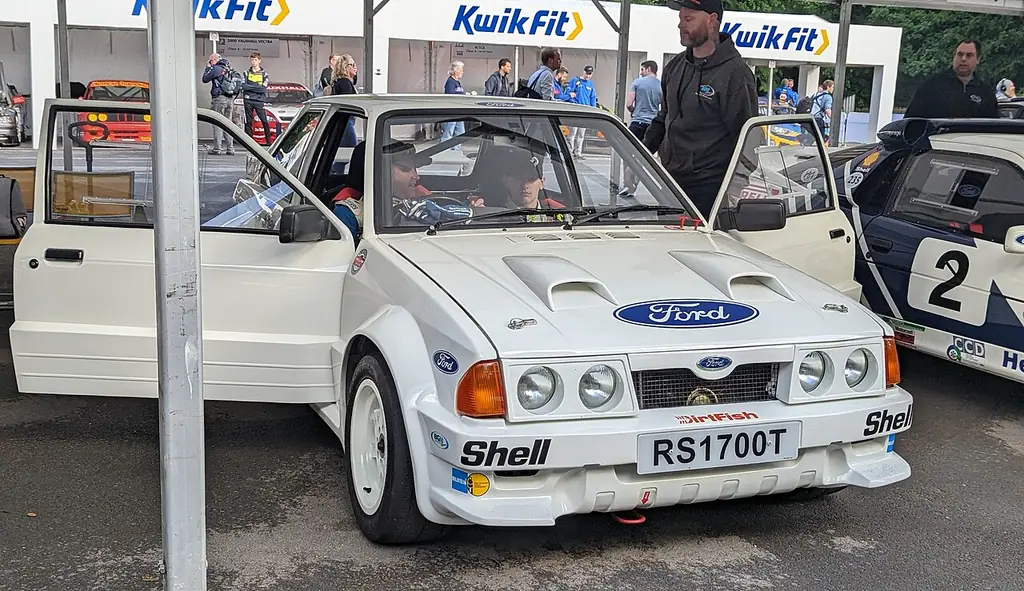
Photo: Calreyn88 · CC BY-SA 4.0

Contents
01Overview
At a glance
- Built
- 18 Built
- Years
- 1981–1983
- Engine
- Front-mounted longitudinal turbocharged inline four (Cosworth BDT, DOHC) · 1,778 cc / 1.8 LFactory: 1,778 cc
- Power
- 261 kW / 355 PSFactory: 350 hp · converted
- Top speed
- 225 km/hFactory: 140 mph · converted
- Body
- Not yet verified
- Designer
- John Wheeler (Ford engineer who chose the Mk3 Escort and the transaxle layout)
- In this archive
- Not yet verified
- Surviving
- Not yet verified
Sources and any conflicting figures are in the sections below.
Why it matters
The Escort RS1700T was Ford's intended Group B rally car, a turbocharged rear-drive development of the Mk3 Escort. The programme was cancelled in 1983 before the planned 200 homologation road cars were built, leaving 18 prototypes, four of them road cars, and most were scrapped.
How rare is it?
Six separate kinds of rarity – never combined into one number.
Each kind of rarity is rated separately and never combined.
02Production & history
Production
Every figure says what it counts.
| What is counted | Figure | Basis | Status |
|---|---|---|---|
| Total model productionprototypes built, including four road cars | 181,2 | Factory production | Independently researched |
Independent counts (e.g. engine and colour) are never combined into a calculated figure. Surviving examples are never presented as original production.
History
After Ford withdrew from rallying at the end of 1979, it announced its Group B car in May 1981 and unveiled the prototype that September. Tests in Portugal in April 1982 with Ari Vatanen showed the turbocharged Cosworth BDT version was quicker than the normally aspirated Hart alternative, so it was chosen for production at Ford's Saarlouis plant. The homologation target slipped from the 1982 RAC Rally to the 1983 Tour de Corse before Stuart Turner cancelled the project in 1983. Some cars went to South Africa, where homologation requirements did not apply.
Variants
How each version differs from the standard Escort RS1700T.
No variants documented yet. Have a source? Contribute it.
03Specifications
Technical specifications
Engine
| Engine family | Not yet verified |
|---|---|
| Engine code | BDT (Cosworth)3 Independently researched |
| Layout | Front-mounted longitudinal turbocharged inline four (Cosworth BDT, DOHC)3 Independently researched |
| Displacement | 1,778 cc / 1.8 LFactory: 1,778 cc3 Independently researched |
| Bore | Not yet verified |
| Stroke | Not yet verified |
| Compression ratio | 7.2:13 Independently researchedCompetition-engine figure from the same page; it quotes 350 bhp for this engine. |
| Valvetrain | DOHC, four valves per cylinder, dry sump3 Independently researched |
| Fuel system | Bosch Jetronic fuel injection3 Independently researched |
| Induction | Garrett AiResearch T3 turbocharger with two rear-mounted intercoolers3 Independently researched |
| Power | 261 kW / 355 PSFactory: 350 hp · converted3 Independently researchedRally specification; source expected the road version at 200bhp. |
| Power at | Not yet verified |
| Torque | Not yet verified |
Transmission & drivetrain
| Gearbox | Five-speed Hewland transaxle3 Independently researched |
|---|---|
| Gears | 53 Independently researchedRally car used a non-synchromesh dog box; road version planned with fully synchromesh five-speed (S2). |
| Driven wheels | Not yet verified |
Chassis, body & dimensions
| Chassis | Not yet verified |
|---|---|
| Front suspension | MacPherson struts with Bilstein dampers3 Independently researched |
| Rear suspension | MacPherson struts with Bilstein dampers3 Independently researched |
| Brakes | Vented discs with AP Racing four-piston calipers at each corner3 Independently researched |
| Steering | Not yet verified |
| Body construction | Modified steel Escort XR3 shell with GRP bumpers, arch extensions, sills, spoiler and bonnet3 Independently researched |
| Wheelbase | Not yet verified |
| Length | Not yet verified |
| Width | Not yet verified |
| Height | Not yet verified |
| Front track | Not yet verified |
| Rear track | Not yet verified |
| Kerb weight | 890 kgFactory: 890 kg3 Independently researchedCompetition version; Hart-powered car 910 kg. |
| Dry weight | Not yet verified |
Performance
| Maximum speed | 225 km/hFactory: 140 mph · converted3 Independently researchedApproximate figure, rally trim. |
|---|---|
| 0–100 km/h | Not yet verified |
| Fuel tank | Not yet verified |
“Not yet verified” means no source has been checked for that value yet. Nothing is estimated to fill a gap.
04Colours & options
Factory colours & interiors
Original paint and trim, with the number of cars in each where a source gives it.
Not yet documented. Have a source? Contribute it.
Factory options & codes
Codes are shown exactly as written by the manufacturer.
Not yet documented. Have a source? Contribute it.
05Individual cars
Chassis register
Every documented car, with its colours, history and where it is now. Open a row for the full record. Known chassis are not automatically authenticated originals.
Not yet documented. Have a source? Contribute it.
Competition history
Every race result of the individual cars, in date order. Click a chassis number to open its full record in the register.
Not yet documented. Have a source? Contribute it.
Auction & sale history
Documented public sales of the individual cars. Click a chassis number to open its full record in the register.
Not yet documented. Have a source? Contribute it.
See one in person
Museums where an example of this car can be seen.
No example is documented on public display yet. Have a source? Contribute it.
06Reference
Identification guide
How to tell an original from a replica or later conversion.
The RS1700T uses a modified Escort XR3 steel shell, 100 mm wider and 15 mm taller than the XR3, with body-coloured GRP bumpers, arch extensions, sills, adjustable rear spoiler and vented bonnet, and four driving lights in a narrowed nose opening. Inside are a full roll cage, Recaro seats and an exposed gear linkage to a five-speed Hewland transaxle; wheels are centre-lock on rally cars and four-stud on road cars.
Sources
Each number links to the exact facts it supports.
- 1
-
2
Guide: Ford Escort RS1700T | Supercar Nostalgia Level B
- 18 prototypes built, including four road cars
-
3
Guide: Ford Escort RS1700T Level A Supercar Nostalgia
- Cosworth BDT was a heavily revised and turbocharged version of the eponymous BDA
- longitudinal front engine, rear-wheel drive; turbocharged Cosworth BDT (paraphrase)
- BDT capped at 1778cc (paraphrase)
- The compression ratio was 7.2:1
- dual overhead camshafts, four valves per cylinder and dry-sump lubrication
- Bosh Jetronic fuel-injection was employed
- Cosworth fitted a Garrett AiResearch T3 turbo with two rear-mounted intercoolers
- BDT rally engine: 350bhp, 380lb-ft (paraphrase)
- Five-speed Hewland transaxle (paraphrase)
- five-speed Hewland transaxle
- MacPherson struts and Bilstein shocks all round
- Vented discs with AP Racing four-piston calipers were fitted to each corner
- a mix of steel and fibreglass
- The Cosworth-engined variant weighed in at 890kg
- rally trim: top speed around 140mph (paraphrase)
Keep exploring
More from Ford
-
Ford · 1934
Edsel Ford 1934 Model 40 Special Speedster
1 Built
-
Ford · 1896
Quadricycle
1 Built
-
Ford · 1969
Mustang Boss 302 Trans-Am (Shelby team, 1969)
3 Built
-
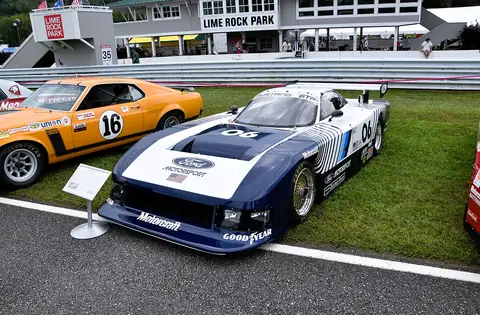
Ford
Mustang GTP (1983-1985)
3 Built
More from United States
-
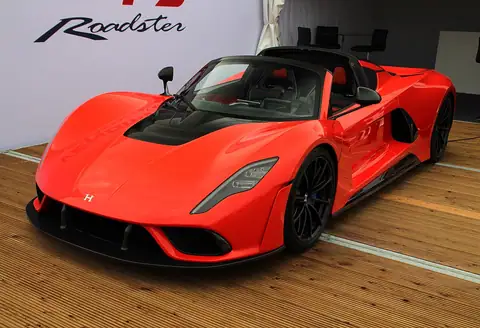
Hennessey · 2022
Venom F5 Roadster
30 Built
-
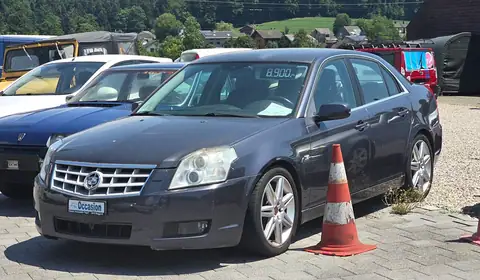
Cadillac · 2006–2009
BLS
7,356 Built
-
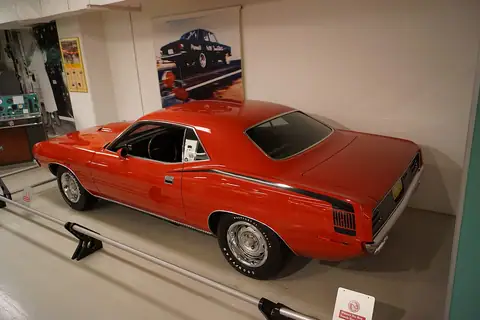
Plymouth · 1970–1971
Hemi 'Cuda (1970–1971)
108 Built
-
Chevrolet · 1957
Corvette SS (XP-64)
2 Built
140 other makes from United StatesAC PropulsionAcuraAllstateAMCAmerican LaFranceAmerican MotorsAmerican UnderslungApteraArmstrongArnoltAuburnBaldwin-MotionBantamBarris KustomsBendixBerger ChevroletBill ThomasBollingerBremerBuckeyeBuffumBuickCadillacCallawayCastleCheckerChevroletChristieChryslerClenetCodaColumbiaConsulierCordCunninghamCzingerDana ChevroletDean JeffriesDeSotoDetroit ElectricAll makes →