Makes › Ford › GT40 and Ford GT › GT (2017–2022) · Rare production · 2016–2022 Rare
Ford
GT (2017–2022)
Entire second-generation (Multimatic-built) Ford GT road-car production
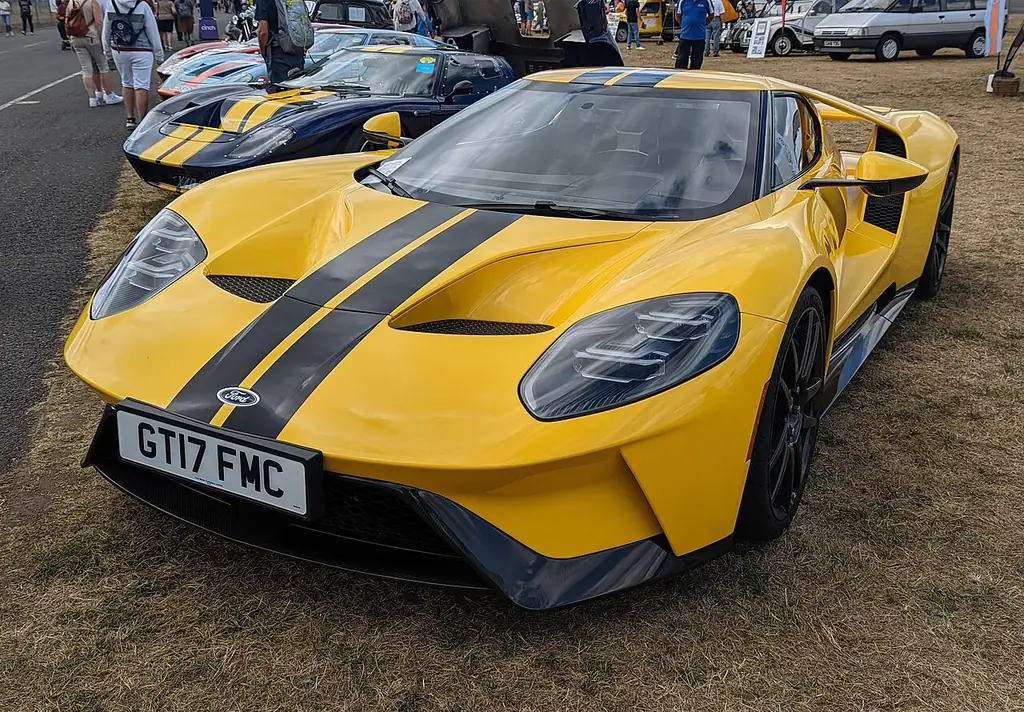
Photo: Calreyn88 · CC BY-SA 4.0
Contents
01Overview
At a glance
- Built
- 1,350 Built
- Years
- 2016–2022
- Engine
- Mid-mounted V6, twin-turbocharged · 3,497 cc / 3.5 LFactory: 3,497 cc
- Power
- 482 kW / 656 PSFactory: 647 hp · converted
- Top speed
- 348 km/hFactory: 216 mph · converted
- Body
- Not yet verified
- Designer
- Not yet verified
- In this archive
- Not yet verified
- Surviving
- Not yet verified
Sources and any conflicting figures are in the sections below.
Why it matters
The second-generation Ford GT was developed in secrecy and shown at the 2015 Detroit show with the declared aim of winning its class at Le Mans in 2016, fifty years after the GT40's 1-2-3 finish. It replaced the supercharged V8 of the 2005-2006 car with a twin-turbo V6 and a carbon fibre structure. Ford planned only 1,350 cars and sold them through an application process, which makes it much rarer than the 2005-2006 model.
How rare is it?
Six separate kinds of rarity – never combined into one number.
Each kind of rarity is rated separately and never combined.
Photos
Exterior, interior and detail photos with their licences.
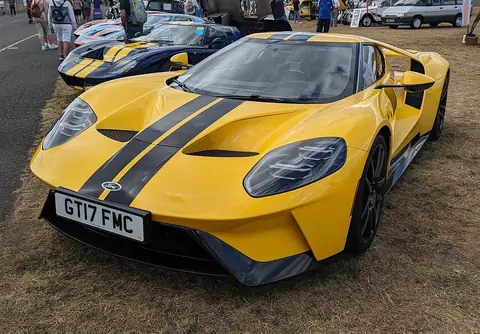 Ford GT (2017–2022) (Wikimedia Commons: Category:Ford GT (2nd generation))
Photo: Calreyn88 · CC BY-SA 4.0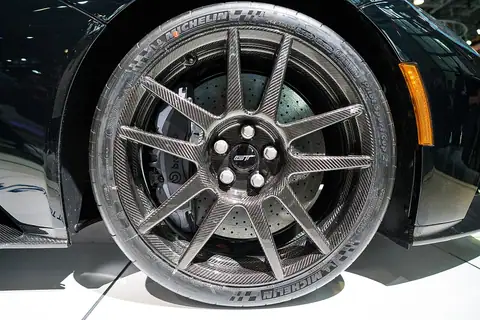 Ford GT (Wikipedia article: Ford GT)
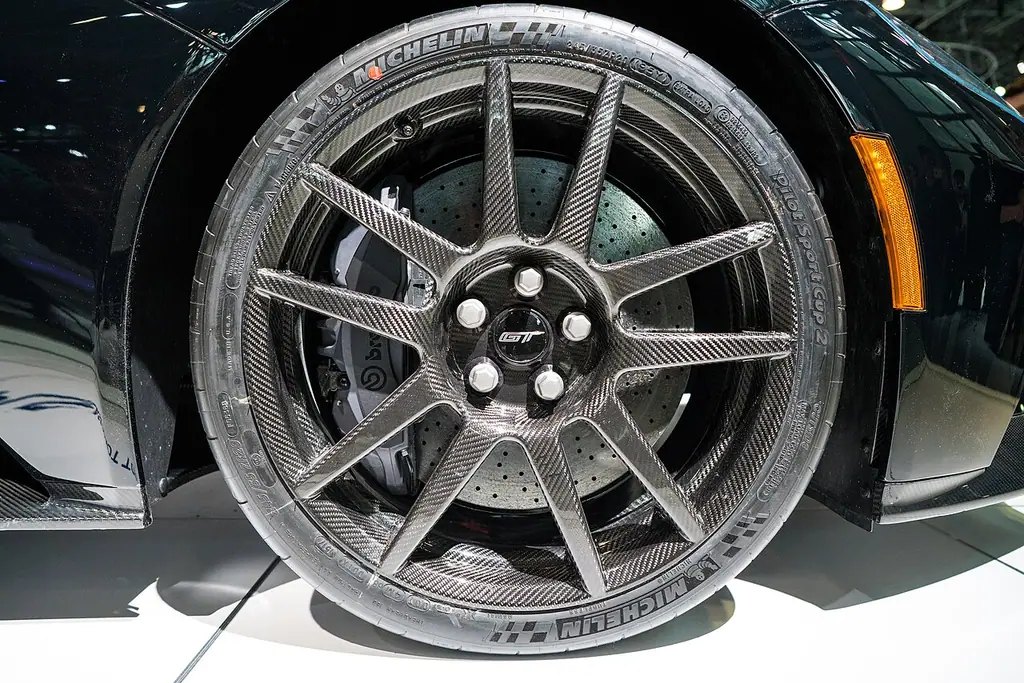
Photo: Nan Palmero from San Antonio, TX, USA · CC BY 2.0


02Production & history
Production
Every figure says what it counts.
| What is counted | Figure | Basis | Status |
|---|---|---|---|
| Total model productionstreet cars built | 1,3501 | Factory production | Independently researched |
Independent counts (e.g. engine and colour) are never combined into a calculated figure. Surviving examples are never presented as original production.
History
Ford introduced the car at the 2015 Detroit show after developing it in near-total secrecy; a small group under chief technical officer Raj Nair set out to build a road car that could also be homologated for the GTE racing class. The racing version won its class at Le Mans in 2016, with Chip Ganassi Racing running the entry.
Production began in December 2016 at Multimatic in Ontario, Canada, with a first target of 1,000 cars over four years that was later raised to 1,350. Buyers had to apply, past involvement with the marque counted in their favour, and they were barred from reselling for 48 months. Applications outnumbered the available allocations by nearly ten to one at the launch. Production ended in late 2022.
Variants
How each version differs from the standard GT (2017–2022).
No variants documented yet. Have a source? Contribute it.
03Specifications
Technical specifications
Engine
| Engine family | EcoBoost2 Independently researched |
|---|---|
| Engine code | Not yet verified |
| Layout | Mid-mounted V6, twin-turbocharged3 Independently researched |
| Cylinders | 62 Independently researched |
| Displacement | 3,497 cc / 3.5 LFactory: 3,497 cc4 Independently researched |
| Bore | Not yet verified |
| Stroke | Not yet verified |
| Compression ratio | Not yet verified |
| Valvetrain | DOHC, 24 valves3 Independently researched |
| Fuel system | Electronic direct and port fuel injection4 Independently researched |
| Induction | Twin turbochargers with intercoolers3 Independently researched |
| Power | 482 kW / 656 PSFactory: 647 hp · converted2,4 Independently researchedQuoted as 647 hp by RM Sotheby's and Mecum, and as 647bhp at 6,250rpm by Bonhams. |
| Power at | 6,250 rpm4 Independently researched |
| Torque | 746 NmFactory: 550 lb-ft · converted3 Independently researched |
Transmission & drivetrain
| Gearbox | Seven-speed dual-clutch transaxle (Getrag 7DCL750)3 Independently researched |
|---|---|
| Gears | 73 Independently researched |
| Driven wheels | Rear5 Independently researched |
Chassis, body & dimensions
| Chassis | Carbon fibre monocoque with integrated steel roll cage and aluminium front and rear subframes3 Independently researched |
|---|---|
| Front suspension | Independent, pushrod and bellcrank actuated torsion bars with anti-roll bar and adaptive dampers4 Independently researchedBonhams describes the four-wheel independent system in one passage; the same description is given for both axles. |
| Rear suspension | Independent, pushrod and bellcrank actuated torsion bars with anti-roll bar and adaptive dampers4 Independently researchedSame source passage as the front axle. |
| Brakes | Brembo carbon-ceramic discs, six-piston front calipers, 15.5-inch front rotors2 Independently researched |
| Steering | Hydraulic power-assisted2 Independently researched |
| Body construction | Carbon fibre outer body panels5 Independently researched |
| Wheelbase | Not yet verified |
| Length | Not yet verified |
| Width | Not yet verified |
| Height | Not yet verified |
| Front track | Not yet verified |
| Rear track | Not yet verified |
| Kerb weight | Not yet verified |
| Dry weight | Not yet verified |
Performance
| Maximum speed | 348 km/hFactory: 216 mph · converted2,4 Independently researchedMecum gives 213 mph in its narrative and 216 MPH in its highlights; a Mecum '67 Heritage lot says 218 MPH. |
|---|---|
| 0–100 km/h | Not yet verified |
| 0–60 mph | 3 s2,4 DisputedRM Sotheby's says "just 3 seconds"; Bonhams says 3.2 seconds with launch control; a Mecum Heritage lot says 2.8 seconds. |
| Fuel tank | Not yet verified |
“Not yet verified” means no source has been checked for that value yet. Nothing is estimated to fill a gap.
04Colours & options
Factory colours & interiors
Original paint and trim, with the number of cars in each where a source gives it.
Not yet documented. Have a source? Contribute it.
Factory options & codes
Codes are shown exactly as written by the manufacturer.
Not yet documented. Have a source? Contribute it.
05Individual cars
Chassis register
Every documented car, with its colours, history and where it is now. Open a row for the full record. Known chassis are not automatically authenticated originals.
Not yet documented. Have a source? Contribute it.
Competition history
Every race result of the individual cars, in date order. Click a chassis number to open its full record in the register.
Not yet documented. Have a source? Contribute it.
Auction & sale history
Documented public sales of the individual cars. Click a chassis number to open its full record in the register.
Not yet documented. Have a source? Contribute it.
See one in person
Museums where an example of this car can be seen.
No example is documented on public display yet. Have a source? Contribute it.
06Reference
Identification guide
How to tell an original from a replica or later conversion.
The car has a carbon fibre passenger cell with aluminium front and rear subframes, carbon body panels with flying buttresses that duct air to the engine, and an active rear spoiler. Under the glass engine cover sits a mid-mounted 3.5-litre twin-turbo V6. Cached lot VINs begin 2FAGP9CW; the serials read HH2000xx for 2017 cars and JH1000xx for 2018 cars. European-specification cars exist: one lot calls a 2018 car one of 50 delivered in that specification.
Sources
Each number links to the exact facts it supports.
- 1
-
2
2017 Ford GT lot essay, Arizona 2023 Level C RM Sotheby's
- twin-turbocharged, 3.5-liter EcoBoost V-6
- 3.5-liter EcoBoost V-6
- 647-hp, 3.5-liter, twin-turbocharged V-6
- Brembo carbon-ceramic brakes with six-piston calipers and 15.5-inch rotors
- the GT also employed hydraulic power steering
- top speed of 216 mph
- sprint to 60 mph in just 3 seconds
-
3
2017 Ford GT lot, Kissimmee 2025 Level C Mecum Auctions · 2025-01-18
- Mid-mounted twin-turbo 3.5L DOHC 24-valve Ecoboost V-6
- DOHC 24-valve Ecoboost V-6
- twin-turbocharged and intercooled
- 647 HP and 550 lb-ft of torque
- 7-speed Getrag 7DCL750 dual-clutch automatic transmission
- 7-speed Getrag 7DCL750
- Carbon fiber monocoque with integrated steel roll cage and aluminum substructure
-
4
2017 Ford GT '66 Heritage Series, Quail Lodge 2019 Level C Bonhams · 2019-08-16
- 3,497cc DOHC V6 Engine
- Electronic Direct and Port Fuel Injection
- 647bhp at 6,250rpm
- wheels connected to torsion bars, anti-roll bars and shock absorbers through pushrods
- four-wheel independent suspension in the Formula 1 mode
- can achieve 216 mph
- reach 60 mph in a mere 3.2 seconds
-
5
2018 Ford GT lot essay, Munich Level C RM Sotheby's
- driven to the rear wheels via a seven-speed dual-clutch gearbox
- Carbon fibre was also used for the outer body panels
Keep exploring
More from Ford
-
Ford · 1934
Edsel Ford 1934 Model 40 Special Speedster
1 Built
-
Ford · 1896
Quadricycle
1 Built
-
Ford · 1969
Mustang Boss 302 Trans-Am (Shelby team, 1969)
3 Built
-
Ford
Mustang GTP (1983-1985)
3 Built
More from United States
-
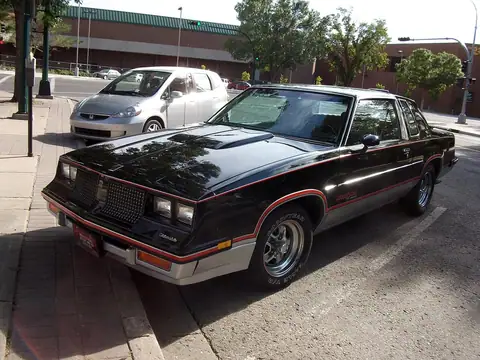
Oldsmobile · 1983
Hurst/Olds 15th Anniversary (1983)
3,001 Built
-
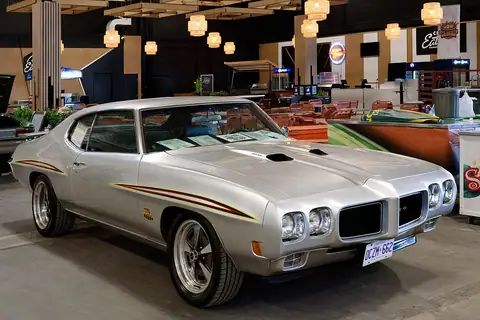
Pontiac · 1969–1971
GTO Judge (1969–1971)
168 Built
-
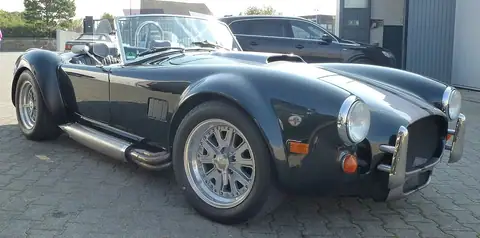
Excalibur
JAC Cobra
Production not yet verified
-
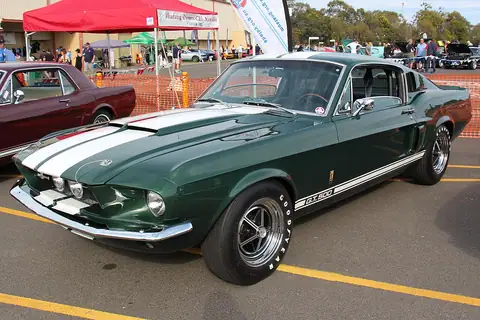
Shelby American · 1967
GT500 (1967 model year)
2,050 Built
140 other makes from United StatesAC PropulsionAcuraAllstateAMCAmerican LaFranceAmerican MotorsAmerican UnderslungApteraArmstrongArnoltAuburnBaldwin-MotionBantamBarris KustomsBendixBerger ChevroletBill ThomasBollingerBremerBuckeyeBuffumBuickCadillacCallawayCastleCheckerChevroletChristieChryslerClenetCodaColumbiaConsulierCordCunninghamCzingerDana ChevroletDean JeffriesDeSotoDetroit ElectricAll makes →