Makes › Renault › 5 Turbo › 5 Turbo 2 · Factory competition · 1983–1986 Rare
Renault
5 Turbo 2
Cheaper steel-panelled successor to the Turbo 1.
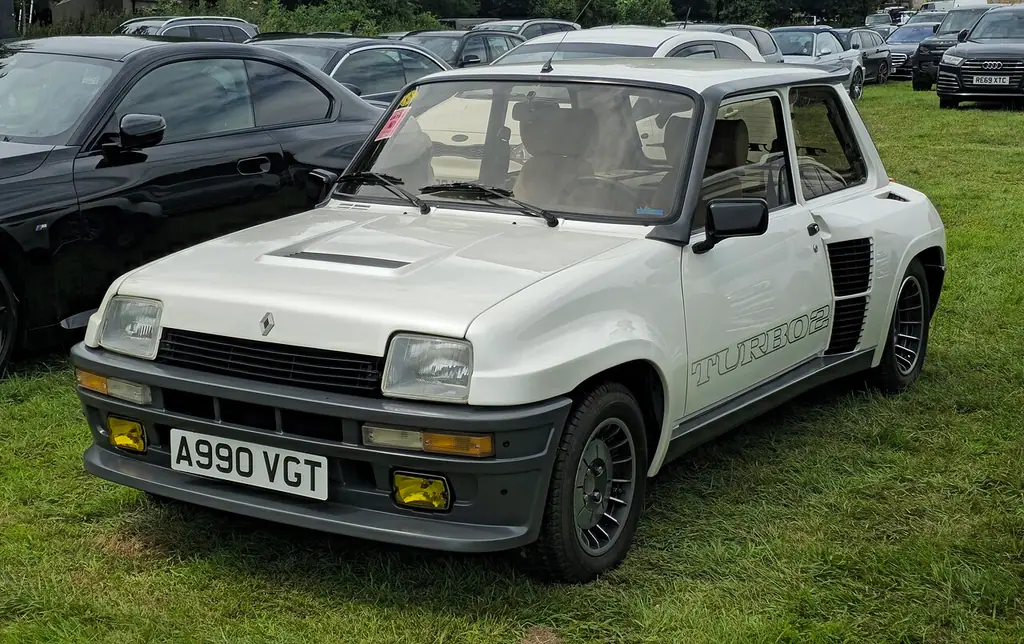
Photo: Calreyn88 · CC BY-SA 4.0
Contents
01Overview
At a glance
- Built
- 3,167 Built
- Years
- 1983–1986
- Engine
- Mid-mounted, longitudinal in-line four · 1,397 cc / 1.4 LFactory: 1,397 cc
- Power
- Not yet verified
- Top speed
- 200 km/hFactory: 124 mph · converted
- Body
- Not yet verified
- Designer
- Not yet verified
- In this archive
- Not yet verified
- Surviving
- Not yet verified
Sources and any conflicting figures are in the sections below.
Why it matters
The Turbo 2 is the cheaper, more production-friendly version of the mid-engined Renault 5 Turbo that followed the 400-car Group 4 homologation run. It keeps the layout of the Turbo 1, with the turbocharged 1.4-litre engine behind the seats driving the rear wheels, but uses more ordinary panels and a plainer interior.
How rare is it?
Six separate kinds of rarity – never combined into one number.
Each kind of rarity is rated separately and never combined.
Photos
Exterior, interior and detail photos with their licences.
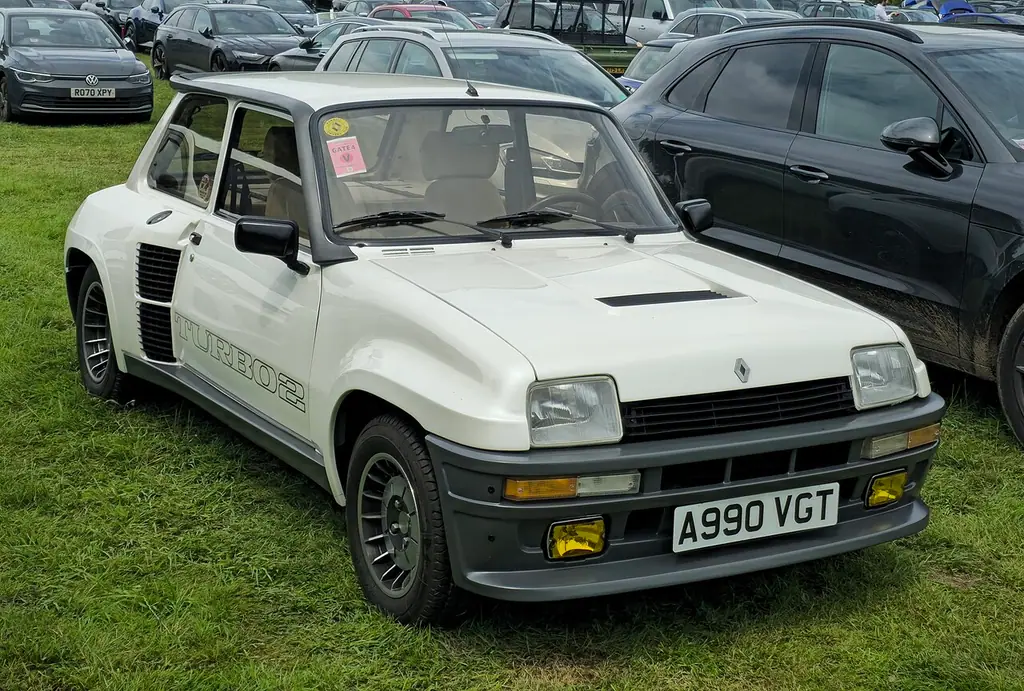
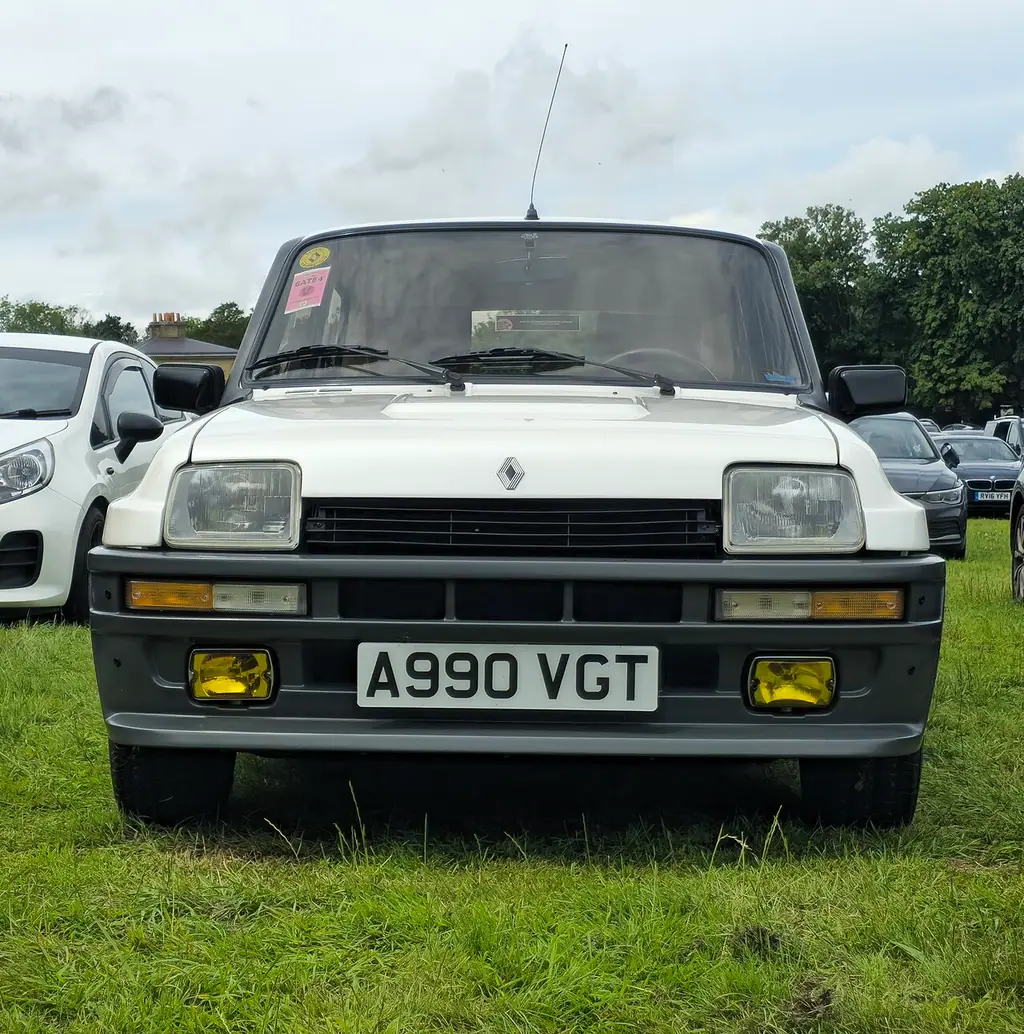
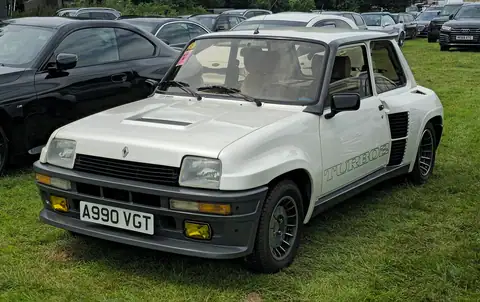 Renault 5 Turbo 2 (Wikimedia Commons: Renault 5 Turbo 2)
Photo: Calreyn88 · CC BY-SA 4.0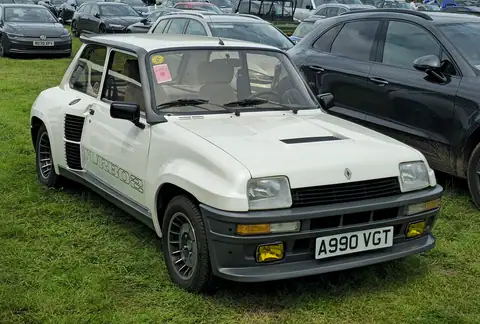 Renault 5 Turbo 2 (Wikimedia Commons: Renault 5 Turbo 2)
Photo: Calreyn88 · CC BY-SA 4.0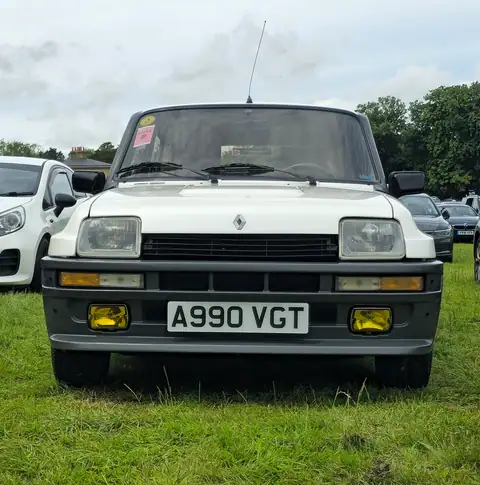 Renault 5 Turbo 2 (Wikimedia Commons: Renault 5 Turbo 2)
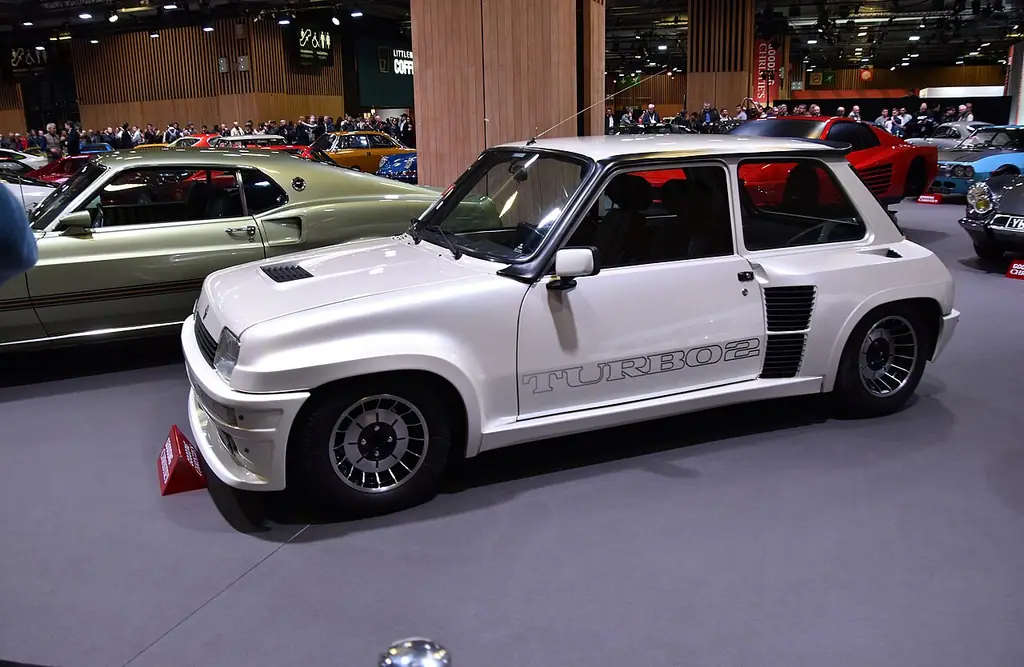
Photo: Calreyn88 · CC BY-SA 4.0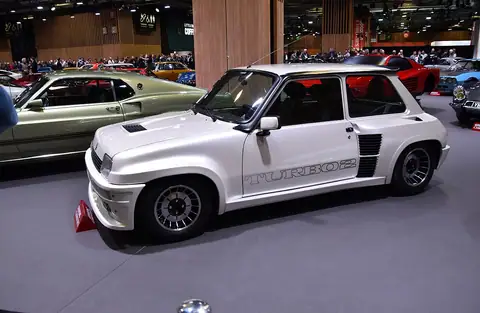 Renault 5 Turbo 2 (Wikimedia Commons: Renault 5 Turbo 2)
Photo: Charles from Port Chester, New York · CC0 1.0


02Production & history
Production
Every figure says what it counts.
| What is counted | Figure | Basis | Status |
|---|---|---|---|
| Total model productionTurbo 2 built | 3,1671,2 | Factory production | Factory reported |
Independent counts (e.g. engine and colour) are never combined into a calculated figure. Surviving examples are never presented as original production.
History
Renault presented the Turbo 2 at the 1982 Paris Motor Show. It differs from the first Turbo mainly in its interior, which dropped the Bertone-styled cabin and seats in favour of fittings from the Renault 5 Alpine Turbo, and in metal rather than aluminium doors and other panels. Renault says the two models' principal technical characteristics are almost identical, so they keep the type number R 8220.
The Turbo 2 weighs 30 kg more but cost 102,000 francs in 1983 against 115,000 francs for the previous model. At the end of 1983 a batch of 200 cars with larger engine capacity (type 8221) was built for Group B homologation.
Variants
How each version differs from the standard 5 Turbo 2.
No variants documented yet. Have a source? Contribute it.
03Specifications
Technical specifications
Engine
| Engine family | Not yet verified |
|---|---|
| Engine code | Not yet verified |
| Layout | Mid-mounted, longitudinal in-line four3,4 Independently researched |
| Cylinders | 43 Independently researched |
| Displacement | 1,397 cc / 1.4 LFactory: 1,397 cc5,3 Independently researched |
| Bore | Not yet verified |
| Stroke | Not yet verified |
| Compression ratio | Not yet verified |
| Fuel system | Electronic fuel injection4 Independently researched |
| Induction | Turbocharged4 Independently researched |
| Power | Not yet verified |
| Power at | 6,000 rpm3 Independently researched |
| Torque | 210 NmFactory: 155 lb-ft · converted3 Independently researchedClassic & Performance Car lists 163 lb ft for the Turbo 2; evo lists 163 for the Turbo 1 and 155 for the Turbo 2. |
| Torque at | 3,250 rpm3 Independently researched |
Transmission & drivetrain
| Gearbox | Five-speed manual4 Independently researched |
|---|---|
| Gears | Not yet verified |
| Driven wheels | Rear wheels4 Independently researched |
Chassis, body & dimensions
| Chassis | Not yet verified |
|---|---|
| Front suspension | Independent, wishbones, longitudinal torsion bars, anti-roll bar, telescopic dampers4 Independently researched |
| Rear suspension | Independent, wishbones, anti-roll bar, telescopic dampers4 Independently researched |
| Brakes | Not yet verified |
| Steering | Rack and pinion4 Independently researched |
| Body construction | Metal monocoque4 Independently researched |
| Wheelbase | 2,430 mmFactory: 2,430 mm4 Independently researched |
| Length | 3,660 mmFactory: 3,660 mm4 Independently researched |
| Width | 1,750 mmFactory: 1,750 mm4 Independently researched |
| Height | 1,320 mmFactory: 1,320 mm4 Independently researched |
| Front track | Not yet verified |
| Rear track | Not yet verified |
| Kerb weight | 970 kgFactory: 970 kg4,3 Independently researchedBoth sources list it simply as "Weight". |
| Dry weight | Not yet verified |
Performance
| Maximum speed | 200 km/hFactory: 124 mph · converted4 Independently researched |
|---|---|
| 0–100 km/h | Not yet verified |
| 0–60 mph | 6.6 s4 Independently researched |
| Fuel tank | Not yet verified |
“Not yet verified” means no source has been checked for that value yet. Nothing is estimated to fill a gap.
04Colours & options
Factory colours & interiors
Original paint and trim, with the number of cars in each where a source gives it.
Not yet documented. Have a source? Contribute it.
Factory options & codes
Codes are shown exactly as written by the manufacturer.
Not yet documented. Have a source? Contribute it.
05Individual cars
Chassis register
Every documented car, with its colours, history and where it is now. Open a row for the full record. Known chassis are not automatically authenticated originals.
Not yet documented. Have a source? Contribute it.
Competition history
Every race result of the individual cars, in date order. Click a chassis number to open its full record in the register.
Not yet documented. Have a source? Contribute it.
Auction & sale history
Documented public sales of the individual cars. Click a chassis number to open its full record in the register.
Not yet documented. Have a source? Contribute it.
See one in person
Museums where an example of this car can be seen.
No example is documented on public display yet. Have a source? Contribute it.
06Reference
Identification guide
How to tell an original from a replica or later conversion.
The Turbo 2 shares the Turbo 1 shape by Bertone but has a standard-Renault 5 style interior instead of the red and blue scheme, and cheaper, slightly heavier steel panels where the Turbo 1 used aluminium for the roof and doors. It weighs about 970 kg against 900 kg for the Turbo 1, and the torque figure listed by evo is 155 lb ft against 163 lb ft for the Turbo 1. Renault's own production table lists the Turbo 2 as type R8220 built from July 1982 to April 1986.
Sources
Each number links to the exact facts it supports.
-
1
Renault 5 Turbo - Les Cahiers Histoire et Passion Level A Renault Classic (Renault Group)
- 3,167 Renault 5 Turbo 2s were produced between 1982 and 1986
- 2
-
3
Renault 5 Turbo: review, history and specs of an icon Level C evo
- the engine was mounted longitudinally
- In-line 4-cyl, 1397cc, turbo
- 160bhp @ 6000rpm
- Max torque ... 155lb ft @ 3250rpm
- 155lb ft @ 3250rpm
- Weight 970kg
-
4
Renault 5 Turbo 2 data sheet Level C Classic & Performance Car (web archive copy)
- Configuration: in-line four; mid-engine RWD
- Fuel delivery: electronic fuel injection
- Aspiration: turbocharged
- Transmission: Five-speed manual
- Drivetrain: mid-engine RWD
- Suspension Front: Independent, wishbones, longitudinal torsion bars
- Suspension Rear: Independent, wishbones, anti-roll bar
- Steering: rack and pinion
- Bodyframe: metal monocoque
- Wheelbase: 2430mm
- Length: 3660mm
- Width: 1750mm
- Height: 1320mm
- Weight: 970kgs
- Top speed: 124mph
- 0-60mph: 6.6secs
-
5
Les chiffres de la production (Renault 5) Level C TOUT sur la RENAULT 5 (renault-5.net, web archive copy)
- TURBO 2 | 1397
Keep exploring
More from Renault
-
Renault
Espace F1
1 Built
-
Renault · 1956
Étoile Filante
2 Built
-
Renault · 1985
5 Maxi Turbo
20 Built
-
Renault · 1898
Type A Voiturette
71 Built
More from France
-
Venturi · 1994–1997
400 GT
15 Built
-
Citroën
TUB (1939-1941)
Production not yet verified
-
Bugatti
Type 30 (1922)
Production not yet verified
-
Peugeot
9X8 (2022)
Production not yet verified
70 other makes from FranceACMAAixamAlcatelAlpineAmilcarArzensAvions VoisinBACBallotBerlietBolloreBuccialiBugattiCGCharron, Girardot et VoigtChenard-WalckerCitroënClément-PanhardDAMSDarracqDBDB (Deutsch-Bonnet)De DietrichDe Dion-BoutonDe Dion, Bouton et TrépardouxDe La ChapelleDelageDelahayeDelaunay-BellevilleDerbyDSExagonFacel VegaFarmanFord FranceGentyGordiniHommellHopiumHotchkissAll makes →