Makes › Rolls-Royce › Silver Wraith › Silver Wraith · Rare production · 1946–1959
Rolls-Royce
Silver Wraith
Silver Wraith built in 1,783 units at Crewe.
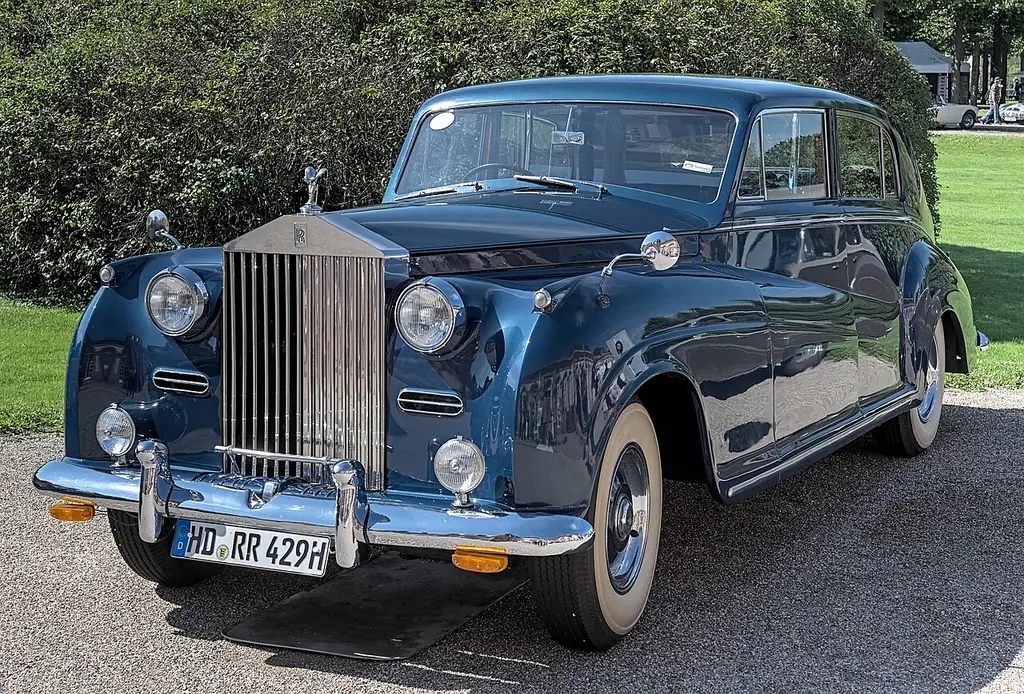
Photo: Alexander Migl · CC BY-SA 4.0
Contents
01Overview
At a glance
- Built
- Not yet verified
- Years
- 1946–1959
- Engine
- 6-cylinder in-line · 4,257 cc / 4.3 LFactory: 4,257 cc
- Power
- 94 kW / 128 PSFactory: 126 hp · converted
- Top speed
- Not yet verified
- Body
- Not yet verified
- Designer
- Not yet verified
- In this archive
- Not yet verified
- Surviving
- Not yet verified
Sources and any conflicting figures are in the sections below.
Why it matters
The Silver Wraith was Rolls-Royce's first post-war model, revealed in 1946 as a rolling chassis for coachbuilt bodies. It was the last Rolls-Royce model to offer a wide range of coachwork styles. The Phantom IV was built on a lengthened version of its chassis.
How rare is it?
Six separate kinds of rarity – never combined into one number.
Each kind of rarity is rated separately and never combined.
Photos
Exterior, interior and detail photos with their licences.
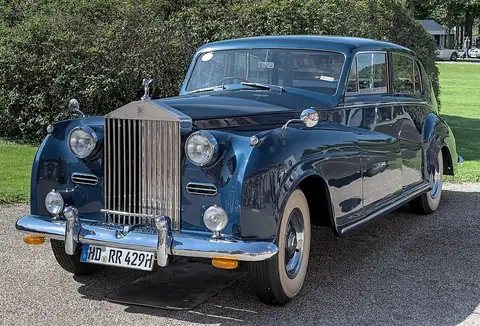 Rolls-Royce Silver Wraith (Wikimedia Commons search)
Photo: Alexander Migl · CC BY-SA 4.0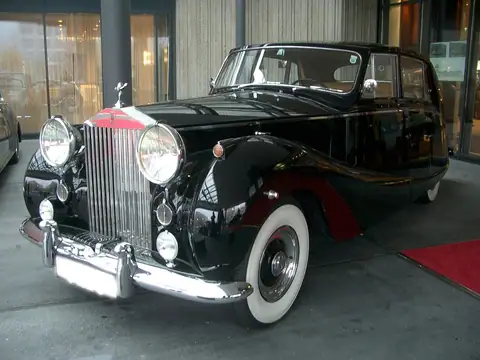 Rolls-Royce Silver Wraith (Wikimedia Commons search)
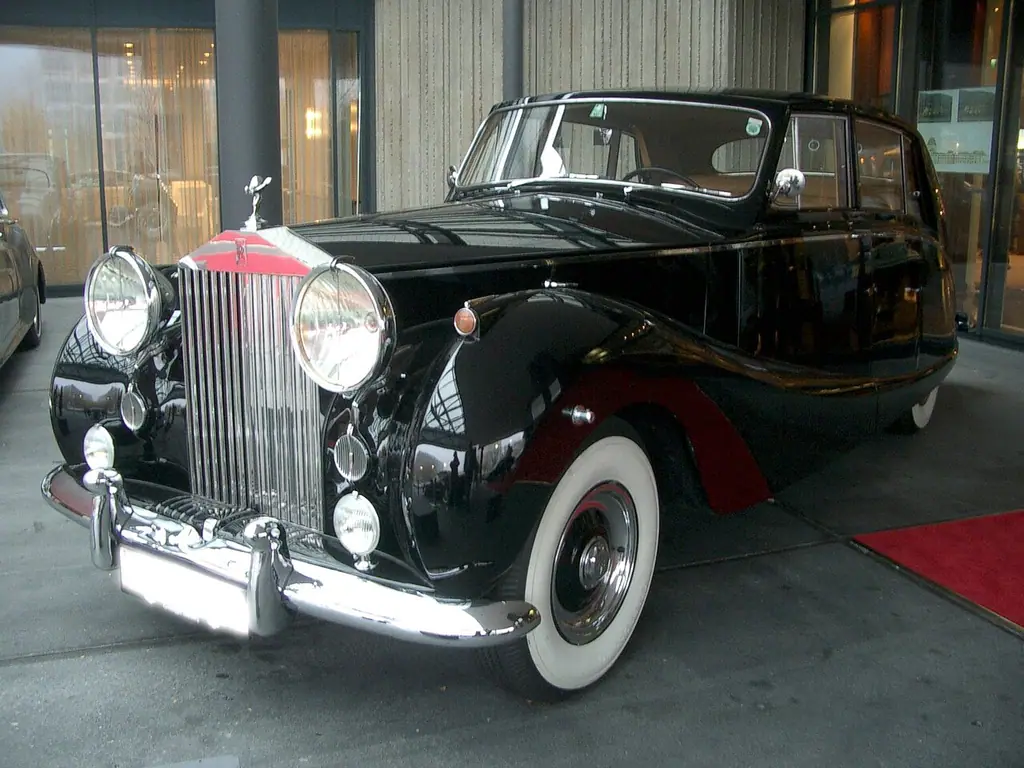
Photo: Rico Heil (User:Silmaril) · CC BY-SA 3.0


02Production & history
Production
Every figure says what it counts.
No production figures recorded yet.
History
Revealed in April 1946, the Silver Wraith was sold as a rolling chassis. Independent coachbuilders such as H.J. Mulliner, Park Ward and Hooper supplied the bodies.
The car was updated through the 1950s. An engine bored out to 4,566 cc was phased in during 1951, and capacity reached 4,887 cc by 1954. An automatic gearbox became an option in 1952, power-assisted steering arrived in 1956, and a longer 133-inch wheelbase replaced the original 127-inch layout.
Production ended in 1959, when the six-cylinder engine was replaced by a V8.
Variants
How each version differs from the standard Silver Wraith.
No variants documented yet. Have a source? Contribute it.
03Specifications
Technical specifications
Engine
| Engine family | B601 Independently researchedThe B60 engine line also powered the prewar Wraith. |
|---|---|
| Engine code | Not yet verified |
| Layout | 6-cylinder in-line2 Independently researched |
| Displacement | 4,257 cc / 4.3 LFactory: 4,257 cc2,3 Independently researchedBase figure. S2 gives 4,566 cc from 1951 and 4,887 cc from 1954; S3 dates 4,887 cc to 1955. |
| Bore | 88.9 mmFactory: 88.9 mm2 Independently researchedBase figure. S2 gives 92.08 mm from 1951 and 95.25 mm from 1954. |
| Stroke | 114.3 mmFactory: 114.3 mm2 Independently researched |
| Compression ratio | 6.4:11 Independently researchedFigure for the 1954 museum car (4,566 cc), not a series figure. |
| Fuel system | Stromberg carburettor; Zenith from 1951; twin SU from 19562 Independently researched |
| Power | 94 kW / 128 PSFactory: 126 hp · converted3 Independently researched1947 figure from the S3 year table. S3 also lists 150 hp (1951-52), 125 hp (1953-56), 180 hp (1957), 177 hp (1958) and 135 hp (1959). S1 says the factory never revealed dynamometer outputs and cites 132-150 BHP from various sources. No rating standard is stated. |
| Power at | Not yet verified |
| Torque | Not yet verified |
Transmission & drivetrain
| Gearbox | 4-speed manual synchromesh; 4-speed automatic option from 19521,2 Independently researchedS3 names the automatic option as General Motors Hydra-Matic. |
|---|---|
| Gears | 41 Independently researched |
| Driven wheels | Not yet verified |
Chassis, body & dimensions
| Chassis | Rolling chassis for coachbuilt bodies2 Independently researched |
|---|---|
| Front suspension | Independent, coil springs2 Independently researched |
| Rear suspension | Live axle, semi-elliptic springs2,3 Independently researched |
| Brakes | Drum, servo-assisted2 Independently researchedS3 describes hydraulic front brakes and mechanical rear brakes with a mechanical servo. |
| Steering | Power-assisted from 19562 Independently researched |
| Body construction | Not yet verified |
| Wheelbase | 3,225.8 mmFactory: 3,225.8 mm2 Independently researchedBase 127 in. S2 gives 3,378.2 mm (133 in) from 1951; S3 dates the 133 in wheelbase to November 1953. |
| Length | Not yet verified |
| Width | Not yet verified |
| Height | Not yet verified |
| Front track | Not yet verified |
| Rear track | Not yet verified |
| Kerb weight | Not yet verified |
| Dry weight | Not yet verified |
Performance
| Maximum speed | Not yet verified |
|---|---|
| 0–100 km/h | Not yet verified |
| Fuel tank | Not yet verified |
“Not yet verified” means no source has been checked for that value yet. Nothing is estimated to fill a gap.
04Colours & options
Factory colours & interiors
Original paint and trim, with the number of cars in each where a source gives it.
Not yet documented. Have a source? Contribute it.
Factory options & codes
Codes are shown exactly as written by the manufacturer.
Not yet documented. Have a source? Contribute it.
05Individual cars
Chassis register
Every documented car, with its colours, history and where it is now. Open a row for the full record. Known chassis are not automatically authenticated originals.
Not yet documented. Have a source? Contribute it.
Competition history
Every race result of the individual cars, in date order. Click a chassis number to open its full record in the register.
Not yet documented. Have a source? Contribute it.
Auction & sale history
Documented public sales of the individual cars. Click a chassis number to open its full record in the register.
Not yet documented. Have a source? Contribute it.
See one in person
Museums where an example of this car can be seen.
No example is documented on public display yet. Have a source? Contribute it.
06Reference
Identification guide
How to tell an original from a replica or later conversion.
Most cars were bodied outside the factory, so the coachbuilder's records are the main identity check. H.J. Mulliner's files list individual cars by body number and design number.
Sources
Each number links to the exact facts it supports.
-
1
Rolls Royce Silver Wraith 1 (1954 car, Atwell-Wilson Motor Museum) Level C Atwell-Wilson Motor Museum
- These engines designated B60
- COMPRESSION RATIO | 6.4:1
- controlled an excellent 4 speed synchromesh gearbox
- NUMBER OF FORWARD SPEEDS | 4
-
2
Rolls-Royce Silver Wraith (1946-1958) Level C rrab.com
- 6 cylinder in-line engine (Technical Data)
- capacity 4,257 cc
- bore x stroke 88.9 x 114.3 mm (Technical Data)
- Stromberg carburettor (from 1951 Zenith carburettor, from 1956 twin SU carburettors)
- from 1952 4-speed automatic gearbox optional
- delivered these cars to be bodied by independent coachbuilders
- independent front suspension with coil springs
- semi-elliptic springs rear
- drum brakes servo-assisted
- power assisted steering in 1956
- wheelbase 3,225.8 mm (127 in)
-
3
1956 Rolls-Royce Silver Wraith Level C conceptcarz.com
- thus the same 4,257cc displacement
- 6 cyl., 260.00 CID., 126.00hp
- a live axle with convention semi-elliptic springs at the rear
Keep exploring
More from Rolls-Royce
-
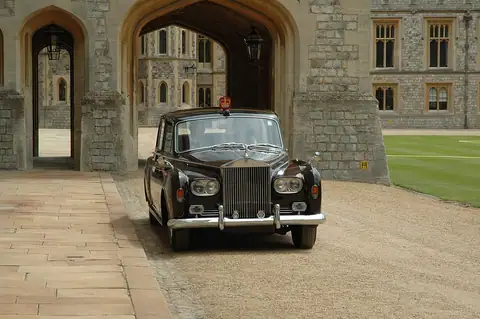
Rolls-Royce · 1987
Phantom VI State Limousine (1986/87, No.4 State Car)
1 Built
-
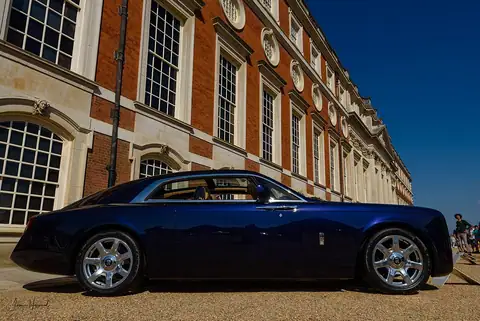
Rolls-Royce · 2017
Sweptail
1 Built
-
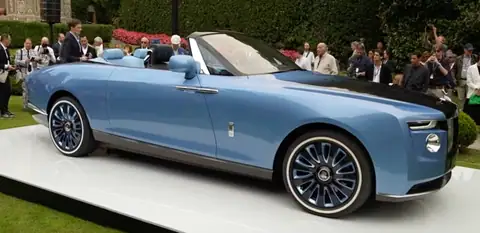
Rolls-Royce · 2021–2022
Boat Tail
3 Built
-
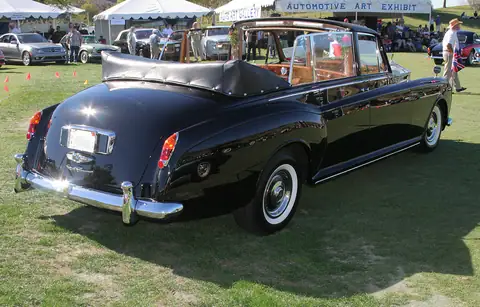
Rolls-Royce
Phantom V State Landaulette (Mulliner Park Ward design 2052)
5 Built
See all 91 cars by Rolls-Royce →
More from United Kingdom
-
DeLorean · 1981–1983
DMC-12
Production not yet verified
-
Bentley
Mark V
17 Built
-
Lotus · 1990–1991
Esprit X180R
3 Built
-
MINI
Cooper S Mk III (1970-1971)
Production not yet verified
134 other makes from United KingdomACAiredaleAlan Mann RacingAllardAlvisArabArashArielArmstrong SiddeleyArrowsAscariAston MartinAtalantaAtlantisAustinAustin-HealeyBedfordBentleyBerkeleyBluebirdBMCBondBrabhamBristolBritish LeylandBroadspeedBrookeBrough SuperiorCampbell-RailtonCaparoCaterhamChevronConnaughtCooperCrayfordDaimlerDavid BrownDawsonDeLoreanDuttonAll makes →