Makes › SS › Jaguar 100 (SS100) · Rare production · 1935–1939 Very Rare
SS
Jaguar 100 (SS100)
Low-volume pre-war sports two-seater; first SS model to carry the Jaguar name
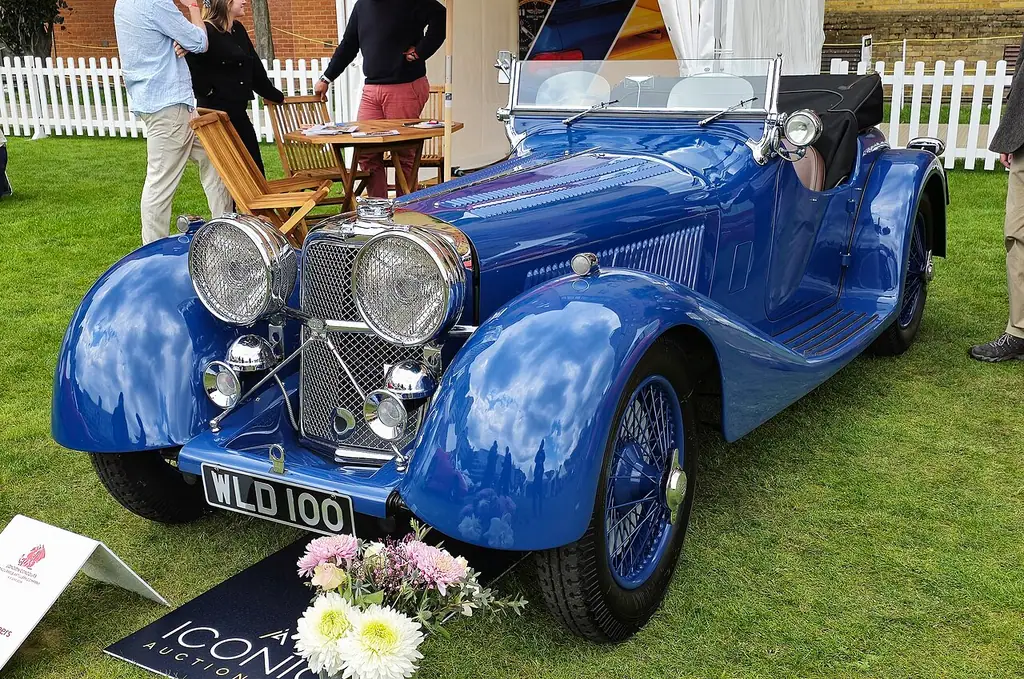
Photo: Calreyn88 · CC BY-SA 4.0
Contents
01Overview
At a glance
- Built
- 309 Built
- Years
- 1935–1939
- Engine
- 2,500 cc / 2.5 LFactory: 2.5 L
- Power
- 76.1 kW / 103 PSFactory: 102 hp · converted
- Top speed
- 151 km/hFactory: 94 mph · converted
- Body
- Not yet verified
- Designer
- Not yet verified
- In this archive
- Not yet verified
- Surviving
- Not yet verified
Sources and any conflicting figures are in the sections below.
Why it matters
The SS100 was the sports car of the first range to carry the Jaguar name in 1935 and marked a big step forward in performance for SS. Built in only 309 examples across 2½- and 3½-litre versions, it is one of the key pre-war ancestors of Jaguar's sports cars.
How rare is it?
Six separate kinds of rarity – never combined into one number.
Each kind of rarity is rated separately and never combined.
Photos
Exterior, interior and detail photos with their licences.
 SS Jaguar 100 (SS100) (Wikimedia Commons: SS Jaguar 100)
Photo: Calreyn88 · CC BY-SA 4.0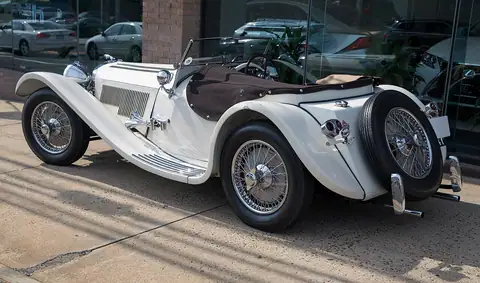 SS Jaguar 100 (SS100) (Wikimedia Commons: SS Jaguar 100)
Photo: Mr.choppers · CC BY-SA 3.0
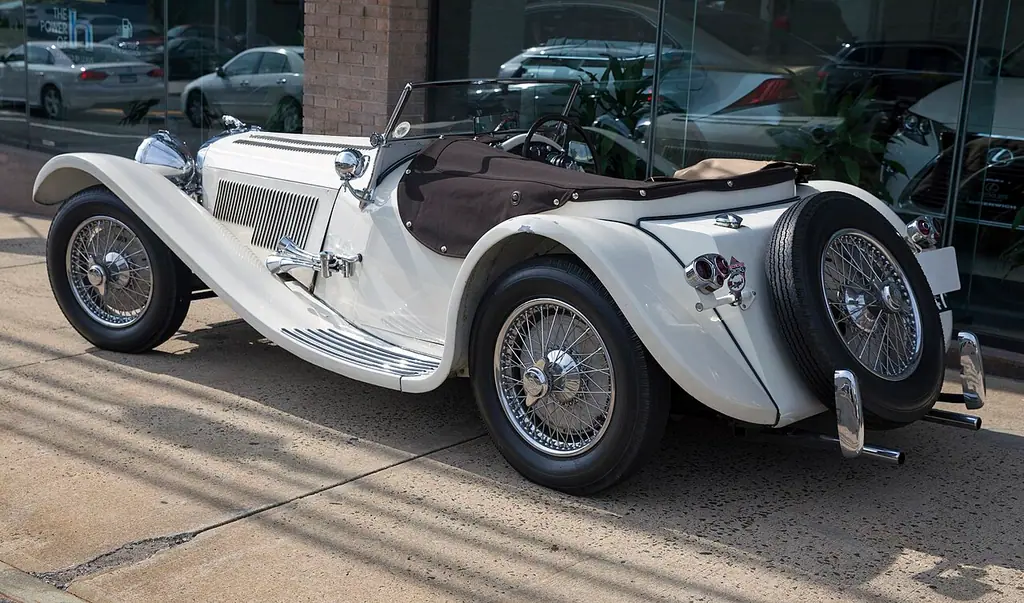


02Production & history
Production
Every figure says what it counts.
| What is counted | Figure | Basis | Status |
|---|---|---|---|
| Total model productiontotal 2½ and 3½ litre cars (191 + 118) | 3091 | Factory production | Independently researched |
Independent counts (e.g. engine and colour) are never combined into a calculated figure. Surviving examples are never presented as original production.
History
The SS100 grew out of the SS90, an open two-seater of 1935 of which only 23 were delivered, gaining new headlamps, a revised radiator and a 'Le Mans' type fuel tank. The 2½-litre car used a development of the SS1 engine with a Weslake-designed overhead-valve head and twin SU carburettors, giving 102 bhp and 94 mph. A 3½-litre version with 125 bhp followed in 1938, and the Jaguar Daimler Heritage Trust now owns ERB 290, a 2½-litre car raced in 1939.
Variants
How each version differs from the standard Jaguar 100 (SS100).
No variants documented yet. Have a source? Contribute it.
03Specifications
Technical specifications
Engine
| Engine family | Not yet verified |
|---|---|
| Engine code | Not yet verified |
| Layout | Not yet verified |
| Displacement | 2,500 cc / 2.5 LFactory: 2.5 L2 |
| Bore | Not yet verified |
| Stroke | Not yet verified |
| Compression ratio | Not yet verified |
| Valvetrain | Overhead valves (Weslake-designed head)2 |
| Fuel system | Twin SU carburettors2 |
| Power | 76.1 kW / 103 PSFactory: 102 hp · converted22½-litre; 3½-litre 125 bhp. |
| Power at | Not yet verified |
| Torque | Not yet verified |
Transmission & drivetrain
| Gearbox | Not yet verified |
|---|---|
| Gears | 43 Independently researched |
| Driven wheels | Rear3 Independently researched |
Chassis, body & dimensions
| Chassis | Not yet verified |
|---|---|
| Front suspension | Rigid axle, semi-elliptic leaf springs3 Independently researched |
| Rear suspension | Rigid axle, semi-elliptic leaf springs3 Independently researched |
| Brakes | Drums on all four wheels3 Independently researched |
| Steering | Not yet verified |
| Body construction | Not yet verified |
| Wheelbase | 2.64 mFactory: 2.64 m3 Independently researched |
| Length | 3.89 mFactory: 3.89 m3 Independently researched |
| Width | Not yet verified |
| Height | Not yet verified |
| Front track | Not yet verified |
| Rear track | Not yet verified |
| Kerb weight | 1,180 kgFactory: 1,180 kg3 Independently researchedApproximate ("around"). |
| Dry weight | Not yet verified |
Performance
| Maximum speed | 151 km/hFactory: 94 mph · converted22½-litre; 3½-litre 101 mph. |
|---|---|
| 0–100 km/h | Not yet verified |
| Fuel tank | Not yet verified |
“Not yet verified” means no source has been checked for that value yet. Nothing is estimated to fill a gap.
04Colours & options
Factory colours & interiors
Original paint and trim, with the number of cars in each where a source gives it.
Not yet documented. Have a source? Contribute it.
Factory options & codes
Codes are shown exactly as written by the manufacturer.
Not yet documented. Have a source? Contribute it.
05Individual cars
Chassis register
Every documented car, with its colours, history and where it is now. Open a row for the full record. Known chassis are not automatically authenticated originals.
Not yet documented. Have a source? Contribute it.
Competition history
Every race result of the individual cars, in date order. Click a chassis number to open its full record in the register.
Not yet documented. Have a source? Contribute it.
Auction & sale history
Documented public sales of the individual cars. Click a chassis number to open its full record in the register.
Not yet documented. Have a source? Contribute it.
See one in person
Museums where an example of this car can be seen.
No example is documented on public display yet. Have a source? Contribute it.
06Reference
Identification guide
How to tell an original from a replica or later conversion.
Jaguar Heritage notes the SS100's differences from the SS90: new headlamps, a revised radiator and a 'Le Mans' type petrol tank.
Sources
Each number links to the exact facts it supports.
-
1
Jaguar Daimler Heritage Trust – 1938 SS Jaguar 100 2½ Litre ERB 290 Level A
- 309 total 2½ and 3½ litre cars (191 + 118)
-
2
1938 SS Jaguar 100 2½ Litre Level A Jaguar Daimler Heritage Trust
- 2½-litre
- overhead-valve head designed by Harry Weslake
- twin S.U carburettors
- 102bhp
- 94 mph (151 km/h)
-
3
SS Jaguar 100 (history article) Level C Best Cars (bestcars.uol.com.br) · 2016-11-12
- câmbio era manual de quatro marchas, sem sincronização para a primeira
- A tração era traseira
- ambas as suspensões tinham eixo rígido e feixes de molas semielípticas
- os freios eram a tambor nas quatro rodas
- distância entre eixos de 2,64 m
- media 3,89 metros de comprimento
- seu peso girava em torno de 1.180 kg
Keep exploring
More from SS
-
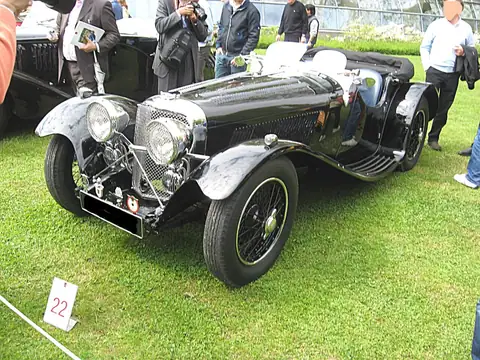
SS
SS 90
Production not yet verified
-
No licensed photo yet
SS · 1938
Jaguar 100 3½ Litre
118 Built
-
No licensed photo yet
SS
SS 2
Production not yet verified
-
No licensed photo yet
SS
SS100 works/alloy competition cars (incl. "Old No. 8", BWK 77)
Production not yet verified
See all 5 cars by SS →The Jaguar family →
More from United Kingdom
-
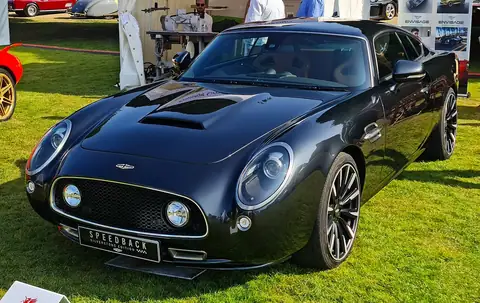
David Brown
Speedback GT (2015-)
Production not yet verified
-
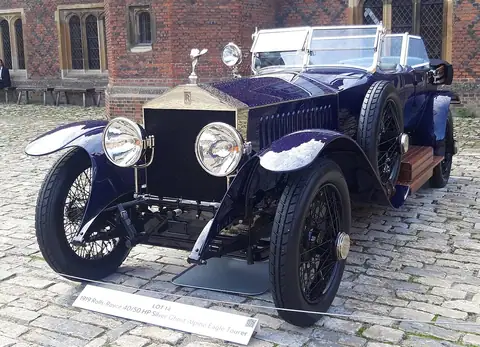
Rolls-Royce
40/50 hp Silver Ghost "Alpine Eagle" (Continental)
Production not yet verified
-
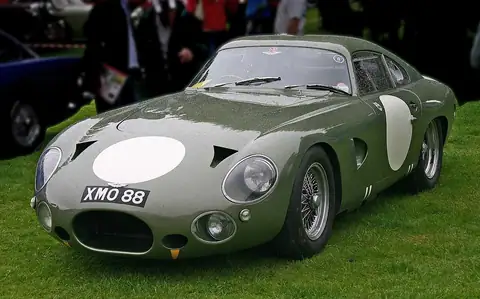
Aston Martin · 1963
DP215
1 Built
-
Sunbeam · 1920
350hp (Blue Bird)
1 Built
131 other makes from United KingdomACAiredaleAlan Mann RacingAllardAlvisArabArashArielArmstrong SiddeleyArrowsAscariAston MartinAtalantaAtlantisAustinAustin-HealeyBedfordBentleyBerkeleyBluebirdBMCBondBrabhamBristolBritish LeylandBroadspeedBrookeBrough SuperiorCampbell-RailtonCaparoCaterhamChevronConnaughtCooperCrayfordDaimlerDavid BrownDawsonDeLoreanDuttonAll makes →