Makes › ERA › R-type voiturette (A/B/C/D) · Factory competition · 1934–1939
ERA
R-type voiturette (A/B/C/D)
British 1½-litre racing voiturette
Contents
01Overview
At a glance
- Built
- Not yet verified
- Years
- 1934–1939
- Engine
- Six-cylinder based on the Riley unit · 1,488 cc / 1.5 LFactory: 1,488 cc
- Power
- 124 kW / 168 PSFactory: 166 hp · converted
- Top speed
- Not yet verified
- Body
- Not yet verified
- Designer
- Reid Railton (chassis); Peter Berthon (overall design)
- In this archive
- Not yet verified
- Surviving
- 16 (independently researched)
Sources and any conflicting figures are in the sections below.
Why it matters
ERA's R-type cars made Britain competitive in 1930s voiturette racing, and only 17 were built in Bourne, Lincolnshire. All but one survive, and cars like Prince Bira's Romulus and Remus remain central to historic racing.
How rare is it?
Six separate kinds of rarity – never combined into one number.
Each kind of rarity is rated separately and never combined.
02Production & history
Production
Every figure says what it counts.
| What is counted | Figure | Basis | Status |
|---|---|---|---|
| Total model production16 of 17 R-type cars survive per Autosport (R3B destroyed 1936) | 163 | Surviving examples | Independently researched |
| Total model productioncars built; all bar one survive | 171,2 | Surviving examples | Independently researched |
Independent counts (e.g. engine and colour) are never combined into a calculated figure. Surviving examples are never presented as original production.
History
Peter Berthon, Raymond Mays and Humphrey Cook founded English Racing Automobiles in 1933 to contest second-tier voiturette racing rather than take on the big Grand Prix teams. Using engines based on the Riley six, the first car was unveiled at Brooklands in May 1934, and R3A gave ERA its first international win at the Nürburgring in 1935. Bira, Richard Seaman and Tony Rolt were among the early drivers, and Mays set the final pre-war Shelsley Walsh record in R4D in 1939. The only car lost is R3B, destroyed in Marcel Lehoux's fatal crash at Deauville in 1936.
Variants
How each version differs from the standard R-type voiturette (A/B/C/D).
No variants documented yet. Have a source? Contribute it.
03Specifications
Technical specifications
Engine
| Engine family | Not yet verified |
|---|---|
| Engine code | Not yet verified |
| Layout | Six-cylinder based on the Riley unit3 Independently researched |
| Displacement | 1,488 cc / 1.5 LFactory: 1,488 cc4 Independently researched1.5 litre B-type (chassis R2B); 1.1 L and 2.0 L (1,980 cc) versions also existed. |
| Bore | 57.5 mmFactory: 57.5 mm4 Independently researched |
| Stroke | 90.8 mmFactory: 90.8 mm4 Independently researched |
| Compression ratio | Not yet verified |
| Fuel system | Not yet verified |
| Power | 124 kW / 168 PSFactory: 166 hp · converted4 Independently researched1.5 litre Roots-supercharged engine. The 2.0 litre (R11B) is quoted at 240 bhp. |
| Power at | 6,500 rpm4 Independently researched |
| Torque | Not yet verified |
Transmission & drivetrain
| Gearbox | Wilson pre-selector gearbox4 Independently researched |
|---|---|
| Gears | Not yet verified |
| Driven wheels | Not yet verified |
Chassis, body & dimensions
| Chassis | Ladder frame4 Independently researched |
|---|---|
| Front suspension | Live axle, semi-elliptic leaf springs, Hartford friction dampers5 Independently researched |
| Rear suspension | Live axle, semi-elliptic springs, Hartford friction dampers5 Independently researched |
| Brakes | Lockheed drums, all round5 Independently researched |
| Steering | Burman steering box5 Independently researched |
| Body construction | Not yet verified |
| Wheelbase | 2,438 mmFactory: 2,438 mm4 Independently researched |
| Length | Not yet verified |
| Width | Not yet verified |
| Height | Not yet verified |
| Front track | 1,333 mmFactory: 1,333 mm4 Independently researched |
| Rear track | 1,219 mmFactory: 1,219 mm4 Independently researched |
| Kerb weight | Not yet verified |
| Dry weight | 914 kgFactory: 914 kg4 Independently researched |
Performance
| Maximum speed | Not yet verified |
|---|---|
| 0–100 km/h | Not yet verified |
| Fuel tank | Not yet verified |
“Not yet verified” means no source has been checked for that value yet. Nothing is estimated to fill a gap.
04Colours & options
Factory colours & interiors
Original paint and trim, with the number of cars in each where a source gives it.
Not yet documented. Have a source? Contribute it.
Factory options & codes
Codes are shown exactly as written by the manufacturer.
Not yet documented. Have a source? Contribute it.
05Individual cars
Chassis register
Every documented car, with its colours, history and where it is now. Open a row for the full record. Known chassis are not automatically authenticated originals.
Not yet documented. Have a source? Contribute it.
Competition history
Every race result of the individual cars, in date order. Click a chassis number to open its full record in the register.
Not yet documented. Have a source? Contribute it.
Auction & sale history
Documented public sales of the individual cars. Click a chassis number to open its full record in the register.
Not yet documented. Have a source? Contribute it.
See one in person
Museums where an example of this car can be seen.
No example is documented on public display yet. Have a source? Contribute it.
06Reference
Identification guide
How to tell an original from a replica or later conversion.
ERA cars are identified by the chassis code: R1A to R4A are the four works A-types of 1934-35, and the 13 customer B-types run R1B to R14B (R13 was not used). C- and D-types were rebuilds of existing chassis, so a single chassis can carry several letters (for example R4B became C-type then D-type, and R12B became R12C and back). The Riley-based six has camshafts on both sides operating pushrod valves, with a Roots-type or Zoller supercharger, and the gearbox is a Wilson pre-selector.
Sources
Each number links to the exact facts it supports.
-
1
ERA D-Type chassis R4D Level B Ultimatecarpage.com · 2006-01-04
- Of the 17 ERAs constructed
-
2
Autosport – ERA at 90: pre-war racers Level B
- 17 cars built; all bar one survive
-
3
The pre-war racers of a landmark English constructor celebrating 90 years Level B Paul Lawrence · Autosport · 2024-11-20
- all but one survive; R3B destroyed at Deauville
- engines based on the six-cylinder Riley unit
-
4
ERA R2B "Romulus" Level B Supercars.net
- Capacity: 1,488 cc
- Bore X Stroke: 57.5 mm / 90.8 mm
- Power: 166 bhp / 124 KW @ 6,500 rpm
- 166 bhp @ 6,500 rpm
- Wilson pre-selector gearbox
- ladder-frame chassis
- Wheelbase: 2,438 mm (96 in)
- Front: 1,333 mm (52.5 in)
- Rear: 1,219 mm (48 in)
- Weight: 914 kilo / 2,015 lbs
-
5
ERA R11B 'Humphrey' - Specifications Level B Ultimatecarpage.com · 2007-10-01
- live axle, semi-elliptic leaf springs, Hartford friction dampers
- live axle, semi-elliptic springs, Hartford friction dampers
- Lockheed drums, all-round
- Burmann steering box
Keep exploring
More from ERA
-
ERA · 1934–1939
R12B/C "Hanuman"
1 Built
-
ERA · 1934–1939
R14B
1 Built
-
ERA · 1934–1939
R1A
1 Built
-
ERA · 1934–1939
R4D
1 Built
More from United Kingdom
-
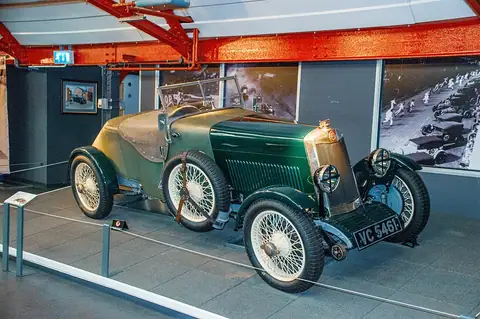
Lea-Francis
Hyper (1928 TT winner)
180 Built
-
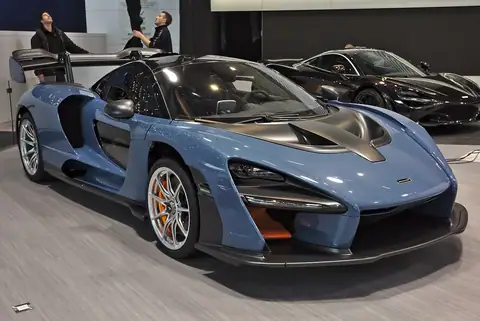
McLaren
Senna
500 Built
-
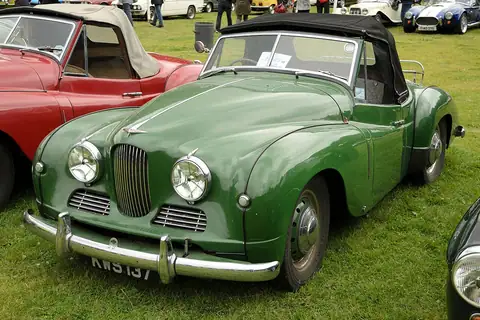
Jowett
Jupiter (1950-1954)
Production not yet verified
-
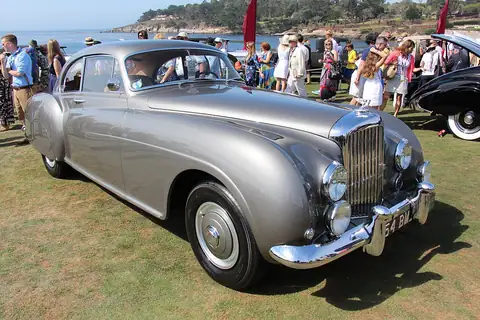
Bentley · 1952–1955
R-Type Continental (H.J. Mulliner fastback)
208 Built
134 other makes from United KingdomACAiredaleAlan Mann RacingAllardAlvisArabArashArielArmstrong SiddeleyArrowsAscariAston MartinAtalantaAtlantisAustinAustin-HealeyBedfordBentleyBerkeleyBluebirdBMCBondBrabhamBristolBritish LeylandBroadspeedBrookeBrough SuperiorCampbell-RailtonCaparoCaterhamChevronConnaughtCooperCrayfordDaimlerDavid BrownDawsonDeLoreanDuttonAll makes →